
Construction of Meaning and Author’s Agenda in Ransom by David Malouf

Related image

AOS1, Unit 1 Reading & Creating Texts, Year 11 English AOS1, Unit 4, Reading & Comparing Texts, Year 12 English

Construction of Meaning / Structure of Texts

When reading texts to construct meaning, readers increase their understanding by recognising the craftsmanship of the writing and the choices the author made to portray the topic in a certain way.
Ransom written by David Malouf

Genre

Narrative fiction.  A novel that uses the final section, Book 24 of Homer’s The Iliad an epic poem, to tell the tale of Hector’s slaughter and Priam’s subsequent visit to Achilles to plead for his son’s body.

Malouf takes some of the generic features from the classical epic and re-makes them in a less formal novel.  The character of Somax is Malouf’s own creation.

Historical context

The story of Achilles, Hector and Priam and Troy date back to 70 BC.  The novel Ransom is set during the Trojan War but begins after Agamemnon called on Achilles to surrender Briseis to him and Achilles refused, withdrawing his Myrmidon forces from the latest battle against Troy and creating an open intended insult.

Malouf begins his narrative of Ransom with the brooding Achilles pondering his options after revoking his support for the Greek cause and insulting Agamemnon.

What Malouf does is he re-works Homer’s epic of the Trojan War with its heroes and brings to life another side of both Achilles and Priam that requires them to face emotions and overcome dilemmas by acting in more honourable ways.  The narrative allows the characters to liberate themselves from a crisis of personal values and a loss of self-esteem, something quite different from the view of human action in The Iliad.

Structure & Narrative Perspective

The 5 chapters of Ransom focus on different perspectives of key characters set in separate settings associated with each character.

The Introduction of the conflict told through Achilles’ thoughts in part 1 leads to the complication in part II of Priam deciding to ransom Hector’s body.  Priam’s journey with Somax to Achilles’ camp further the action of Priam’s quest and adds a contrasting pastoral interlude in part III.

The meeting of Achilles and Priam in part IV is a dramatic climax.  A short conclusion in part V describes Priam’s journey back to Troy as the truce begins.  The closing focus on Somax as an aged storyteller offers a miniature epilogue to the action and is a lighter more comic ending.

The narrative is told in the present tense through a third-person voice, which does change to first-person or third-person limited perspective to reveal the thoughts and feelings of a particular character.  The shifts in narrative voice allow the text to convey each character’s thoughts and reflections on events, characters and settings round them.

Language Style & Shifts in Narrative

Malouf’s language style, sentence construction and vocabulary choices often reflect the action or atmosphere of the narrative paying close attention to the character’s thoughts, actions and the features of the world in which they find themselves.  For example the description of Hector’s dead body trailing behind Achilles’ chariot spans most of page 26.

Descriptions are at other times precise, realistic, economical and evoking character’s moods.  For example Somax’s pikelets explain a simple world that Priam is discovering a fresh way of appreciating the small experiences he can enjoy that were absent from his formalised life of a king on page 118.

At some times he chooses more evocative complex words that carry connotations that enrich the narrative as when Achilles feels the notes of the lyre and this emits a dreamlike quality.

Malouf often uses word patterns of imagery like he does in his poetry, such as the way water, earth, air and fire are connected with different characters in Ransom.  He connects bodies and minds in these terms.  His words share feelings in the reader so that the reader can experience a specific theme in the novel.  Water is an element that moves in waves but is also described as ‘shifting’ and ‘insubstantial’ on page 4.

Shifts in the narrative point of view give characters an individual presence in the reader’s mind.  By changing the narrative focus Malouf gives value to diverse views.

Tragedy & Comedy

While the novel is predominantly tragic, Malouf invites the reader to consider comic moments in part III when Priam and Somax travel together and meeting Hermes on their journey to the mildly ridiculous description of Somax’s affection for his mule.  These occasions of humour present the reader with brief but vital moments of reprieve amid the violence and brutality inherent in the narrative.

Tragedy is evident in the human loss and failure in a world where characters face harsh consequences for their actions.  Nothing about Achilles ritual rage and the speed of his chariot carrying its macabre cargo are positive.  The reader gains a sense of tragedy and horror as Achilles turns into almost a mad man mistreating Hector’s body over and over again for 12 days.

Imagery & Senses

Malouf uses sensory imagery to encourage readers to envisage and imagine the events and changing moods within the narrative.  For example he utilises appeals to the senses of sight, taste, smell, touch and hearing to engage the reader in Priam’s childhood experiences as Padarces.

Voices are combined with images of the sea combining vision and sound at the beginning of Ransom “The sea has many voices” (p.3).

The elements of water, air, earth and fire show the vital connection between humans and the natural world helping to define how characters think and feel.

Animal imagery is used to present Achilles as wild, barbaric and merciless.  As a warrior he is imbued with ‘an animal quality he shares with the wolves …” (p.35).

Concept of the Journey

The concept of the journey in the text allows the characters to experience a range of settings, including places they “never till now even considered” (p.192).

Malouf describes the journey into the landscape brutalised by war that Priam has never seen.  Across the Scamander River Priam and Somax see a landscape which is “one of utter devastation” (p.155).

Unfamiliar settings are also described when Achilles goes to the laundry tent in the Achaean camp to see Hector’s dead body being washed by women.  These are elements that are strangely alien yet familiar to him as he thinks of his mother (p.192).

Themes

Taking a chance, choosing action = Priam acts in an unexpected way to achieve a positive goal when he decides to follow chance rather than passive customs.  The novel invites us to ask questions about our own beliefs if we should believe in fate or chance.

Pity and compassion = Priam pleads with Achilles to release Hector’s body.  He appeals to humanity and in doing so raises the question of what is means to be human.  The novel questions the values of basic respect for each other and showing compassion.

Gender roles and power = The novel is set in a world where political power belonged to men and the role of warriors fighting each other was a key aspect of men’s identity.  The role of women is limited and the influence is second to men.  Yet Malouf does explore the feminine side of his characters when he talks about the ritual actions of local women in the story and Somax’s daughter in law and granddaughter.  Achilles softer side is more to do with his mother the sea goddess Thetis that allows him to embody a duel self.

Storytelling = The nature of stories is an important theme in the novel.  Malouf blends the relationship between stories, history and myths which is how he was able to give fresh life to ‘crevices’ found in Homer’s ancient tale.

Family / father & son / friendships = Affection for family and friends is a central value in the novel.  Love for family is at the centre of both Priam and Achilles actions and values.  When Priam asks Achilles for Hector’s body he appeals to Achilles to remember his love for his son Neoptolemus and Peleus’ love for him.  Close male friendships like Achilles and Patroclus and father-son loyalties are important in Ransom.

The Author’s Purpose / Agenda

The reasons why authors write are called the Author’s Purpose or Agenda.  Depending on the purpose, authors may choose all different sorts of writing formats, genres and vernacular [language].  There are 3 main categories of author’s purpose:

  1. To Persuade = the author’s goal is to convince the reader to agree with them
  2. To Inform = the author’s goal is to enlighten the reader about real world topics and provide facts on those topics
  3. To Entertain = authors write to entertain with a goal of telling a story.

Malouf is interested in the “untold tale”

In reinterpreting Homer’s Greek classic, the Illiad, Malouf alerts readers to the fact that he is more interested in the “untold tale” found in the margins.  Malouf says of Ransom in his afterword that “its primary interest is in storytelling itself” and the reason that stories are told and often changed.  In this case, the change becomes of paramount importance in Ransom as King Priam dares to re-imagine his role by stepping outside convention and inventing a different path.  In this retelling, or retold story, Malouf foregrounds the central act of ransom and refashions a novel for our times.

This focus on storytelling is evident from the opening line of the novel, when he has his narrator observe that “The sea has many voices” (p.3).  Just as Achilles needs to listen carefully to discern the voice of his mother amongst the many voices of the sea, so the reader needs to attend carefully to the different voices in Ransom.  Malouf gives voice to Achilles and Priam, well known from Homer’s Iliad, but he also gives voice to Somax, the simple carter, his own invention, as he appropriates a section of Homer’s tale for his own purposes.


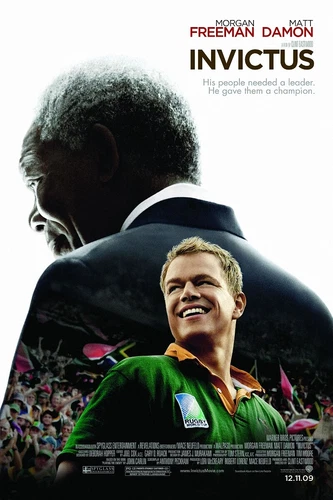
Construction of Meaning in Invictus the Film

Image result for pictures of invictus the movie

Year 12 English students studying Invictus the film as a comparative text with Ransom a novel in AOS1 Unit 4 Reading and Comparing Texts.

Why is Construction of Meaning in Invictus the Film Important?

When reading/viewing texts to construct meaning, readers/viewers increase their understanding by recognising the craftsmanship of the writing/film and the choices the authors/directors made to portray the topic in a certain way.

In order to achieve a high mark for essays students need to interpret the texts analytically which includes understanding the implications of:

  • how the author constructs meaning and structure in a text and
  • then explain what the author’s purpose or agenda was in writing the text

If you just write about the narrative only you are NOT answering the key criteria of AOS1

What the author SEES, THINKS, VALUES & BIG PICTURE / How?  Through LITERARY TECHNIQUES

  1. Type of Text = Movie / historical / drama / biographical / political / sports. Released in 2009.  Director Clint Eastwood.  Writer Anthony Peckham.
  2. Setting = South Africa between 1994-1995. 1st year of Nelson Mandela’s Presidency.  Post apartheid South Africa, start of Rainbow Nation.
  3. Title of movie = Symbol for ‘unconquered’ taken from Henley poem that inspired Mandela.
  4. Narrative Structure = The film progresses in a linear fashion with an introduction / middle / end with the history behind Nelson Mandela / his Presidency / rugby World Cup / conclusion winning the World Cup.
  5. Historical Context = Mandela is released after 27 years in prison and his 1st year of Presidency is the narrative as he uses the rugby World Cup in 1995 to unify South Africans.
  6. Themes = leadership / sacrifice / reconciliation / forgiveness / identity / family / politics / challenges / responsibility / racial tension / apartheid / inspiration / change / sport / revenge / documentary story / destiny
  7. Symbolism/Imagery = Flag of Springboks / Rainbow Nation Flag / South African Flag / Mandela’s clothes / Springboks jersey, cap and colours / Nkosi Sikelel / South African division between black and white / poor and wealthy / rugby catalyst for change
  8. Characters & Relationships = Mandela & his staff / Mandela & his family especially Zindzi / Mandela & the South African nation / Pienaar & his rugby team / his family / Black & white body guards / South Afrikaners & black South Africans
  9. Director’s Big Picture Values = Clint Eastwood was inspired by the book ‘Playing the Enemy’ by Carlin about the inspiration of Mandela to use a rugby game to help unify a nation. He also appreciated the element of ‘the underdog’ in sport to win and the support of sportsmanship.
  10. Music & Soundtracks = 9000 Days of Destiny / Nkosi Sikelel i Africa adds to position the viewers and the dramatic plot.
  11. Narrative Voice = Dialogue of characters – words are powerful tools / social and political interactions / media is a narrative device to create a back story on Mandela / Newspaper headlines / News casts on TV / TV broadcaster Johan de Villiers comments establishes the international community view on apartheid.
  12. Film Techniques =
    • Mise en scene
    • Setting
    • Lighting
    • Acting style
    • Costumes
    • Cinematography
      • Camera distance / close ups / medium shots / medium long shots / long shots
      • Camera angle / straight on / low angle / high angle / camera movement / pans
    • Sound
      • Dialogue and sound of action
      • Music soundtrack
      • Voice overs
      • Dream sequence of action in character’s mind

Construction of Meaning & Structure in a Text

Image result for pictures of writing in a book

HOW the Author Constructs Meaning and Structure in a Text

Year 11/12 English students studying AOS1 Reading and Creating Texts as well as Reading and Comparing Texts it is important to write in your essays how the author constructs meaning and structure in a text.

When reading texts to construct meaning, readers increase their understanding by recognising the craftsmanship of the writing and the choices the author made to portray the topic in a certain way.  Readers go beyond the literal [factual] meaning of the words to find significant and unstated meanings and authors rely on their reader’s ability to do so.  The reader’s mind then pieces together evidence to make sense of the text as a whole.

Essentially the reader needs to find out in the texts how the author:

  1. Sees something: their views ie. his/her opinion, perspective, way of thinking, impression or observation.
  2. Thinks about something: their values ie. his/her principles, morals, ethics or standards.
  3. Ways the author uses to construct the text:
  •      Type of text
  •      Setting
  •      Style of writing & language
  •      Narrative structure & plot
  •      Social/historical context
  •      Characters & their relationships
  •      Themes/issues/values
  •      Symbolism & imagery

WHY the author writes his text is his Purpose or Agenda

Depending on the purpose, authors may choose all different sorts of writing formats, genres and vernacular [language].  There are 3 main categories of author’s purpose:

  1. To Persuade = the author’s goal is to convince the reader to agree with the author.
  2. To Inform = the author’s goal is to enlighten the reader about real world topics and provide facts on those topics.
  3. To Entertain = authors write to entertain with a goal of telling a story.

Also consider the Big Picture behind Why the author wrote his/her story.

Dissecting Prompts in Comparative Texts

 Image result for picture of someone reading a bookYear 12 English AOS1 Unit 4 Reading and Comparing Texts

Comparative Texts Prompts have 3 Categories:

  1. Character-based prompts:

    1. ‘How do characters in both texts explore the idea of belonging?’
    2. ‘Compare the ways in which individual and collective memory affects the lives of characters in both texts’
  2. Thematic prompts:

    1. ‘Compare what the two texts suggest about racial discrimination’
    2. ‘How do the authors of Black Diggers and The Longest Memory explore the idea of identity?’
  3. Views and values prompts:

    1. ‘What is the impact of one group assuming mastery over another both on attitudes and lives in Black Diggers and The Longest Memory?’
    2. ‘Both Black Diggers and The Longest Memory argue that individuals cannot escape the roles that society imposes on them’.

What to do first

  1. Choose a prompt you CAN answer
  2. Dissect prompt words and look them up if needed (use your dictionary)
  3. Is the prompt character based / theme based or a value prompt?
  4. Take the basic idea/message from the prompt and break it down
  5. What are the authors trying to demonstrate about the subject matter?
  6. If the prompt has quotes, work out who said them and in what context
  7. Look for similarities and differences in the messages of the texts
  8. You need 6 quotes to cover ideas in the prompt (3 per text per body paragraph)

Easiest Prompt Plan Process = Cause / Response / Consequence

Comparative Texts Pair Example = Black Diggers and The Longest Memory

Prompt: ‘Compare what Black Diggers and The Longest Memory say about injustice’

Introduction = States your main contention about the prompt 

Body Paragraph 1 = Cause = cause of the injustice / historical context culture of racism / restrictions to freedom / dispossession / marginalisation

Body Paragraph 2 = Response = response of characters to injustice / Bertie / Mick / Archie / Stan / Chapel/ Lydia / Cook / Mr Whitechapel

Body Paragraph 3 = Consequence = consequence of injustice on individuals / trauma/ loss of belonging / loss of identity / remembering / trying to forget / whipping of Chapel / death / loss of hope

Conclusion = Sums up your essay including the message from the authors

What is the Context for injustice?

In both texts the notion of racial superiority, whereby skin colour correlates with intellectual and moral capacity, is a form of justification for both slavery in the American Deep South and the marginalisation of Aborigines in Australia

What are the Authors Value Statements about injustice?

Both authors demonstrate that injustice is detrimental and its effects are long lasting even generational.  They promulgate the idea that entrenched racism is not merely physically harmful but emotionally devastating as well.