Capitalism and financial equality fairness – Occupy Wall Street protest not just for the 1% but for the 99%
LGBTQ+ rights
Terrorism
Peace & ceasefires
First Nations people deaths in custody
Fake news
Sexual liberation
Youth violence
Oppression by countries against their own people
First Nations people close the gap
GenZ’s against corruption and economic instability of US President Trump
Disability rights
Homelessness
Displacement and deportation of illegal immigrants
First Nations people stolen generation
Anti-ICE immigration protests in USA against President Trump
Cultural appropriation and multimedia
First Nations people Day of Mourning – change Australia day date – Invasion Day
Cancel culture
First Nations People truth, treaty & sovereignty
Addiction and drug use
GenZ’s against corruption and economic instability of Australian Government
Education – free education and fight for equality to educate everyone
Mental health
Consider protest groups you select – their elements of protest = the spark/nucleus – the purpose – the form – the obstacles – the price paid – the achievements and outcomes – the failures and why
All Resources created by englishtutorlessons.com.au Online Tutoring using Zoomfor Mainstream English Students in the Victorian VCE Curriculum
This Resource is for Mainstream English Year 12 Students studying Unit 4, AOS 2 Analysing Argument Written Text.
ANALYSING ARGUMENT = 3 elements
(1) What is the argument the author is making?
(2) How are the techniques used by the author & the language around arguments?
(3) Why does this technique & language affect the audience? The author’s intention to make audience do something:
Think something – logos – appeals to logic, research, graphs, reputable people as evidence
Feel something – pathos – emotional response, idioms, cliches, attacks or praises, emotive language rhetorical questions
Do something – ethos – act ethically & responsibly – call to action for the readers to actively get involved in the issue
Written Text Article Analysis = How to start annotating
Begin at the top of the article and analyse it in a chronological order
Look at the big picture [context] and how it may have wider considerations for the author’s arguments
Look at the language around the arguments and how the author transitions tone and language to examine the arguments
Do not forget all the visuals [including banners on top of websites or podcasts] and how they are relevant to the written text
Essay start of the document is called the ‘opening strategy’ / middle is called ‘the body strategy’ and the end is called ‘the closing strategy’ – divide the article into those 3 strategies to help when you write the essay – the 3 strategies then become your 3 body paragraphs after the Introduction
SAMPLE INTRODUCTION FORMAT
There is an ongoing debate about xxxxxxxxxxxxxx (Context) In response to the issue is an [text form = opinion piece/letter to the Editor/Editorial/Podcast] by xxxxxxxxxx titled “xxxxxxxxxxxxxxx” published on [date] xxxxxxxxxxxxxxxxx by the [source] xxxxxxxxxxxx (Author/Title/Source) [The author’s name] contends in a xxxxxxxx tone, that xxxxxxxxxxxxxxx (Tone/Contention). Her/His [text form] targets xxxxxxxxxxxxxxx positioning her/his audience with [type of language], transitioning from [example pathos to logos] (Audience). She/He bases her/his appeals to xxxxxx to stress the importance of xxxxxxxxxxxxx (Intention). The accompanying [visual form = photograph/cartoon] of xxxxxxxxxxxxx by [name of cartoonist or title of photograph] signals xxxxxxxxxxxx and endorses [author’s name] contention that xxxxxxxxx with the intention to xxxxxxxxxxxx (Visual/Intention)
All Resources created by englishtutorlessons.com.au Online Tutoring using Zoomfor Mainstream English Students in the Victorian VCE Curriculum
This Resource is for students studying Mainstream English in the Victorian VCE Curriculum. The criteria is a check list for students about to undergo an Oral Presentation or write a Point of View (POV) Essay.
KNOW THE ISSUE’S CONTEXT
Have a clear understanding of the BIG ISSUE
Why do you feel strongly about this particular issue?
Select carefully your focus from the big issue
Your Main Contention should be clear and easy to understand
Do not have an ambiguous contention
THE AUDIENCE
Decide who is your intended audience
Make sure your target audience is appropriate for the issue
The target audience will be connected to the public forum you choose to write your article in
WHAT IS YOUR PURPOSE?
What exactly do you want to achieve through your arguments?
What are your aims for positioning your audience?
Are you wanting to:
Shock
As a Call to Action
To effect change
To ridicule
To demonise someone
To attack
WHAT IS YOUR FORM OF PRESENTATION / PUBLIC FORUM?
A speech
Opinion piece for a newspaper / online media such as ABC News Online or The Conversation or Crikey or Mamamia
Letter to the Editor of a newspaper
A debate in Parliament
Guest panellist on a current affairs program
CONSTRUCT YOUR ARGUMENTS
Clearly state your Main Contention
List your arguments with evidence to support your reasoning
Consider a Rebuttal & your Counter Arguments
USE PERSUASIVE LANGUAGE TECHNIQUES
Opinions need emotive language to persuade
Use Idioms as figurative language
Consider your tone – are you forceful enough
Don’t ‘tell’ with boring information be able to ‘show’ with descriptive language
STRUCTURE OF POV/ORAL
Introduction / Hook / Main Contention
Body Paragraphs – at least 3 + a Rebuttal
Use single sentences or rhetorical questions in between body paragraphs to change structure and make it more interesting to read
Conclusion include Call to Action
All Resources created by englishtutorlessons.com.au Online Tutoring using Zoom for Mainstream English Students in the Victorian Curriculum
This Resource is for students in Year 12 in the VCE 3&4 English Curriculum writing for the SAC and Section B in the Exam on the Framework ‘PLAY’
What is Writing about Play?
Writing about play is a framework that looks at the exciting and wide range ideas about how play transcends the boundaries of age, culture, language, and time. It can be relevant to anything from games and sports to acting and the creating of literature, musical works, and images. Exploring the idea of play you can discover the variety of ways it is used as a form of self-expression and exploration. Play enables individuals to experiment with different roles, emotions, and behaviours in a controlled environment.
Play and Imaginative Play Ideas
Stories about imaginative play often involve children transforming everyday objects into magical worlds, like a cardboard box becoming a spaceship or a backyard fort turning into a castle, which depict children using their imaginations to have adventures and solve problems.
I hope these play ideas give you inspiration to create your writing piece for the SAC and Section B in the English Exam.
How stories inspire imaginative play
Transforming the ordinary: Stories show how a simple object, like a box or a stick, can become a tool for adventure.
Role-playing: Familiar tales like Little Red Riding Hood or The Three Little Pigs allow children to act out different characters and scenarios.
Encouraging creativity: Books that highlight the creative process, like What If…? and Beautiful Oops!, give children permission to be messy and explore their own ideas.
Creating new worlds: Stories demonstrate how to build elaborate fictional settings and worlds through imagination.
Books that inspire imaginative play
Alice in Wonderland: by Lewis Carroll: The story follows a young girl named Alice who falls down a rabbit hole into a fantasy world filled with bizarre, anthropomorphic creatures and surreal adventures, such as a Mad Hatter’s tea party and a nonsensical game of croquet with the Queen of Hearts. The story is known for its literary nonsense, wordplay, and memorable characters like the Cheshire Cat and the White Rabbit.
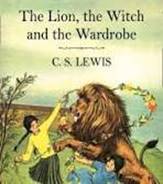
The Lion. The Witch and the Wardrobe: by C.S. Lewis: One day Lucy finds a wardrobe that transports her to Narnia. Once a peaceful realm filled with talking animals, fauns, Giants, and dwarves that is now under a cursed eternal winter by the villainous White Witch. With aid from the majestic lion Aslan, the Lucy, her brothers, and sister lead Narnia into an all-out war as they fight to outwit the Witch and restore peace to the land.
Games that inspire imaginative play
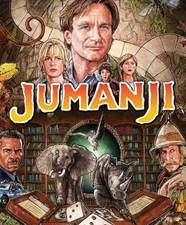
Jumanji Board Game: bring the adventure to life with Jumanji the Board Game. Players and a band of brave adventurers suddenly find themselves deep in a mysterious jungle full of secrets and surprises. Danger lies along your path, threatening to take away your 3 precious Life Tokens. Your goal is to reach Jumanji (the centre) and call out its name.
Films that inspire imaginative play
Jumanji the Film Version: The “Jumanji” films explore several themes related to play and imagination, including:
Adventure and Escapism: The Jumanji games transport characters into thrilling, fantastical worlds, allowing them to escape their everyday lives and embark on extraordinary adventures.
Teamwork and Friendship: Characters must work together to overcome challenges, highlighting the importance of collaboration and support in achieving goals.
Personal Growth: Throughout their journey, characters often face personal fears and insecurities, leading to significant character development and self-discovery.
Confronting Consequences: The game imposes real-life consequences for actions taken within it, emphasizing the idea that play can have serious implications and teaches responsibility.
The Power of Imagination: The films celebrate creativity and the freedom of imagination, showcasing how games can bring people together and inspire them to think outside the box.
These themes intertwine to create a narrative that is both entertaining and meaningful, engaging audiences while encouraging deeper reflection on play and creativity.
Writing a Short Story Based on Jumanji
Writing an imaginative story inspired by playing a game like “Jumanji” by crafting your own adventure:
Step 1: Create Your Setting
Choose a Theme: Decide on the overall theme of your story. It could be jungle adventure, outer space, medieval fantasy, or even a whimsical land.
Describe the Game: Imagine a mysterious board game similar to Jumanji. What does it look like? What are the rules? What unique elements does it have (e.g., magical creatures, traps, helpful items)?
Step 2: Introduce Your Characters
Main Characters: Develop a few main characters who will play the game. They can be friends, siblings, or even strangers who come together for the adventure.
Unique Traits: Give each character distinct personalities, strengths, and weaknesses. This diversity will enrich the story and create dynamics during gameplay.
Step 3: Set the Scene
Discovering the Game: Decide how the characters come across the game. Is it found in an attic, gifted by a mysterious stranger, or discovered on a beach?
Initial Reactions: Describe their feelings about the game. Are they excited, scared, or sceptical? This reaction sets the tone for the adventure.
Step 4: Start Playing
Game Begins: Have the characters start playing the game. Describe the first roll of the dice and what happens next. What unexpected challenges do they face?
Introduce Elements of Gameplay: Include imaginative aspects, such as drawing cards that present quests or encountering fantastical creatures that impact the game.
Step 5: Develop the Adventure
Encounters and Challenges: Create a series of challenges the characters must face. They could solve riddles, navigate obstacles, or battle mythical creatures.
Teamwork and Growth: Emphasize how the characters work together to overcome obstacles, highlighting their growth, learning, and developing friendships along the way.
Step 6: Introduce a Conflict
Rising Tension: Introduce a significant challenge or conflict as the game progresses. Perhaps a powerful antagonist appears or the game itself becomes more dangerous.
Character Development: Show how characters must confront their fears or insecurities to succeed, providing a deeper emotional layer to the story.
Step 7: Climax and Resolution
Climactic Moment: Build up to a thrilling climax where the characters must use everything they’ve learned and the bonds they’ve formed to overcome the final challenge.
Winning the Game: Describe their victory and the rewards they receive. It could be a lesson learned, a magical gift, or simply a return home.
Step 8: Conclusion
Returning to Reality: Explain how the characters return to the real world. Do they reflect on what they experienced during the game? How has it changed them?
Open-Ended Thoughts: Optionally, leave the story open-ended with a hint that the adventure may continue or that there are more mysteries to explore.
All Resources created by englishtutorlessons.com.au Online Tutoring using Zoom for Mainstream English Students in the Victorian Curriculum
This Resource is for Year 12 students studying Yoko Ogawa’s ‘The Memory Police’ in the VCE Victorian Curriculum for Unit 3 AOS1 Reading and Responding to Texts.
Introduction
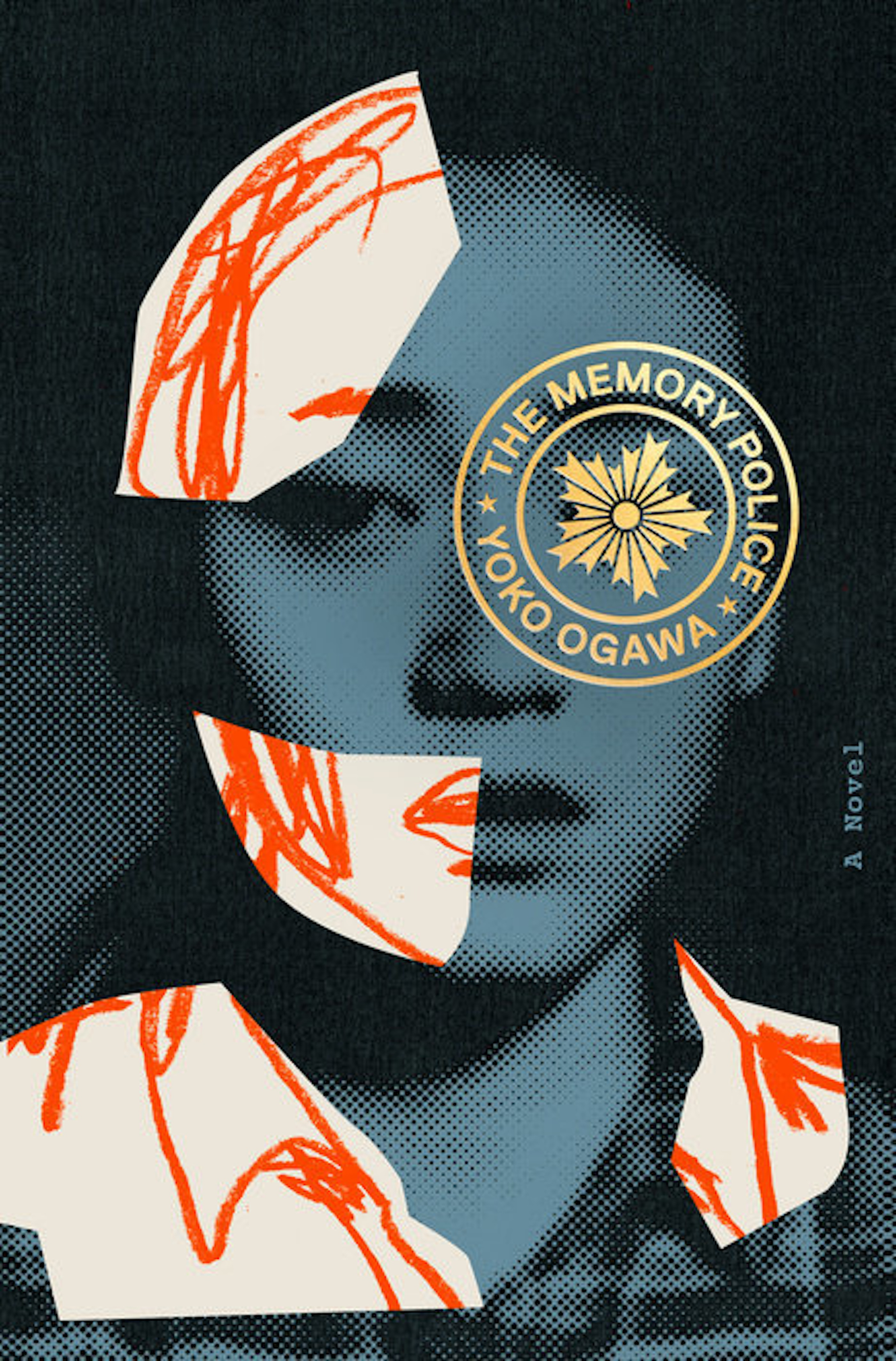
Yoko Ogawa’s ‘The Memory Police’ is a dreamlike exploration of the role of memory in creating and sustaining cultural identities. Set on an unnamed, untethered island, the novel chronicles the work of the omnipresent Memory Police in slowly and deliberately destroying the memories, and eventually the very personhood, of the island’s residents.
It is a dystopian novel with an unnamed young novelist where mundane objects like ribbons, hats, perfume, books and memories are vanishing mysteriously. Then nature inexplicably disappears like roses, birds and more worryingly, people are taken away and body parts stop working. The ruthlessly efficient Memory Police (totalitarian agency) offer no explanation for their actions, and the islanders ask no questions. There is an inevitability to their work, as explained by the unnamed narrator’s flashbacks to her childhood, and the disappearances that have marked every major occasion in her life. The behaviour of the Memory Police is rendered sinister by the fact that readers are not given an insight into the why of their actions; it is all that residents and readers alike can do to infer the logic behind the erosion of life on the island. The apocalyptic atmosphere of the island, the frightened people, the misery of a fragmented community and disappearing traces of a free world are clearly portrayed in the story.
Despite the Memory Police giving the appearance of being able to exert total power, there still remain ways to counter them. The unnamed narrator works methodically with her major ally, known only as ‘the old man’, to provide the only resistance they can imagine – hiding the narrator’s editor, R, who is one of a small number of people who retain the capacity to access their memories, despite the disappearances. The narrator draws inspiration from like-minded souls operating in secret across the island, hiding individuals and, in some cases, whole families from the Memory Police. This hugely risky undertaking is not the only way that the narrator appears to challenge and resist the edicts of the Memory Police. She works with R to finish a novel, even after novels have been disappeared. The three close friends spend much of the text reflecting on the relationship between memory and the soul, but they spend little time explicitly discussing what appears to be one of Yoko Ogawa’s major concerns: the power of art to provide resistance in times of political conservatism.
Genre & Structure of the Text
First published in 1994 in Japan and translated by Stephen Snyder in 2019, the novel is a first-person narrative that addresses issues of loss of individualism under a totalitarian regime as the theme of this allegorical text. Critics have situated Ogawa’s work within a literary canon of speculative, science and dystopian fiction that concerns itself with efforts to rewrite and reshape history to support the efforts of authoritarian rulers. Her work can also be considered magic realism, as the characters are subject to phenomena that challenge a reader’s understanding of the laws of nature. The cumulative effect of these surreal events adds a mystical, fablelike feel to the text, while offering a warning for contemporary audiences about what their world may yet become.
Nestled within this largely chronological structure are a series of flashbacks that allow the reader to develop a sense of what life looked like for the narrator prior to the death of her parents. These flashbacks serve to underscore the significance of the narrator’s developing understanding of the form and function of the Memory Police. As an adult she is able to reimagine her memories of childhood, often under R’s guidance. These flashbacks thus serve a dual purpose: they offer insight into how the narrator came to be, whilst also foreshadowing the seemingly unstoppable march towards the erosion of everything that once made the island a functional society.
The text includes a novel-within-the-novel. In The Memory Police, the narrator’s preoccupation with her own work again serves to foreshadow her understanding of what is happening to the world around her, whilst also affording her an agency that she is denied in her day-to-day life. Her profession, and the reader’s access to her work, also acts as a reflection on the role of the arts and artists in both documenting and reflecting on the major historical and political events of their times.
Perspective of the Text
The Memory Police asks readers to consider the role of power, memory, and history in contemporary society. Ogawa’s world is the logical extension of the work undertaken by conservative governments worldwide, where history is written and rewritten to serve dominant narratives about war, government, and economics. Written at a time when Japanese society was still wrestling with the demons of World War Two, Ogawa’s work renewed conversations around Japan’s role in the war and its atrocities committed by the Japanese empire in its forced colonisation of the Asian mainland and other countries in the Pacific. A common refrain Japan has used as a nation is to sidestep responsibility for wartime acts and to forget in order to be disconnected from the past like Ogawa’s novel. The novel’s explicit discussion of the way that memory and storytelling can be weaponised to target minorities and empower ruling parties contributes to reader understanding of some of the philosophical questions that have arisen in response to many of the most complex moments in recent human history.
The Memory Police and Echoes of Nazi Germany
It is impossible to ignore the echoes of Nazi Germany and the treatment of Jewish people that Ogawa draws on, especially regarding the Memory Police themselves like the SS and the loaded imagery of the hidden enclave the narrator builds in her home to hide R which is similar to ‘The Diary of Anne Frank’. Ogawa took inspiration from the secret hidden annex in Amsterdam where German Jewish girl Anne Frank and her family hid for over 2 years from the Nazi’s during WWII.
In March 1944, Anne wrote in her diary, “The brightest spot of all is that at least I can write down my thoughts and feelings; otherwise, I would be absolutely stifled.” In August of that year, the inhabitants of the annex were captured by the SS. Anne died of typhus in the Bergen-Belsen concentration camp in February 1945, just two months before liberation. She was fifteen years old.
Many elements of Anne Frank’s life in hiding are incorporated into The Memory Police. “Anne’s heart and mind were so rich,” commented Ogawa in a conversation with Motoko Rich. “Her diary proved that people can grow even in such a confined situation. And writing could give people freedom… I wanted to digest Anne’s experience in my own way and then recompose it into my work.”
Chapter Summaries.
Chapter 1 The narrator remembers her mother, who kept her memories. She establishes a central tension of the text: the ever-widening gap between those who remember and those who forget.
Chapter 2 Birds disappear – a particularly painful and personal disappearance for the narrator, whose father was an ornithologist. The Memory Police arrive to search her house.
Chapter 3 The narrator explains her work as a novelist, and her artistic preoccupation with that which ‘had been disappeared’ (p. 15). The reader is introduced to the old man.
Chapter 4 En route to her publisher, the narrator encounters the Memory Police. She meets with R, her editor.
Chapter 5 The narrator works on a novel wherein the protagonist is a typist loses her voice. Professor Inui and his family flee their home after receiving a summons from the Memory Police – just as it had happened to her mother.
Chapter 6 The typist experiences a flashback to her own childhood. The narrator continues to work with R, and she worries for the safety of the Inui family. Roses disappear.
Chapter 7 The narrator visits the old man, and they discuss the impact of the continued disappearances on life on the island.
Chapter 8 The relationship between the typist and her teacher deepens. The narrator shows R around her home, and she discovers that he is able to retain all of his memories, despite the disappearances.
Chapter 9 Winter descends on the island, and the Memory Police strengthen their grip on the community. The narrator discloses R’s secret to the old man, and they begin a plan to hide R in the narrator’s home.
Chapter 10 R agrees to take up residence in the narrator’s house.
Chapter 11 R and the narrator become increasingly intimate. They discuss R’s experience with memory. The narrator works with a replacement editor, and the old man makes contact with R’s wife.
Chapter 12 In the narrator’s novel, the typist and her teacher grow closer as he gives her a private lesson. R seeks work of any kind to ward off feelings of uselessness and depression as his world becomes ever smaller. Two new disappearances sweep the island: ‘first, photographs, and then fruits of all sorts’ (p. 94).
Chapter 13 The old man is taken into custody. R tries to reassure the narrator, and they continue to discuss the nature of memory, and the ways that the outside world is changing without him.
Chapter 14 The old man is released from custody, revealing that he was suspected of being involved in a smuggling operation. R’s baby is born, and he continues to adapt to life in hiding.
Chapter 15 Tension increases in the narrator’s novel, as the teacher renders his student voiceless. The Memory Police now focus on eliminating calendars; the worst effect of this particular disappearance is the trapping of residents on the island in a perpetual winter.
Chapter 16 R and the narrator organise a celebration for the old man’s birthday. R gifts the old man an orugōru (pp. 145-146), a long disappeared traditional music box. The celebration is cut short by a visit from the Memory Police.
Chapter 17 The Memory Police search the narrator’s home. She fears that they are looking for R, but it becomes clear that their visit was motivated by a raid on her neighbours’ safe room. R comforts the narrator after the raid.
Chapter 18 The typist feels a growing disconnect between her soul and her body. The narrator’s life contracts further as she tries to limit actions that might result in drawing the attention of the Memory Police to her and to her home. She furtively listens to R bathe, aware of the uneasy intimacy between them.
Chapter 19 The narrator is asked for help by an old woman, who appears to be seeking refuge from the Memory Police. Novels are the next significant item to be disappeared, which sharpens R’s sense of urgency to help restore some of the narrator’s memories. The narrator adopts her neighbours’ abandoned dog, Don.
Chapter 20 After the disappearing of novels, in order to earn a living, the narrator takes a job as a typist. R continues to try to activate the narrator’s memories. This effort feels futile to the narrator and the old man. The narrator realises that she is in love with R. An earthquake strikes.
Chapter 21 The narrator and the old man narrowly escape the earthquake and the resultant tsunami. They find R safe, but the narrator’s home, including the safe room is badly damaged.
Chapter 22 The old man comes to live with the narrator. They discover that the narrator’s mother had found a way to use her art to retain disappeared items by hiding these inside her sculptures. R furthers his efforts to awaken the narrator’s soul.
Chapter 23 The narrator and the old man venture to her mother’s cabin in search of additional disappeared items. On their way home, they narrowly escape being searched by the Memory Police.
Chapter 24 The old man contemplates the changes in his life. His imminent death is foreshadowed as he begins to struggle physically with everyday tasks.
Chapter 25 The narrator recovers the old man’s body. After his funeral, she feels increasingly lonely and disconnected. A new disappearance signals a new phase for the island’s residents, as they find themselves without the use of their left legs.
Chapter 26 The narrator re-establishes contact with R’s wife. Another body part disappears – the right arm. The narrator becomes increasingly reconciled to her own inevitable disappearance; however, R maintains that he will be able to shield her from this fate.
Chapter 27 This chapter is an entire extract from the narrator’s novel. It has been written at great effort under R’s instruction. It chronicles the last minutes of the typist’s life as she is completely absorbed into her teacher’s room.
Chapter 28 The narrator details the disappearance of the island’s inhabitants. She encourages R to make his way back in the world, leaving her alone, disembodied and without a voice, in what was once his secret room.
Characters
Unnamed narrator Ogawa’s narrator is the reader’s set of eyes on the island. She is unnamed, and the reader is not provided with much detail about her physical attributes. Despite this lack of conventional information, the reader’s most intimate relationship is with the narrator, who tells the story in the first person. The narrator is a novelist, compelled to tell the story of things that disappear, we see the world through her eyes, but we are intimately aware that she is slowly, but forcibly, losing her memory.
Narrator’s mother The narrator’s mother was a sculptor who worked skilfully before her untimely death, to retain her memories. The text opens with the narrator reminiscing about her mother’s attempts to preserve memories in her daughter, and in her art. Her death, whilst in the custody of the Memory Police, acts as a warning sign for those closest to the narrator about the power of these law enforcers. The narrator’s mother acts a guiding force for the narrator, her drive to preserve that which was disappeared seemingly acting as a formative experience for the narrator.
Narrator’s father The narrator’s father was an ornithologist. He, like the narrator, lost his memories as intended by the Memory Police. Ogawa’s references to his work provide a rhythm within the novel; every time that the narrator encounters physical reminders of her father and his life’s endeavours, she reconnects pieces of her life, and builds on the memories that she is able to awaken with R’s assistance.
The old man The old man is a constant in the narrator’s life. The two are connected through the nurse who raised the narrator – he was the nurse’s husband. The old man provides a kind of practical support that seems to tether both the narrator and the narrative itself to something concrete. Every time that the narrator appears to be losing her sense of confidence and her will, he responds with a kind pragmatism.
R R is one of the few people in the narrator’s life that she trusts. Their desires are inextricably connected, as they work painstakingly together on appraising and editing each word and line of her novels. By the very nature of their shared work, the relationship between the narrator and her editor is close, and yet it still seems surprising when R declares his secret to her, in her basement. He appears to be emboldened by the revelation about the narrator’s mother’s determination to remember and to record reality, and their relationship quickly deepens.
Professor Inui and family Professor Inui and his family connect the narrator to her mother. Helping them as they escape is the narrator’s first effort to actively resist the Memory Police.
Don The narrator’s anxiety levels rise when her neighbours are taken away by the Memory Police. Unexpectedly but also unsurprisingly, the narrator takes their dog, Don, into her home. The dog, too, acts as a steadying presence in the narrator’s life, giving her another tether to the visceral, mortal realm. Don also acts to triangulate the reader’s experience of Ogawa’s world, revealing how the wishes of the Memory Police organise life for all living beings on the island.
The Memory Police The Memory Police are rendered as a brutal, cruel, and professional unit. They operate as a group, giving civilians on the island little opportunity to negotiate their treatment. They generate fear, working from both their reputation and their highly visible actions. They act as enforcers, but readers do not know for whom – the Memory Police are the only face of authority that we see. This works to enhance the reader’s understanding of their menacing quality, but also raises questions about the rationale behind this seemingly totalitarian power.
The typist in the novel-within-a-novel The narrator’s construction of the typist character provides important insight into her own daily concerns. The typist is rendered mute early in the novel, but ‘was continually struggling to speak’ (p. 55). She initially does not want to accept her fate, but feels ‘increasingly oppressed, as though [she] were being backed into the corner by a powerful force’ (p. 91).
The teacher in the novel-within-a-novel The typist’s teacher is a domineering figure, who manipulates and entraps his students. He acts as an enforcer, but positions himself as a protector.
Neighbours There is a small cast of neighbours and townspeople operating in the background of the narrator’s life. These minor characters act to reinforce the degree of risk that the narrator and the old man are undertaking. They are subject to forces that the narrator will have to encounter.
THEMES
memory
connection
craft of writing
art
alienation
totalitarian police state
loss
isolation
identity
surveillance
storytelling
creation vs destruction
tyranny
fate vs free will
longevity
defiance
censorship
resistance
forgetting & disconnection from the past & history
power
cultural identities
SYMBOLS
hearts
snow
hands
food
memories
birds
disappearances
narrator’s novel
typist in the novel
Memory Police
book burning
the protagonist narrator
roses & rose garden
the weather
All Resources created by englishtutorlessons.com.au Online Tutoring using Zoom for Mainstream English Students in the Victorian Curriculum