
The Crucible by Arthur Miller Themes and Message of Author

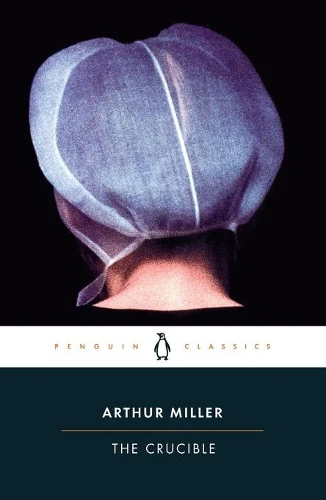
This resource is for Mainstream English students studying the play ‘The Crucible’ by Arthur Miller in the Victorian Curriculum.

  • Vengeful Community & Suffering

Salem contributes to their own destruction through a toxic combination of fear, intolerance, and a desire to find scapegoats.  Message of Miller = The text argues that the greatest threat to a community can come from within when people reject rationality and become victims of their own blind prejudices.  Widespread belief in the active malevolence of the Devil underpins the mayhem that is unleased in Salem.  The desire to lay blame is strong and the poor and marginalised are obvious scapegoats in this God-fearing community.  Driven by jealousy Abigail manipulates the town’s fear and superstition in her personal vendetta against Elizabeth Proctor.  The erroneous assumption that the Devil is loose in Salem is exploited by unscrupulous individuals whose wickedness and greed are all too recognisably human.

  • Judgement and persecution (closely connected to guilt)

Message of Miller = The text explores the relationship between judgement, punishment, and forgiveness and how the judgement of others impacts upon individual’s reputations and sense of self-worth which is punishment in itself.  At the end of Act 4, John Proctor arrives at an impossible impasse—save himself through false testimony and damn his friends, or be executed alongside them. He seeks Elizabeth’s counsel and blessing, but she attests ‘I cannot judge you …’ (p. 120). The burden of the moral decision rests with John, just as he must bear the consequences of his final actions.

  • Guilt

Message of Miller = He is interested in the way in which good men can be persuaded to doubt themselves and how damaging the effects of guilt can be and the corrosive effects of guilt.  John Proctor judge himself harshly and has a sense of unworthiness makes him complicit in the retribution demanded of him.  Hale blames himself for his role in the witch hunt and his crisis of conscious pitches him against the court of which he was a crucial part.  Danforth is so convinced of Salem’s guilt that even the news of Abigail’s defection fails to weaken his resolve.

  • Hysteria

Message of Miller = The text argues that the greatest threat to a community can come from within.  The social compact, including respect, goodwill and shared history, is irreparably damaged when people reject rationality and become victims of their own blind prejudices and hysteria. There are many examples of hysteria within The Crucible. Wild accusations, violence and absurdist behaviour erupts in an ever-growing climate of fear. Modern readers recognise the power of suggestion and mob mentality at work in the girls’ frenzied behaviour in the courtroom, their ability to turn cold, and to faint. However, this is interpreted by the Judges as weighty evidence in support of the notion that the devil is alive in Salem. Act 3 provides one of the most dramatic examples, perhaps because the tension and fear has become so palpable. Mary Warren has presented her deposition and the news of John’s lechery is brought to light. There is a real chance that both Abigail and John will ‘slide together’ into the moral pit of their own doing, the court proceedings exposed as farce.

  • Love & Forgiveness

Message of Miller = The Crucible demonstrates how closely love is allied with forgiveness.  The Proctor’s love each other deeply but Proctor’s adultery has damaged the couple’s marriage.  Act 2 reveals how strained relations between them have become as Elizabeth tells herself that she has forgiven her husband but still an ‘everlasting funeral’ (p.55) marches around her heart.  Arthur Miller explores the tortured soul of John Proctor.  His immense guilt and attempts to earn back the trust and forgiveness of Elizabeth form an essential component of his tragic state, and without these traits the audience would not feel so much for him by the end of the final Act 4. For a long time, it is clear that Elizabeth cannot forgive John. He becomes enraged after her suspicious questioning, remarking that ‘an everlasting funeral marches round your heart.’ (p. 55). The imagery of her solemn and dark heart reveals that John has injured his wife deeply and that forgiveness is not easily given. Through the adversity they face, each gains a new perspective and, in their final conversation, both seek to repair their broken bond and ask forgiveness.  Therefore, love is presented as a powerful force for good, challenging the bigotry and hatred that threatens to overwhelm events.

  • Revenge and shifting power

Message of Miller = The text reveals a shift within the power structures that have historically held strong in Salem.  Those who held absolute power at the start of the play now find themselves doubted by the community. Hale still maintains his role as an advisor, but now he is a ‘broken minister’ and asks fellow Christians to belie themselves. Hale urges Danforth to postpone the execution warning of rebellion in Andover. Judge Danforth’s reluctance to admit wrongdoing only succeeds to further unloosen his final grip on power. The society of Salem is fated for annihilation at the hands of vengeance.

  • Abuse of Power

Message of Miller = Power and the abuse of it is in the text as the patriarchal society meant men-controlled society and could abuse their wives with impunity.  However, in Salem the concept of female empowerment was alien, yet Abigail is instrumental in shaping the crisis that plays out in the town.  The power she exercises in malevolent and self-interested.  Her intimidation of the girls demonstrates the force of her personality and the strange hold she develops over them.  The witch-hunt gives her status and influence and even the judges believe her every accusation no matter how far-fetched.  Danforth and Hathorne represent the highest power in the province, and his authority is corrupted on a grand scale rigid in believes and self-serving in his priorities, he rules by fear and embodies the face of the public fear unleashed in Salem.  In a perverse rationalisation, he refuses to pardon the condemned prisoners on the basis that 12 have already been hanged for the same crime.  His own reputation and that of the government he represents, is more important that the lives of the innocent people he convicts.

  • Outcasts, Hypocrisy, Memories & the Past

Message of Miller = The text focus is on the plight of the outcast and the way they are made scapegoats.  Tituba is an outcast in Salem, as a woman from Barbados, and as a slave. She is the property of Reverend Parris and her background sets her apart from the Puritan faith. She is powerless and, unsurprisingly, is the first to be accused as a witch. Tituba faces the impossible decision to falsely confess, or be hanged. She acts on survival instinct.  Tituba’s cooperation with Reverend Hale not only raises her low social status, it enables her to finally express her feelings towards her master, ‘mean man’ Reverend Parris. Tituba shocks the congregation by saying the Devil, ‘he bid me rise out of my bed and cut your throat’ (p. 48), revealing her repressed anger and feelings of helplessness.

  • Secrets, Hypocrisy & Conformity

In the town of Salem, we see a pretence born from an intense social pressure to conform, coupled with the fear of others’ retribution. Proctor’s words “common vengeance writes the law” reveal that the townsfolk have always harboured feelings of resentment towards one another. They have also always known each other’s business, yet stood mute. This is illustrated when Mary Warren bashfully admits to John that she knew of his affair— ‘I have known it sir’ (p. 74). Message of Miller = The witch trials provide an outlet for people to unburden themselves of the repressed feelings that accompany long-held grudges. Even those with little power, such as children, could suddenly assert their power, metaphorically possessing the keys to heaven and wreaking cruel vengeance on anyone who had wronged them in the past.

  • Truth, Deception, Illusion, Hypocrisy, Memories, the Past is too full of Pain

Message of Miller = In The Crucible, there is a disconnect between what people are ready to believe about themselves and the world around them, and what is actually true.  Truth is an expendable commodity in this community.  Abigail’s fundamental contempt for Salem’s hypocrisy is one of the factors that enables her to rationalise her outrageous lies.  In setting her terrifying fraud in motion, ignorance and the prevailing religious ethos play into her hands.

Sarah Good is an outcast in the community and is one of the first to be used as a scapegoat during the first frenzied accusations. This final remark from Sarah Good is quite beautiful, evoking imagery of freedom and transformation in death. We see the same camaraderie between Sarah Good and Tituba in this scene. The women within The Crucible also avoid the topic of their impending fate. Tituba says ‘we goin to Barbados soon’ and there ‘him be pleasure man’, ‘singin’ and dancin’ (p. 108). The two women, bound by their shared persecution and exile, console themselves with the image of flying southerly towards a brighter future.

  • Suffering has an impact on mental state

Ann Putnam suffers the fate of mourning the loss of her babies in the public arena of Salem. She is bitterly envious of women, such as Rebecca Nurse, who have been blessed with fruitful families. This jealousy turns to rage when Rebecca Nurse chastises her about her immoral behaviour. Message of Miller = The character of Ann Putnam once again highlights the power of grief. Even the fear of God’s wrath is not enough to stop her from sending her only daughter Ruth to conjure the spirits of her lost babes.

  • Acceptance and forgiveness

Message of Miller = John Proctor speaks of the exact compassion and selflessness.  Proctor has the option to save himself, yet he considers the impact of this decision upon other people. He recognises that tragedy does indeed include everyone, and he is not willing to ‘blacken’ the names of his friends and set an example of deceit to his sons. John Proctor is a respected pillar within his community and his and his friends’ death represents a critical moment in terms of dismantling an archaic system of judgement.

  • Vengeance & Motif of Fire is a Powerful Symbol

The motif of fire is a powerful symbol employed by Miller. John Proctor tells Danforth that they will ‘burn together’ as payment for their cowardice. John accuses Danforth of being too afraid to stand against evil, like the brave Malcolm and Macduff were able to do. One of Miller’s central messages = is that we must oppose injustice in the world and work to keep powerful institutions accountable. In fact, the final scene where Proctor, Martha Corey and Rebecca Nurse are executed occurs at the beginning of a new day. Elizabeth’s final comment ‘he have his goodness now’ (p.126) is uttered as ‘the sun is pouring upon her face’, symbolic of a new dawn where goodness has prevailed.

All Resources created by englishtutorlessons.com.au Online Tutoring using Zoom for Mainstream English Students in the Victorian VCE Curriculum

Fear and Mass Hysteria in ‘The Crucible’ and Arthur Miller’s Views on the Play

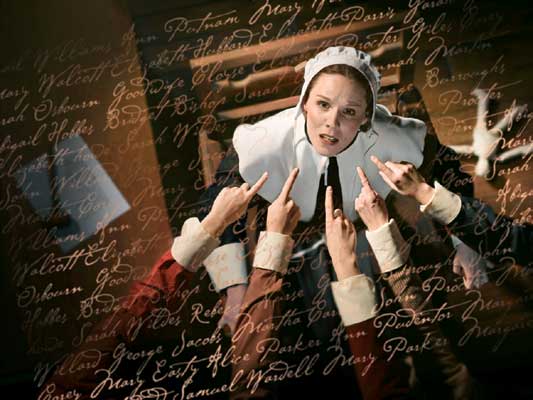
Image result for Images of The Crucible

This resource is for Mainstream English students studying the play ‘The Crucible’ in the Victorian Curriculum.

Theme of Fear & Mass Hysteria

An important theme is that of fear and mass hysteria which leads to extreme acts in the play as the human inclination to ascribe blame for pain and suffering to others and then destroy the supposedly guilty party surfaces. In Salem the witch trials are a clear example of mass hysteria, with residents engulfed in a frenzy of accusations.

Context of Fear & Mass Hysteria in Salem

In ‘The Crucible’  Salem is a strict religious community where superstition is rife and scientific explanations minimal. In the puritanical colony of Massachusetts, reading books other than the Bible was forbidden, hence any scientific thinking was unlikely.

Mass hysteria and mob violence can infect the collective consciousness when fear, ignorance and isolation are not countered with universal education.  In Salem, personal vengeance, paranoia and fear, rather than grief and illness, is what escalates the social panic.

Miller writes that because ‘it is impossible for most men to conceive of a morality without sin’ Salem, and analogously his own 1950’s zeitgeist, was ‘gripped between two diametrically opposed absolutes.’ Such binary thinking and absolutism is another catalyst for mass panic or mob violence.

The society in Salem is spurred on to collective hysteria by a dualistic belief that things they don’t understand or can’t explain must be ‘evil’. Satan, when referred to in the Bible, is thought of as the evil one, the tempter, the wicked one. To the people of Salem, the Devil is the adversary of God and an invisible threat. But Miller’s audience sees that it is the villagers’ own inner demons that bubble to the surface and wreak havoc on the town, combined with their irrationality.

Martha Corey has done nothing particularly adversarial, she merely reads books that are not approved of by her neighbours, but she finds herself charged as a witch.

The end of Act One and Act Three of the play show just how infectious a group mentality can be. Close study of Miller’s acting directions in these two sections of the play reveals the range of causes for such a frenzy; whether that be characters offloading their own shame and resentment, or being so fearful of punishment that they will say anything to avoid it.

Briefly What is Causing Fear in The Crucible?

  • In ‘The Crucible’ Abigail and the group of girls spark fear in the town after being accused of engaging in sacrilegious activities while playing in the forest
  • The people in Salem are convinced that the Devil has arrived and must be driven from his conspirators
  • What begins with a handful of girls dancing in the forest manifests within eight days into a society whose feverish desire to rid itself of an unseen evil allows the suspending of human decency
  • Unfortunately fear leads to a rapidly growing series of accusations against various members of the community
  • Innocent people are labelled witches and forced to confess or suffer death

What does Miller Believe about the Spread of Fear?

  • Miller presents the witch hunt then as a consequence of the hysterical fear that grips citizens when faced with social and religious upheaval
  • Miller seeks not only to explore the evolution of mass hysteria but additionally to delve into what causes individuals to abandon personal loyalties in such times
  • Even justice and reason are sacrificed and religion, which should provide a moral and ethical blueprint, is used to fuel the emerging fear and hysteria
  • The theocratic society in Salem and the power of the state is under threat as individuals begin to question entrenched conservative, Puritan religious values
  • Miller explains this as a paradox as individuals seek greater freedom they become a threat to the religious and political status quo

Arthur Miller was interviewed about why he wrote ‘The Crucible’and his thoughts about fear, hysteria and the threat of the Devil in Salem.  See Arthur Miller’s views:

Fear Motivates People to Behave Unscrupulously in The Crucible

As Miller comments (on page 17 of the play in his notes before Act One), that “Old scores could be settled on a plane of heavenly combat between Lucifer and the Lord”.

  • Personal fears instigate some characters to cry witch
  • Reverend Parris fears losing his job provokes him to cry witch and if Abigail is exposed as the fraud she is he will be punished for supporting an illegitimate court procedure
  • Parris also fears that the rebellion in Andover about the hangings will occur similarly in Salem
  • Abigail uses fear of consorting with the Devil in her motives of vengeance against Elizabeth Proctor to accuse her of witchcraft
  • The group of girls do what Abigail says for fear of getting caught so deflecting blame away from themselves is their only option
  • The Putnams use fear and the hysteria of the accusations for self interest in acquiring land from those about to hang
  • Deputy Governor Danforth uses the fear as a reason for his agenda to protect his reputation, the court and the theocracy it serves

Mob Mentality, Punitive Justice & Binary Thinking

‘The Crucible’ is a legal drama. An entire scene takes place in the Salem meeting house which is now Judge Danforth’s court, but every scene in the play is concerned with the process of arriving at a legal judgement. Because the play is an analogy for Senator McCarthy’s HUAC hearings, the audience is positioned to regard the justice system of Salem as being similarly flawed and equally ideologically motivated. Justice is not delivered by this legal system.

Indeed, the audience is led to the conclusion that the most dangerous person in the play is Judge Danforth. His lack of mercy, his willingness to believe evidence that has no proof, and his preoccupation with his own reputation, all serve to remind Miller’s audience that justice denied anywhere diminishes justice everywhere.

In ‘The Crucible’, Elizabeth humbly tells her husband that she cannot judge him; ‘The magistrate sits in your heart that judges you. I never thought you but a good man, John’ (p. 55). Elizabeth believes in the supremacy of the individual’s conscience, of his own accountability for decisions and actions. Miller shows that only when John Proctor explores the depths of his own guilt can he begin the redemptive process.

At the end of the play he dies on his own terms and sees ‘some shred of goodness’ in his decision.  Proctor does not fear death because he has made his peace with himself and is free from self-admonition. His death is a great injustice, but the courage and moral conviction he shows is his legacy and his epitaph.

This Resources is created by englishtutorlessons with Online Tutoring of English using Zoom

ORAL & POV CRITERIA CHECKLIST FOR YEARS 11 & 12 MAINSTREAM ENGLISH

This Resource is for students studying Mainstream English in the Victorian VCE Curriculum. The criteria is a check list for students about to undergo an Oral Presentation or write a Point of View (POV) Essay.

  1. KNOW THE ISSUE’S CONTEXT
    • Have a clear understanding of the BIG ISSUE
    • Why do you feel strongly about this particular issue?
    • Select carefully your focus from the big issue
    • Your Main Contention should be clear and easy to understand
    • Do not have an ambiguous contention
  2. THE AUDIENCE
    • Decide who is your intended audience
    • Make sure your target audience is appropriate for the issue
    • The target audience will be connected to the public forum you choose to write your article in
  3. WHAT IS YOUR PURPOSE?
    • What exactly do you want to achieve through your arguments?
    • What are your aims for positioning your audience?
    • Are you wanting to:
      1. Shock
      2. As a Call to Action
      3. To effect change
      4. To ridicule
      5. To demonise someone
      6. To attack
  4. WHAT IS YOUR FORM OF PRESENTATION / PUBLIC FORUM?
    • A speech
    • Opinion piece for a newspaper / online media such as ABC News Online or The Conversation or Crikey or Mamamia
    • Letter to the Editor of a newspaper
    • A debate in Parliament
    • Guest panellist on a current affairs program
  5. CONSTRUCT YOUR ARGUMENTS
    • Clearly state your Main Contention
    • List your arguments with evidence to support your reasoning
    • Consider a Rebuttal & your Counter Arguments
  6. USE PERSUASIVE LANGUAGE TECHNIQUES
    • Opinions need emotive language to persuade
    • Use Idioms as figurative language
    • Consider your tone – are you forceful enough
    • Don’t ‘tell’ with boring information be able to ‘show’ with descriptive language
  7. STRUCTURE OF POV/ORAL
    • Introduction / Hook / Main Contention
    • Body Paragraphs – at least 3 + a Rebuttal
    • Use single sentences or rhetorical questions in between body paragraphs to change structure and make it more interesting to read
    • Conclusion include Call to Action

All Resources created by englishtutorlessons.com.au Online Tutoring using Zoom for Mainstream English Students in the Victorian Curriculum

VCE English Tutor for Maths and Science Students who find English Difficult

Are you a Maths and Science loving student for whom English is a weak point? 

You excel at Foundation Maths, General Maths, Further Maths, Mathematical Methods and Specialist Maths. You excel at Biology, Physics and Chemistry but English might be the one crucial core subject that could bring your ATAR down.

I CAN HELP YOU.

I can explain the correct format for essays and provide you with notes on all texts and full scaffolding of essay prompts to help you achieve that high SAC mark and help you with revision for the Exam.

English does not have to be difficult 

Using a tutor like me with years of teaching experience can help.  With a strong grasp of English you can enhance your academic performance across many other subjects and this knowledge will transfer into your further studies and future career paths.

Are you stressed about writing essays for Unit 1 & 2 Year 11 and Unit 3 & 4 Year 12? 

My knowledge of the texts for years 11 & 12 is comprehensive.  This knowledge will help you to explore the depth of skills required for Units 1 & 2 for Year 11 and Units 3 & 4 for Year 12 with Crafting Texts,  Creating Texts Frameworks and Reading & Responding to Texts in 2026.

These are the Year 12 Texts I am teaching in 2026:

Born a CrimeNon-Fiction Novel by Trevor Noah
RegenerationNovel by Pat Barker
My Brilliant CareerNovel by Miles Franklin
Chronicle of a Death ForetoldNovel by Gabriel Garcia Marquez
We Have Always Lived in the CastleNovel by Shirley Jackson
The Memory PoliceNovel by Yoko Ogawa
Bad Dreams and Other StoriesShort Stories by Tessa Hadley
The Complete StoriesShort Stories by David Malouf
Twelfth NightPlay by Shakespeare
Oedipus the KingPlay by Sophocles
Selected PoemsPoems by Langston Hughes
Sunset BoulevardFilm by Billy Wilder

Do you need help in Unit 2 in Year 11 or Unit 4 in Year 12 for Analysing Argument?

I will de-mystify Language Analysis for you and give you the confidence to answer both components of Audio/Visual Analysing Argument & Article Analysis. I will help you research topics for Presenting a Point of View with an Oral Presentation.

My online tutoring service provides the one-on-one attention that may be missing from school.  

I have a proven track record of helping students to achieve high ATAR Scores in English. I am proud of the students I taught for 2025 who achieved a perfect 50 ATAR for English.

Join me on your learning adventure to achieve A+ in English.

Contact Me Icons Images – Browse 2,326 Stock Photos, Vectors, and Video ...

Don’t Leave it to Late to Contact Me to discuss a tailor-made program just for you:

  1. Via mobile phone = 0418 440 277
  2. Via this site = by leaving me a comment on the contact form below
  3. Via email = margaretnmorris@gmail.com

[contact_form]

English VCE Tutor Melbourne

My Melbourne based online English tutoring service provides the one-on-one attention that may be missing from school. 

Based in Berwick in Melbourne Victoria, I can reach students all across Victoria via online classes using ZOOM.

I am a Year 11 and Year 12 VCE specialist with experience teaching the VCE Victorian Curriculum for Mainstream English.

Proven Track Record for ATAR Results

I have a proven track record of helping students to achieve high ATAR Scores in English.

Congratulations to the students I tutored with perfect 50 ATARs in English for 2025 VCE. I am so proud of you.

Are you stressed about writing essays for Units 1-2 and 3 Creating Texts & Unit 4 Reading & Responding to Texts? 

My knowledge of the texts for years 11 and 12 is comprehensive.  This knowledge will help you to explore the depth of skills required for Units 1-2 & 3 Creating Texts Frameworks and Unit 4 Reading & Responding to Texts.

The Year 12 Texts I am teaching for 2026 are:

Born a CrimeNon-Fiction Novel by Trevor Noah
RegenerationNovel by Pat Barker
My Brilliant CareerNovel by Miles Franklin
Chronicle of a Death ForetoldNovel by Gabriel Garcia Marquez
We Have Always Lived in the CastleNovel by Shirley Jackson
The Memory PoliceNovel by Yoko Ogawa
Bad Dreams and Other StoriesShort Stories by Tessa Hadley
The Complete StoriesShort Stories by David Malouf
Twelfth NightPlay by Shakespeare
Oedipus the KingPlay by Sophocles
Selected PoemsPoems by Langston Hughes
Sunset BoulevardFilm by Billy Wilder

If you are concerned about writing Creating Texts in Unit 3 AOS2 for Year 12, I have taught all the Frameworks:

Protest / Play / Personal Journeys OR Country

I can help you develop your creative writing to address your specific framework for the SAC and Exam.

Join me on your learning adventure to achieve A+ in English.

Contact me to discuss a tailor-made program just for you:

  1. Via mobile phone = 0418 440 277
  2. Via email = margaretnmorris@gmail.com

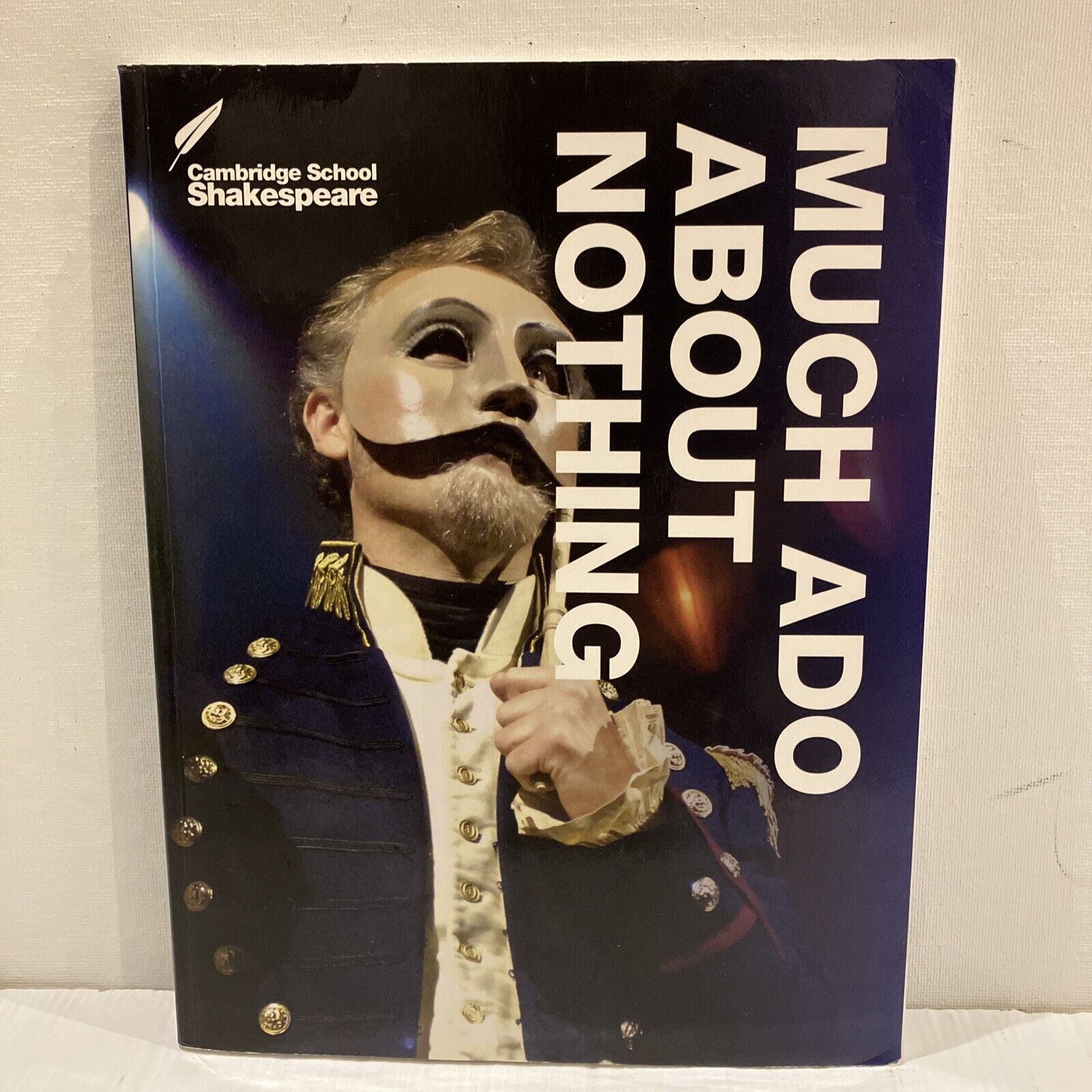
Much Ado About Nothing by Shakespeare a Brief Analysis

This Resource is for students studying ‘Much Ado About Nothing’ play by William Shakespeare in Analytical Text Response, in the Victorian VCE Mainstream English Curriculum

Human Emotion and Psychology

Usually classified as a romantic comedy, William Shakespeare’s Much Ado About Nothing is both a love story and a ‘much darker and stranger play’ (Dobson 2011/The Guardian).  The play is a study in human behaviour, of psychological power and abuse; it is a critique of social structures; it hides some of the ugliness of human behaviour behind a veil of light comedy, ambiguity and fast-paced wit.

In the process of all of this, the plot of Much Ado About Nothing also just happens to include two budding romances built on the tenuous grounds of perception and deception.  In exploring human emotion and psychology, Shakespeare draws ambiguous connections between love and loathing, desire and distrust, union and destruction, honesty and deception, trust and doubt, malice and forgiveness.  Shakespeare’s pairing of antithetical themes in Much Ado About Nothing highlights how people can be inconsistent in their approach to relationships and romantic unions, deceiving themselves as well as others.  

The Fatal Flaw

Much Ado About Nothing also explores desire, and people’s need for reciprocal love; how we respond when we believe we have attained love, and how we rail at our (sometimes perceived) rejection.  Shakespeare’s contrast of the relationship between Hero and Claudio with that of Beatrice and Benedick suggests that genuine affection only comes from seeing your partner as a whole person: flawed, the product of their environment or context, and with strengths and charms.  Many of Shakespeare’s characters have this ‘fatal flaw’, a defect in their personality, that taken to extreme, can lead to their downfall.  Each character has their own ‘fatal flaw’ that shines light on some of the darker characteristics of humanity.

Marriage According to Beatrice & Benedick

Beatrice and Benedick do not simply revile marriage for the sake of being contrarians; such a justification would be disappointing in otherwise complex and interesting characters.  They are older and they lack the social status of other characters such as Hero and Claudio; they see the absence of meaning in life and therefore in marriage, yet they enjoy the cut and thrust of their intelligent witticisms.  They understand that marriage does not augment their enjoyment of life or contribute to some greater existential meaning. 

That Shakespeare’s characters, at times unknowingly, make much ado about nothing perhaps reflects the playwright’s view that life is ultimately pointless.  Benedick’s conclusive justification for requiting Beatrice’s alleged love is that ‘the world must be peopled’ (II.iii.p.61), and the song of Balthasar ‘Sigh no more, ladies, sigh no more’ exhorts the ladies merely to: … be you blithe and bonny, Converting all your sounds of woe, Into hey nonny nonny (II.iii.p.53).  The song addresses the main manipulators of trickery and deceit, the men.

Perspective of the Text – Romantic or Cynic?

Beatrice & Benedick

There are two broad ways of experiencing Much Ado About Nothing: as the romantic and as the cynic [sceptic].  One need not wholly subscribe to only one or the other.  Looking at the 2 relationships, it is easy to view Hero and Claudio in a cynical manner and for Beatrice and Benedick, a more romantic view.  Beatrice and Benedick’s love is so pure because it comes without the baggage of inheritance and class, and the false notions of romance which conceal obligation.  Their cutting remarks have stripped each other and they have nothing left to hide.  Beatrice gives as good as she gets when it comes to the sort of male banter Benedick engages in.  Here is a couple who will argue, they will not grind their lives away under the deceptively heavy shade of pleasantries and a false concern for the other’s feelings which in truth is used simply to avoid conflict; Benedick and Beatrice need not fear conflict, they thrive off it.

Claudio & Hero

Interpretations of the values and attitudes surrounding the relationship between Claudio and Hero are much more ambiguous.  Given that ‘Shakespeare takes shape through our interpretations’, how do we interpret the easy susceptibility of the Count, the Prince and the Governor to the malignant trickery of the Prince’s ‘bastard brother’ Don John?  One interpretation is that Claudio’s behaviour is unforgivably unacceptable.  (For a contemporary #MeToo audience, so he gets off far too lightly).  Another is that it is patriarchal social values that are at fault, and another that the fault lies with codes of masculinity in which male bonding is cemented with misogynist jokes and banter.

Or perhaps the shocking metaphorical ‘death’ of Hero is generated by the ‘comedy’ of mistaken perception, and we forgive the gentlemen their bad behaviour because the near-tragedy is a plot device, a structural necessity of the romantic comedy genre.  However, no reading of the play can excuse the brutality of [Claudio’s] treatment of Hero, but the conventional comic action does demand that he be forgiven.

Title of the Play

The title of the play is open to various interpretations.  The most straightforward explanation; that much ado is made over allegations that hold nothing of the truth, suggests the play is a comment on people’s rash judgment and disproportionate responses, particularly to gossip.  This relates to the interpretation which replaces ‘Nothing’ in the title with ‘Noting’, a near homophone and colloquialism for ‘noticing’ or ‘gossip’, which connects the title to both pairs of lovers: Beatrice and Benedick base their conscious acceptance of their feelings on overheard misinformation, and Claudio is twice deceived by the snake-like whisperings of Don John, comments that the play is ‘most appositely titled’ because of its reference to the ‘nothingness’ of life.

Style of the Play – Comedy or Tragedy?

While all stories, even comedic ones, need some kind of complication and climax, Shakespeare certainly puts the drama in dramatic structure.  He heightens the climax of Much Ado About Nothing to the point where it could have toppled into tragedy.  This sets the play apart in the world of comedy, as the stakes are so high and dire circumstance so nearly realised; though it begins and ends with merry wit, there are dark issues explored as the life-threatening action of the play takes place.

Analytical Text Prompts

  1. What role do deceptions play in Much Ado About Nothing?
  2. How does Shakespeare present love and marriage in the play?
  3. In Act 2, Scene 1 (p.43) “Come, you shake the head”.  How does Shakespeare present Don Pedro in this extract and elsewhere in the play?
  4. How does a modern context affect our interpretation of the Hero-Claudio relationship?
  5. “I will assume thy part in some disguise/ And tell fair Hero I am Claudio” (i.i.p.17 Don Pedro).  We accept the deceptions in the play because mostly the characters’ intentions are benign.  To what extent do you agree?
  6. How does Shakespeare use comedy in Much Ado About Nothing to explore serious themes and values?
  7. “… yet sinned I not/ But in mistaking.”  Forgiveness is too freely given in Much Ado About Nothing.  Discuss.
  8. Much Ado About Nothing is a joyful play which celebrates human relationships.  Do you agree?
  9. The women in Much Ado About Nothing are the true holders of power.  Discuss.
  10. Shakespeare’s characters hide their insecurities behind innuendo and metaphor.  Discuss with reference to at least three characters in Much Ado About Nothing.
  11. Don John is the only example of authenticity in Much Ado About Nothing; all the other characters wear masks of some sort, at some time in the play.  Do you agree?
  12. “I speak not like a dotard, nor a fool/ As under privilege of age to brag” (v.i.p.133 Leonato).  It is their privilege that makes the behaviour of characters in Much Ado About Nothing all the more reprehensible.  Discuss.
  13. Much Ado About Nothing is supposedly a comedy but the play contains many darker, more tragic elements than a typical comedy.  In what ways is this play tragic?
  14. A central theme in the play is trickery or deceit, whether for good or evil purposes.  How does deceit function in the world of the play, and how does it help the play comment on theatre in general?
  15. Language in Much Ado About Nothing often takes the form of brutality and violence. “She speaks poniards, and every word stabs,” complains Benedick of Beatrice (II.i.p.37).  What does the proliferation of all this violent language signify in the play and the world outside it?
  16. In some ways, Don Pedro is the most elusive character in the play.  Why would Shakespeare create a character like Don Pedro for his comedy about romantic misunderstandings?
  17. In this play, accusations of unchaste and untrustworthy behaviour can be just as damaging to a woman’s honour as such behaviour itself.  What could Shakespeare be saying about the difference between male and female honour?’

All Resources created by englishtutorlessons.com.au Online Tutoring using Zoom for Mainstream English Students in the Victorian VCE Curriculum

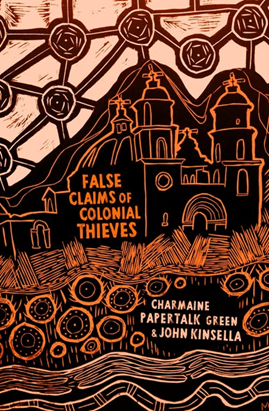
‘False Claims of Colonial Thieves’ Poetry: The Basics

This Resource is for students studying ‘False Claims of Colonial Thieves’ poetry collection by poets John Kinsella and Charmaine Papertalk Green in the Victorian VCE Curriculum.

The Title ‘False Claims of Colonial Thieves’

Refers to the legacy and residue of past wrongs carried out by colonialism that the poets consider were literally ‘colonial thieves’ robbing the Indigenous people of their land under the guise of Terra Nullius [land legally deemed to be unoccupied or uninhabited].  The ‘false claims’ of the title are revealed as colonial misinformation which white-washes the crimes of the past.

The Poets

John Kinsella                  Born in 1963 in WA is non-Indigenous man who has Anglo-Celtic origins and has written over 30 books based on the WA landscape, colonisation, mining, family and conservation.  He supports Indigenous rights, land rights and says he is a ‘vegan anarchist pacifist’.  His dedication is to Kim Scott a prize-winning WA Indigenous author of ‘That Deadman Dance’.

Charmaine Papertalk Green        Born in 1962 in WA is an Indigenous Yamaji woman who speaks Badimaya and Wajarri.  ‘Papertalk’ is her mother’s maiden name.  Her message is to restore her ancestors’ histories and stories as ‘paper talks everywhere now’.  She exposes the concept of colonisation through her lived experiences and family stories.  Her dedication is to her brothers who died to cast relief on Aboriginal mortality rates that are 11.5 years lower than white males.

Both Poets want to know “Who are the real rulers of Australia?”

The collection of poetry identifies itself as political and a serious postcolonial discussion of two poets collaborating to warn of environmental impacts of mining and to track the relationship of both Indigenous and non-Indigenous people in regards to ‘country’.  They both actively interrogate injustices, cultural cruelty, cultural genocide and the pain left behind by colonisation.  They seek to challenge the myth of Terra Nullius and rewrite the colonial history of Australia by identifying the colonists not as heroic adventurers into an uninhabited new land, but as plunderers.  Through their poems they question the dominant narrative and its instruments of power that fog and irradiate [expose] a land of ‘invisible victims’.

The Ambition of the Collection

The ambition of the collection is the ‘beautiful conversation’ (‘Simply Yarning’ p.97) which is proudly postcolonial; from its title to its references, it invites readers to move beyond the constricting myths of the colonial past and into a more equitable future.

The Structure of the Text

The structure of both the collection and the individual poems is an important part of ‘False Claims’. The collection begins and ends with poems written by the two authors together, ‘Prologue’ by Kinsella and ‘Prologue Response’ by Green which appear on the same page and ‘Epilogue’ which is attributed to the poets jointly.  There is thus established a sense of the combined purpose and project of the collection which frames the text, so that even in those sections when there are several poems by one poet, before Kinsella’s voice is again heard, the collaborative nature of the text cannot be forgotten.

‘Prologue’ and ‘Prologue Response’

The repeated language in ‘Prologue’ and ‘Prologue Response’ reinforces the shared project of the poets.  This is most clearly apparent in the repeated bitter accusations of negligent ‘environmental scientists’, but it is also evident in the echoed notion of unthinking and unsustainable consumption, appearing in the metaphoric [symbolic] ‘on a platter’ in the first poem, and the more literal ‘plastic bottle’ of the second.

The first poem by Kinsella is longer, the lines are extended, and the text is broken into two verses.  The second poem by Green focuses on the obliviousness of the general population raised by Kinsella with the line ‘Stygofauna speak up through the land; some listen, more don’t’ (p.xi).  Green repeats the idea of ‘blindness’ through her shorter, more abrupt and accusatory poem, condemning those who refuse to see beyond their ‘privilege’.  The structure of these poems, both as they complement each other and as they differ, is a useful reference point for ‘False Claims’.  Kinsella and Green share some views, and each poet operates within the context of contemporary poetry, but they are not the same.  Green’s poetry is more direct, and her tone is more often angry.  Kinsella is more regretful and more likely to consider institutional causes of social and environmental malaise [sickness], rather than referring to personal responsibility.

Language and Style

  • Call and response—the whole collection exists as a dialogue between the poets as they negotiate the ‘third space’ of shared understanding.  Some of the poems speak directly to each other, and some poems are written in parts, which the poets write in sequence.
  • Colloquial (Australian) language (including expletives)—both poets sometimes use recognisably Australian language features in their poems, which creates authenticity in dialogue, and functions to locate the poetry in its Australian regional context.
  • Dedications—the collection and some of the poems are committed to the honour of particular people or peoples.  Like titles, these dedications can provide insight into the focus and ‘agenda’ of poems and poets.
  • Ekphrastic [work of art]—both JK and CPG respond to artworks in poems, a clear knowledge of the artworks (where possible) will assist in understanding these poems.
  • Enjambement—when sentences in poems run over lines, a sense of inevitability can be created, either positively or negatively.  Both poets use this style feature in some of their poems, and significance of run-on lines should be considered.
  • Intertextuality—both poets refer to other texts in some poems, notably in ‘The Wild Colonial Boy’ (pp.135-137 / ‘A White Colonial Boy’ pair (pp.138-140).  As well as placing their works into the wider community of poetry and literature, these references indicate the power of texts to shape attitudes.
  • Line breaks, stanzas and stanza breaks—indicated with a ‘/’ in quotation, are strategically used by both the poets to create either continuity and flow in poems, or disjointedness and discontinuity.
  • Non-Standard English—CPG particularly uses some non-Standard English phrases of spoken Indigenous English, recognising the validity of this patois.
  • Pun—the poets, particularly JK, play with words, linking distinct ideas together, challenging assumptions, and creating irony.
  • Punctuation / lack of punctuation—JK is strategic in the way he deploys punctuation in some of his poems; reading aloud and following punctuation cues will help recognise the strategic ways in which the poet shapes his longer sentences. CPG often writes without punctuation, depending on rhythm and line breaks to shape the reading experience; this can often create a sense of uncontrolled urgency in her poetry.
  • Repetition—both poets use repetition throughout their poetry to create emphasis and sometimes to enhance rhythm; significantly both poets sometimes repeat a line or series of lines from the other poet, indicating their co-operation in the construction of the collection, but also suggesting alternative perspectives to an idea.
  • Rhyme—although the poets write largely in free verse, both internal (within a line) and external rhyme (rhyming words at the end of lines) appear in the collection, enhancing or breaking rhythm, associating ideas, creating inevitability.
  • Rhythm—poetry is an oral form, so reading poems aloud in class can help students understand the poems, especially when meaning might appear obscure, upon a first (silent) reading. The rhythm of a poem can often become more apparent when poems are read aloud.  As with rhyme, rhythm can hold disparate ideas together in a poem, showing the connectedness of different notions.  A rhythm can also create urgency, or a mournful tone or a feeling of inevitability, or inescapability, if the rhythm is compelling or almost compulsive.
  • Simile, metaphor, personification, symbol, synaesthetic description [figurative language that includes a mixing of senses], alliteration [occurrence of same letter or sound at the beginning of words], sibilance [hissing sound with repetition of ‘s’ sounds]—the poets use various figurative devices which enhance the reach of their poetry, making it more vivid, linking apparently disparate ideas, and evoking landscape.
  • Titles—titles of poems, express the way in which a poet directs a reader, from the start of a text.  The title of this collection is important as it places all the poems in a postcolonial, revisionist context.
  • Use of language—both JK and CPG move into Indigenous languages (Noongar and Wajarri respectively) throughout the collection.  This subverts the hegemony [domination] of English and indicates the limitations of English in terms of understanding the subjects the poets write about.

Issues and Themes

The issues and themes are interconnected not only to land, its peoples, cultures, history, stories and art, but the voices of the poets reinforce the connectedness of peoples, stories and histories and the free flowing discussion of the two poets in all the poems in the collection. A commonality between the two poets is the injustice of people and the environment, particularly the destruction of mining, which is not separated in the poems, rather the suffering of both is explored as one country suffering together.

Central Ideas/Issues & Themes Covered in the Collection are:

  • Colonisation and Reconciliation
  • History and Crimes of the Past
  • Redressing Historical Injustices by Reconstructing our Notion of the Past
  • The Myth of Terra Nullius (the Colonial Thieves)
  • Secrets and Silences of Australian Culture
  • History and Memories and their Importance to Individuals
  • The Environment and Social Effects of Mining on Country and Individuals
  • Exploitation of Mining on Country and Individuals
  • Country, Destruction of Country and Landscape
  • Family, Friendship, Nature of Loss in Family and Country
  • Recognising Important Indigenous and Non-Indigenous Family Members
  • Language and Culture of Indigenous People
  • Dangers of Cultural Appropriation and Erasure
  • The Stolen Generation
  • Black Deaths in Custody
  • Close the Gap Campaign
  • Aboriginal Mortality
  • Poetry, Art and the Power of Both
  • Racism , Social Justice and Race Relations Between Indigenous and Non-Indigenous People
  • Our Responsibility to each other as Indigenous and Non-Indigenous Peoples in Australia
  • Social Issues Pertaining to Contemporary Indigenous People
  • Stories and Storytelling (Yarning)

Analytical Text Response Topics

  1. ‘False Claims of Colonial Thieves is more positive about the future than it is negative about the past.’ Discuss.
  2. ‘Memory is shown to be the most important aspect of culture in this collection.’ To what extent do you agree?
  3. How do the authors of False Claims of Colonial Thieves show that the natural environment is vulnerable and needs protection in this collection?
  4. “I won’t pretend it’s easy / Living in an intercultural space” (‘I won’t pretend’, CPG, p.62) ‘Despite the idealism of the collection, False Claims of Colonial Thieves suggests that cultural harmony is impossible.’ Discuss.
  5. “And the dead are loud in their graves.” (‘Edges of Aridity’, JK, pp.82-4) “Arrived as colonial thieves / Remain as colonial thieves” (‘Always thieves’, CPG, pp.127-8) ‘There is no recovery from colonisation.’ Discuss with reference to the poetry in False Claims of Colonial Thieves.
  6. How do the poets of False Claims of Colonial Thieves create hope in their collection?
  7. “How can I but take up the call, / Charmaine, and yarn right back at you – / it’s what we do when we connect” (‘Yarn Response Poem’, JK, p.98) ‘The poems in the False Claims of Colonial Thieves reveal that we are shaped by our relationships with others.’ Discuss.
  8. ‘The strength of this collection rests in its political agenda.’ To what extent do you agree?
  9. How do John Kinsella and Charmaine Papertalk Green convince their readers of the healing power of poetry in False Claims of Colonial Thieves?

All Resources created by englishtutorlessons.com.au Online Tutoring using Zoom for Mainstream English Students in the Victorian Curriculum

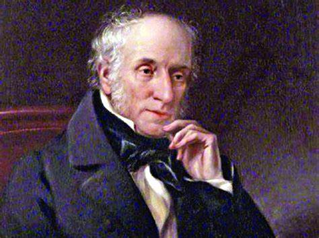
William Wordsworth’s Poetry: The Basics

This Resource is for students studying William Wordsworth’s Poetry from ‘Poems Selected by Seamus Heaney’ in the Mainstream English Curriculum.

Seamus Heaney’s selection consists largely of the poetry considered to be Wordsworth’s best, written in the decade 1797 to 1807.

Introduction & Themes

Many of Wordsworth’s ideas and values, in the poems in Seamus Heaney’s selection, are concerned with Themes such as:

  • our relationship with Nature / life’s circularity / Nature nurtures & wellbeing
  • religion / loss and death
  • the significance of childhood experiences / wisdom & splendour of childhood / nurturing parents
  • family & community / connectivity / wanderers & wandering / humanity & empathy for people less well off in society
  • the connection between clear thinking & nourishment of one’s soul in solitude & silence / transcendence
  • memory & personal growth / the self & individuality / the power of the human mind
  • irrational fear and death / vision / sight / light
  • the effects of materialism & industrial change / destructiveness of industrialisation / urbanism
  • the pros & cons of political protest / revolutionary activism / rebellion / need for reform
  • the problem of social inequality / need for change

Most radically, he viewed natural landscapes as emblematic of the mind of God, and as central to the wellbeing of humans.  Wordsworth believed that God was in every aspect of the natural world and so much of his poetry explores nature in a sacred and religious sense presenting goodness and naturalness as synonymous, so nature is a living, divine entity, that if ignored, was at humankind’s peril.

Born in 1770 at Cockermouth on the River Derwent, which is in the Lake District of England, the natural elements of this landscape would come to be immortalised in his poetry.  He was a prominent member of the group of poets called ‘Romantics’ that broke the traditional way poetry should be written, believing the poet’s role was to guide others through the transforming power of the poetic imagination.

The Romantic Movement 1798-1832

The Romanticism movement was founded during the Industrial Revolution in 1750 where poets like William Wordsworth, Samuel Taylor Coleridge and William Blake were concerned that people had grown away from nature towards industrial cities and modern mechanisation of mass manufacturing. The Romantic poets had specific ideas that were radical at the time, moving away from traditional poetry, towards breathing imaginative life into all human experiences.  Romanticism was an emotional and passionate reaction against the Industrial Revolution, the Age of Enlightenment, urbanisation and its corrosive effects on the individual, community and the landscape.

The Romantics saw landscape and peasant people, ‘folk’ songs and traditions, as representing a simpler time.  They regarded the legends, myths and folk traditions of a people as the wellspring of poetry and art, the spiritual source of cultural vitality, creativity and identity.  The Romantics agreed with French philosopher and novelist Jean-Jacques Rousseau’s idea that feelings are the human essence, that ‘our sensibility is … prior to our reason’.  Abstract reason and scientific knowledge, they said, are insufficient guides to knowledge.  Reason and science provide only general principles about nature and people, failing to penetrate to ‘what really matters’, the uniqueness of each person, tree, cloud or lake.

Wordsworth said “all good poetry is the spontaneous overflow of powerful feelings”.  He viewed poetry as being “the image of man and nature”.

Reading Wordsworth poems reveals a poet with a social conscience

One who believes that Nature provides the inspiration for the interior life.  He repeatedly returns to the idea of the cycle of life, and expresses both fear and acceptance of death.  He looks to Nature for a sense of immortality, although he doesn’t move far from the idea, as in all three ‘religions of the book’, that the earth is infused with, or created by, something beyond the material.  Wordsworth was on the side of the ordinary person, and against the authoritarian regimes in power.  The theological and social ideas in the poems imply values such as concern for the poor and support for equality and social justice sit alongside the centrality of the individual self.  Another interesting element of Wordsworth’s poetry is his presentation of children and how he saw the child as possessing a kind of essential wisdom, allowing them access to truths that were barred to adults.  As well as being free from sin, the child was privileged with great insight into the human condition, a gift that was lost in adulthood.  Wordsworth suggests that the innocence of children shows us a fresh truth, a new way of seeing.

Nature is central to Wordsworth’s romantic view on life

Writing in an era dominated by the corruptive elements of industrialisation, Wordsworth sought to reinstate Nature as a central focus of human concerns that was increasingly vulnerable.  The poet in Seamus Heaney’s collection is Wordsworth himself delighting in the aesthetics found through the environmental grandeur of Nature, presenting it as a source of joy and wonderment.  He embraces the language of the ‘common man’ that provokes readers to lament the impact of modernity has had on humanity’s capacity to appreciate natural sensations.  For Wordsworth the antidote to the threat posed by the industrial societies that surrounded him lay in the natural world he exalted in both his youth and adulthood.  By positioning Nature and by extension, human nature centrally in his poetry, Wordsworth directs individuals to discover deeper truths about themselves and thus humanity as a whole with a focus on the ‘self as subject’.  Overall, by concentrating on the sublime [inspirational] elements of the natural landscape, the poet’s collection of childhood epiphanies and philosophical reasonings reveal that immersion in rustic settings is able to guide humanity into a purer state of mind and spirit.

Example Introduction for a Prompt about Grief and Loss

Prompt          “How soon my Lucy’s race was run”. While much of Wordsworth’s poetry celebrates the joys of nature and human life, he also focuses on human grief and loss.  Discuss.

Use quote in essay “How soon my Lucy’s race was run” = One of the ‘Lucy’ poems “Three years she grew in sun and shower”

Through images and descriptions of the natural world, poet William Wordsworth celebrates the joys of human life, but he is always mindful of the personal elements of grief and loss.  By using nature, and men and women within nature, as the inspiration for his imagination, Wordsworth is able to portray a range of human emotions.  The complexity of Wordsworth’s poetic vision is apparent when he uses recollections of experiences in the natural world to explore feelings of happiness in living things.  In the poem ‘I wandered lonely as a cloud’ the speaker’s joy of his experience seeing daffodils is transposed into an almost spiritual transcendence of his understanding of the joy that nature brings to human life.  However, in a natural extension of his poetic sensibility, Wordsworth is able to contrast this joy of life in the natural world with a sense of grief and loss in his series of ‘Lucy’ poems that are seen as a sober meditation on death, grief and loss.  Moreover, imagination and memory, Wordsworth suggests, are powerful tools that present the possibility of transcending loss and allow us to gain a more complete understanding and acceptance of human life through nature.

Analytical Text Response Prompts

  1. How does the poetry in this collection explore the interdependence between humans and the natural environment?
  2. “The child is father to the Man” How does Wordsworth explore the idea that childhood experiences are significant in shaping the adult life?
  3. ‘Although the poems show concern for others, they seem more concerned with the self.’ Discuss.
  4. To what extent does Wordsworth’s poetry suggest that natural rural landscapes must be preserved despite the needs of commerce?
  5. “… and I grew up/ Fostered alike by beauty and by fear.” ‘Wordsworth’s poetry is animated more by fear than by awe.’ Do you agree?
  6. “Not without hope we suffer and we mourn” How does Wordsworth’s poetry explore this idea?
  7. “Bliss was it in that dawn to be alive, But to be young was very heaven!” What ideas and values about youth are revealed in this collection of Wordsworth’s poems?
  8. ‘The poems reveal an ambivalent attitude towards the social changes of the time.’ Discuss.
  9. “… with an eye made quiet by the power Of harmony, and the deep power of joy, We see into the life of things.” How does Wordsworth’s poetry ‘see into the life of things’?
  10. “The world is too much with us; late and soon, Getting and spending, we lay waste our powers” ‘The poems in this collection condemn materialism, suggesting that it destroys the life of mind and spirit.’ Discuss.
  11. “Whither is fled the visionary gleam?” ‘Despite the sense of loss in the poems, the poet more often expresses hope and joy.’ To what extent do you agree?
  12. ‘Wordsworth shows us that the contemplation of nature can be a way of lightening feelings of melancholy and despondence’.  Discuss.
  13. Wordsworth refers to “a higher power than Fancy”.  How does he demonstrate the dynamic power of the imagination in his poems?
  14. “Ships, towers, domes, theatres and temples lie/Open unto the fields”.  ‘Wordsworth successfully marries the contrasting ideas of unfettered nature and the edifices we have constructed’.  Discuss.
  15. “Behold her, single in the field/Yon solitary highland lass”.  ‘Wordsworth uses varied images of simple rustics to highlight the heroic and ordinary human life’.  Discuss.

All Resources created by englishtutorlessons.com.au Online Tutoring using Zoom for Mainstream English Students in the Victorian Curriculum

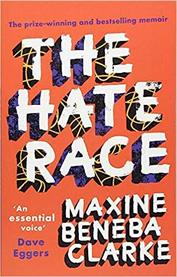
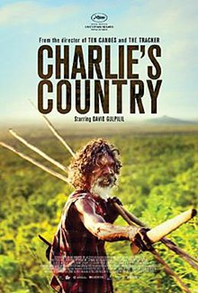
The Hate Race and Charlie’s Country Comparative Texts

This Resource is for English students studying in the Victorian Curriculum.  Racism is an important theme comparison between the memoir ‘The Hate Race’ by Maxine Beneba Clarke and the film ‘Charlie’s Country’ by Rolf de Heer.

Why Compare ‘The Hate Race’ and ‘Charlie’s Country’?

Introduction

Maxine Beneba Clarke’s memoir ‘The Hate Race’ and Rolf de Heer’s film ‘Charlie’s Country’ explore the shifting experiences of racism in Australia. The texts foreground the complex and traumatic impact of racism on individuals, as well as the broader social ramifications of institutionalised racism. Beneba Clarke and de Heer shine a light on the corrosive and unexpected impacts of racism, and the way that this can shape an individual’s experience of the world around them. The texts reveal fundamental truths about the role of racism in contemporary Australia.

A comparison of ‘The Hate Race’ and ‘Charlie’s Country’ offers insight into the common experiences of people of colour, whilst also highlighting the unique experiences of First Nations people. The texts focus on modern day events, dispelling any notions of the elimination of racism in modern Australia. They share a grounding in the historical evolution of racism on both national and global scales. They offer insight into two very distinct geographical locations, again revealing the varied manifestations of both institutional and interpersonal racism.

The pain that is central to the experience of the protagonists in both texts is reflected through the prisms of the memoir and film respectively. Beneba Clarke’s work chronicles the experience of a child through the reflective lens of an adult. Conversely, de Heer’s film showcases the cumulative impact of racism on an adult.

‘The Hate Race’ Memoir is an Autobiographical Work

‘The Hate Race’ is an autobiographical work, a factual yet subjective narrative of events, experiences and emotions from the author’s own life. Specifically, the book is a memoir, since it does not reflect on Clarke’s whole life but on a particular and significant period of it – her childhood. The narrative illuminates how this period would inform the rest of her life (as suggested by the Prologue and Epilogue) when the adult Maxine undergoes experiences intertwined with the discrimination she faced for years as a young person. The book can also be considered a form of bildungsroman or ‘coming of age’ narrative that charts the social, emotional, and psychological growth and development of its protagonist.

‘The Hate Race’ situates the experience of an individual childhood within a broader social landscape. Beneba Clarke’s use of the memoir form allows her to paint a vivid picture of the social and historical forces that shaped the experiences of the author and her family. ‘The Hate Race’ offers an account of an Australian childhood that is distinctly recognisable—a fact that makes the characters’ experiences of racism all the more uncomfortable and undeniable.

The Title ‘The Hate Race’

The title signifies for minorities in Australia, life is constantly akin to a race. There is no rest, no comfort, and no sense of home when your mind is preoccupied with all the ways you don’t belong. Being denied a firm sense of self, and constantly being forced to justify one’s own existence is not easy, and becomes a ‘race against time’ to see who can cope and rise above, and who will be swept away along with the tide. If people of colour stop running, they run the risk of being consumed by the hatred themselves and become so cynical and disillusioned that they forget their culture and accede to the Anglocentric, white majority.

Structure of ‘The Hate Race’

The text follows a largely chronological structure, which has the effect of simulating the cumulative nature of Maxine’s experience of racism. There is an acute sense of the role that racism plays in ensuring childhood and adolescence are experienced differently by children of colour. The carefully placed layers of trauma may not have been fully comprehended by the author as a child, but the adult Beneba Clarke reflects the depth and extent of her wounds through a story told ‘just so’ (p. 3). The chapters of the memoir offer vignettes; seminal moments from Beneba Clarke’s childhood to reflect unflinchingly the toll on a life lived as a person of colour in Australia. Again, as Beneba Clarke notes in the text’s acknowledgements, these memories are about a ‘very specific’ (p. 257) aspect of her life. Racism alone is not her life story, but equally her life story cannot be told without understanding racism.

‘Charlie’s Country’ Film is a Fictional Drama

In contrast to ‘The Hate Race’ which is a factual memoir, ‘Charlie’s Country’ is a fictional drama that incorporates some details from life and some elements of the story that comes from the life of the main actor protagonist Charlie played by David Gulpilil. However, de Heer did not want the film to be interpreted as ‘being about one particular (real) individual’ but rather as ‘being about issues much more widespread, much more representative of many individuals’ (de Heer 2014). In this way, ‘The Hate Race’ and ‘Charlie’s Country’ approach some of their common themes from different directions. While the autobiographical genre of ‘The Hate Race’ concentrates on ideas central to the protagonists’ life, ‘Charlie’s Country’ is more interested in the impact of broad issues on an individual.

Rolf de Heer’s ‘Charlie’s Country’ is a stark, fictional film that adopts many of the hallmarks of documentary filmmaking; this is a film that aims to heighten consciousness about the plight of Aborigines impacted by the Australian Government’s intervention, in 2007, in the Northern Territory. The injustice of institutionalised racism is at the heart of this collaboration between Rolf de Heer and David Gulpilil. Their film focuses on the life of one Aboriginal man, Charlie, whose struggles to find a way to live in the modern world whilst staying true to his cultural identity are constantly thwarted by local, white authority figures.

The Title ‘Charlie’s Country’

The title of the film reflects a simple reality – this is Charlie’s country. Rather than a ‘country’ de Heer speaks of the Indigenous notion of connection to and respect for one’s traditional lands and country. Nurturing this connection is a sacred responsibility and the film reminds us that, despite Charlie’s many trials and tribulations, the land on which he lives is truly his own.

Structure of ‘Charlie’s Country’

The film adopts a chronological structure, tracking Charlie’s decision-making in regards to his attempts to regain meaning and purpose in his life as he tries to return to a more traditional way of relating to his environment. The structure of the film is also circular, Charlie ends up back in the place where he began, and seems in a similar state of something like static, confined despair. There is little sense that his journey has been moving forward, rather the places he finds himself (bush, hospital, prison) seem a series of sideways stumbles with no plan or intention. This echoes Maxine’s journey in ‘The Hate Race’, which begins and ends in the adult Clarke’s life, with matching scenes of discrimination, suggesting that her experiences repeat themselves over and over.

Charlie’s Country can be divided into 3 parts:

  • Part 1 – Intervention
  • Part 2 – Bush
  • Part 3 – Jail
Common Themes in ‘The Hate Race’ and ‘Charlie’s Country’
Racism & bullyingDiscrimination– institutional versus interpersonalIdentity – personal and national
PrejudiceGrowing up black in a white countryIntergenerational disadvantage
BelongingResilience & resourcefulnessHopelessness & lack of agency
RepressionGap between generationsPower of language & culture
Struggle of being an outsiderFriendshipTrauma & hate

All Resources created by englishtutorlessons.com.au Online Tutoring using Zoom for Mainstream English Students in the Victorian Curriculum

‘All Quiet on the Western Front’ by Erich Maria Remarque: The Basics

This Resource is for English students studying in the Victorian Curriculum.

The Author Erich Maria Remarque

Erich Maria Remarque was born in Osnabruck, Germany in 1898. He joined the German Army in 1916 to fight in World War 1, and was wounded. After the War ended in 1918, Remarque published his novel ‘All Quiet on the Western Front’ – ten years later in 1928.

The novel is very realistic about the harsh realities of being an ordinary soldier in war, including none of the usual glory propaganda. It was a firmly anti-war novel and became an instant international success. In 1930 a film based on the novel was released. As the German Nazi party rose to power and prominence, the novel was being attacked as being anti-German or unpatriotic in 1931, and the film was banned. In 1932 Remarque and his wife fled to Switzerland for protection and by 1933 the Nazi Party banned Remarque’s books and burned them on bonfires.

The fact that ‘All Quiet on the Western Front’ is based on the German soldiers’ experiences during War highlights the universal suffering and futility that War brings.

The Novel in Context of World War I – 1914 – 1918 (Estimated 9.7 million military soldiers died)

The First World War was one of the biggest wars that had ever been fought and saw the introduction of weapons of mass destruction such as gas, as well as other new war technology. There are many reasons for the outbreak of World War I, however the trigger was the assassination of Archduke Franz Ferdinand by a Serbian student. Other factors included diplomatic fall-outs, irrational nationalism, and a build-up of military might.

Europe was split into two opposing camps. France, Russia and Great Britain were in the Triple Entente and Germany, Italy and Austria/Hungary were part of the Triple Alliance. On July 28, 1914 Austria/Hungary declared war on Serbia, so Russia began to get ready for war, and then Germany declared war on Russia and (later) France. However, when Germany invaded Belgium – a neutral country, Britain joined the war for fear of follow-up attacks. Later the United States joined the Allies.

After Germany moved into France, the trench warfare began. This was a new method of warfare that had never been tried before and had been a military officer’s brainchild. It meant that both sides had dug trenches underground, and the middle became known as “no-man’s land”. The conditions in the trenches were horrific, especially as they were always wet and muddy and filled with rats, lice and disease. There was shelling and firing by guns all day and night, and no protection from the heat or winter cold. Many soldiers not only died from being hit by guns and grenades, but also from the diseases that were rampant in those conditions or deadly poison gas. The War also caused much mental anguish and suffering for the soldiers.

Propaganda in WWI Why Men Enlisted to Fight – Both British & German

If we look back to the time of the break out of World War 1 – 1914 and before this, the world was a much different and slower place. Mass communication, electronic media and global travel were barely available and this may explain the success of war campaigns to lure young men, some still in school, to sign up and fight for their country.

The values of the time were that:

  • It was an honour to fight for one’s country in a war
  • Those who did not fight were cowards and should be punished
  • People who went to war were heroes
  • There was much glory and pride in being a soldier

At the time, there were people who were ‘conscientious objectors’, who did not believe in war, but standing out for this cause was seen as a betrayal. Thus, we see that in ‘All Quiet on the Western Front’, all of Paul’s class signed up to fight in the war, even though they were so young. The older men in the community were at first seen as too old to fight, so the first soldiers chosen were teenagers and those in their early twenties. The love of country and patriotism was valued highly, even though no one really knew about the horrors of war, back at home. Whilst there were official war photographers, artists, and reporters, most of what they were allowed to report back and produce would have been censored by their governments. All countries used propaganda to create fear amidst their citizens about the enemies, and to reinforce the need for men to sign up as soldiers.

The Truth about the Horrors of War

The truth about the horrors of World War I began to unfold as the soldiers realized they were just fodder for a huge killing machine that was war. Trench warfare was a new ‘idea’ that was being tested, and it allowed for massive amounts of death and disease. Paul and his friends realise when it is too late that there is no glory in this killing machine; they are just here to die. The fact that ‘All Quiet on the Western Front’ is written by a German soldier reflects the universality of the horrors of war.

Poetry about War – Wilfred Owen

Wilfred Owen

The same sentiments and experiences are also found in Allied writing, art-works and poetry written by those who were there – for example poems by Wilfred Owen such as ‘Dulce et Decorum Est’ about the horrors and pity of war. Owen’s poetry presents the utter brutality of trench warfare truthfully. The experience for the soldiers was a shocking one especially as many of the soldiers were just young teenagers who had been fed propaganda about how noble it would be to fight for one’s country in the War. In fact, the common saying was “How sweet and noble it is to die for one’s country”, but the soldiers quickly realised they had just been sent to killing fields.

Plot Summary of the Novel

Paul Baumer, 19 joins the German Army to fight in World War 1. Several of his friends from his class were inspired to join the War by their patriotic school master, Kantorek. They feel they have been tricked after a few weeks at war, as the soldiers are subject to cruelty, brutality, and suffering, often leading to death. In fact, after just two weeks, Paul’s company of soldiers’ experiences losses of over 50% of the men. One of Paul’s friends Kemmerich, also a classmate is in hospital with gangrene and dying. Another friend Muller becomes pragmatic and hopes for Kemmerich’s boots when he dies.

Life is made very unbearable by the cruel and sadistic Corporal Himmelstross. Life in the trenches is disgusting and many men are struck down by disease or death. Soon there are only 32 of Paul’s company remaining alive. Not only is war hell but Paul realises that when he has leave, he feels nothing and is just numb. When he has time to go home on leave for a few weeks, Paul finds he cannot relate to others. However, he goes to visit Kemmerich’s mother and tells her that her son’s death was painless. This lie makes her happy.

Back at war, Paul is forced to stab a French soldier to death and he is filled with remorse and guilt. He realises that the enemy is just another victim of war like all soldiers. Looking through his identification, he learns the man’s name was Gerard and he has a wife and two children, which upsets him even more. By 1918 just before the War ends, Paul is the only original member of his company left. Paul is killed in October 1918. The novel ends with a statement from the Army report for this day as ‘All quiet on the Western Front’.

The Narrator of the Novel

Who is telling this story? The novel is written mostly in the First person from the perspective of Paul Baumer until the end of the book, where it changes briefly to Third person – as a report excerpt. As such the reader follows the rise and fall of Paul’s sense of life and enthusiasm. We feel his betrayal and despair, his inability to feel pain as it may overwhelm him.

Structure of the Novel

It is divided into twelve chapters, where there is some overlap, reflecting the confusion and loss of time. The reader goes on Paul’s incredible journey from innocent adolescent to jaded and despairing ‘hollow man’ who has lost everything. The last few chapters especially reflect the desperate chaos that ensued once America joined the war and Germany was clearly losing the war. Due to the lack of resources and younger men, the dying soldiers were now being replaced by older men, and the pace became even more frantic and destructive. When Paul dies, and his death is objectively reported in the third person of a military report – “All quiet on the Western Front.”

Themes of the Novel

The Horror of War – The novel presents the horror and brutality of war, which was a sharp contrast to War literature before this novel. Traditionally war books, poems, songs etc. glorified war as a patriotic honour and duty. The novel presents war from the point of view of the ordinary soldier so it cannot hide the truth and the horror of the immense suffering. World War I was a complete shock and introduced a ‘new’ method of French warfare – long, drawn out battles, new technology/weapons, which increased the death toll. The novel ends with all the major characters dead – including the protagonist and narrator, Paul.

Nationalism – The novel depicts the lies behind nationalism, exposing it as a powerful tool. Paul discovers that war has nothing to do with ideals, but rather it becomes a fight to stay alive. Moreover, there is no real sense of fighting an enemy. The enemy becomes the government and authority figures that sent them to the War.

The Effects of War on Soldiers – Clearly millions of soldiers died or were seriously injured by the War. Those that did not die and managed to return home would never be the same again. Months or years of constant exposure to physical danger constant attacks and living with fear had severe consequences on their nerves and emotional well-being. To add to this burden, the trenches were filthy, rat-infested and damp/water logged habitats. The soldiers were also dealing with lice infestations and diseased/decaying corpses all around them. Sleep was disrupted; food was lacking or of poor quality and medical care was very limited and poor. This is a toxic burden that made life for the soldiers unbearable. To survive, many of the soldiers had to disconnect from their feelings. As Paul discovers, although this leads to a general numbness that becomes all pervading, it protected the soldiers from mental anguish to some extent. The men became somewhat desensitized to the suffering and deaths all around them.

Friendship Bonds – The bonds between friends and sticking together seemed to be the only thing that kept the men alive and sane, and sometimes even this was not enough. It is especially touching to see how the more experienced soldiers looked after the new recruits who had never seen so much death and suffering. In Chapter 4, a shell-shocked young recruit seeks comfort from Paul and begins to cry as he is supported and told he will soon get used to it. Throughout the novel, Paul and Kat are very close and have a rare moment of intimacy and celebration of friendship as they eat the goose. (Chapter 5) Paul is constantly watching others die, but at this moment with Kat he acknowledges the humanizing power of friendship and relationships.

Betrayal and the Loss of Innocence – These two themes belong together because when the young men, filled with life and hopes for the future entered the war, they had been encouraged to do so by the very people who had guided them their whole lives – parents, teachers, and other authority figures. As soon as they arrived at the war, they were shocked into the reality of what the war was and the first thing they lost was their innocence, and it would have been impossible to feel betrayed by those they had trusted. In fact, Paul and the others see right through the lies and become quickly aware of the reality, and that they are just part of a giant killing machine, and need to be sacrificed to make the governments ‘plans’ a reality. The horror of war is never-ending and the recruits just keep on coming and being sacrificed for some lofty ideals.

Online Tutoring of English Using Zoom