‘Night’ by Elie Wiesel Basic Notes

Night

This resource is for students studying in the Victorian Mainstream English Curriculum.

Context of Night by Elie Wiesel

Night is Elie Wiesel’s masterpiece autobiographical account of surviving the Holocaust while a young teenager.  It is a candid, horrific and deeply saddening piece of Holocaust literature.  Set in a series of German concentration camps, Night offers much more than a litany of the daily terrors.  It records the unspeakable yet commonplace occurrences, the everyday perversion and rampant inhumanity, of life inside a death camp.  At times, it is a painful memoir to read but it does eloquently address what the Holocaust was, what it meant, and what its legacy is and will be.

Elie Wiesel records his own terrifying personal experiences of the Nazi death camp horror through his narrator Eliezer.  Night traces Eliezer’s journey as a young Jewish boy who agonizingly witnesses the death of his family, the death of his innocence and the death of his God.  While Eliezer parallels Elie Wiesel’s own biography and is intensely personal, it also is representative of the experiences of hundreds of thousands of Jewish teenagers during the Holocaust.  Night awakens the shocking memory of evil at its absolute and carries with it the unforgettable message that this horror must never be allowed to happen again.

Each chapter raises questions that have haunted the world since Hitler’s rise: How could the world allow such a staggering number of innocents to be persecuted and executed? Why does one man survive when his body, mind and spirit are brutalized for months, even years, when his neighbour, or father, does not?

Non-Fiction Narrative such as Night by Elie Wiesel

The chosen text, such as Night by Elie Wiesel, explores a range of experiences and offers interesting insights into human experience and human condition.  Texts such as this help us to reflect on how individuals respond to challenge and adversity, what they value, what gives them hope and why they behave the way they do.  The ‘why’ is the most interesting question for students to explore.

Types of Non-Fiction Narratives such as Night by Elie Wiesel

Biography, autobiography and memoirs are popular forms of book-length non-fiction narratives.  They tell a story, the story of someone’s personal experience.  These texts share many of the structural features of other narrative genres, for example, they usually have a climax and some sense of resolution.  Biographies, autobiographies and memoirs give us insights into the lives of others whose experiences are unique.  They can increase our understanding of many issues, human suffering and dilemmas.  They can present “the untold story” of someone who lives through a situation such as Elie Wiesel during the Holocaust, recount an unknown event that affected the course of history or simply bring us stories of courage, resilience and heroism.

Point of View and Selection of Events in a Biography, Autobiography and Memoirs

To a great extent these texts tell the ‘truth’.  They are accounts of real events happening to real people.  However, in any genre the writer selects what to include and what to leave out of the story, and this is no less the case for non-fiction narratives.  These texts often aim to be detached from their subject and are written from a certain perspective, evident in the information included and what is omitted.

For autobiographies and memoirs, that is first-hand or ‘eyewitness’ accounts, the writer will remember the facts from a particular point of view.  For example, the events of Night are narrated by Elie, a Holocaust victim.  If a bystander or an officer in the German army was to recount the same events, their recollections would no doubt be different. Therefore the author’s purpose in writing a non-fiction text, whether to give testimony, find answers, reveal a hidden story, can also affect the way in which he or she recalls or shapes the account.

In studying Night by Elie Wiesel it is important to identify the writer’s perspective on the people and events in the narrative.  This will help you appreciate the tone and style of the writing and understand why certain themes are explored and certain values are expressed.

Importance of Context and Setting

One way of understanding an author’s viewpoint in non-fiction narrative writing is to undertake research about the life and times of the subject.  Studying Night by Elie Wiesel you should research the author and the history of World War II,  Nazi Germany, concentration camps, lives of survivors of such camps and the social and political context in which the events took place.

Create a Timeline

Creating a timeline is also useful to record the significant events in the narrative along with the historical significance.  Annotating on the timeline any crises and turning points in the narrative, a climax and some sort of resolution as well.

Consider the Subjects – The People of Non-Fiction

Make a summary of the subjects, the people in the non-fiction.  List these important facts about them:

  1. Name
  2. Brief words about them
  3. Their appearance
  4. Most important relationship
  5. Most important thing that happens to them
  6. Key quotes, by them, to them, or about them
  7. Main function in the text
  8. Most important thing he or she contributes to our understanding of a main subject or theme

Themes and Values

Identify the central theme of the non-fiction text.  Develop some ‘big ideas’ related to the central theme by creating a concept map.  Identify values demonstrated in the text by making a summary of the following:

  1. Choose 5 people from the text, the main subject and four other significant individuals
  2. Based on what they say, think or do, summarise the views expressed by each
  3. Make a note of the consequences of their behaviour
  4. Does this show the writer’s approval or disapproval of their values, or of the values of their society?
  5. As Night is an autobiography, how does the writer judge his own actions, decisions and attitudes?

Identify the World View Illustrated in the Text

Ask yourself these questions about the world view illustrated in the text:

  1. ultimately hopeful or doomed?
  2. getting better or getting worse?
  3. a frightening place or a beautiful place?
  4. a place of abundance or dearth?
  5. a place of restrictions or of freedom?

Summarise your conclusions in a few sentences that include evidence from the text that supports your conclusions.  This is vital information that you need to write an analytical essay on the non-fiction text you are studying.

Metalanguage for Non-Fiction Narratives

Use metalanguage when writing about your particular texts that includes what is relevant to the subject, the point of view and the type of narrative.  Words to include in this list are

  • autobiography
  • biography
  • biographer
  • non-fiction
  • memoir
  • point of view
  • subject ie. the person or a set of events

Here is some Valuable Research on Night by Elie Wiesel to use for Analytical Text Responses

Use the following research to summarise your reading and understanding of the text to help you respond analytically in an essay.

Background on the Author Elie Wiesel

Elie Wiesel was born on September 30, 1928, in Sighet, a small town in Transylvania that was then part of Romania but became part of Hungary in 1940.  Wiesel’s Orthodox Jewish family was highly observant of Jewish tradition.  His father, Shlomo, a shopkeeper, was very involved with the Jewish community, which was confined to the Jewish section of town, called the shtetl.  As a child and teenager, Wiesel distinguished himself in the study of traditional Jewish texts: the Torah (the first five books of the Old Testament), the Talmud (codified oral law), and even, unusual for someone so young, the mystical texts of the Cabbala.

The Jews in Hungary During World War II

Until 1944, the Jews of Hungary were relatively unaffected by the catastrophe that was destroying the Jewish communities in other parts of Europe.  While anti-Jewish legislation was a common phenomenon in Hungary, the Holocaust itself did not reach Hungary until March 1944.  The German army occupied Hungary, installing a puppet government under Nazi control.  Adolf Eichmann, the executioner of the Final Solution, came to Hungary to oversee personally the destruction of Hungary’s Jews.  The Nazis operated with remarkable speed: in the spring of 1944, the Hungarian Jewish community, the only remaining large Jewish community in continental Europe, was deported to concentration camps in Germany and Poland.

Eventually, the Nazis murdered 560,000 Hungarian Jews, the overwhelming majority of the pre-war Jewish population in Hungary.  In Wiesel’s native Sighet, the disaster was even worse: of the 15,000 Jews in pre-war Sighet, only about fifty families survived the Holocaust.

Elie Wiesel’s Family Deported to Auschwitz in 1944

In May of 1944, when Wiesel was fifteen, his family and many inhabitants of the Sighet shtetl were deported to the Auschwitz concentration camp in Poland.  The largest and deadliest of the camps, Auschwitz was the site of more than 1,300,000 Jewish deaths. Wiesel’s father, mother, and sisters all died in the Holocaust.  Wiesel himself, the only survivor of his family, was liberated by the American Army in 1945.

Genre of Night

As an autobiography, Night is not a formal history, but rather a portrayal of a life and time from a limited point of view.  It is not a novel because the events and people portrayed really did exist.  The text is a mixture of testimony, deposition and emotional truth-telling which is similar to works in the memoir genre.  It is clear that Eliezer is meant to serve, to a great extent, as author Elie Wiesel’s stand-in and representative.  Minor details have been altered, but what happens to Eliezer is what happened to Wiesel himself during the Holocaust.  It is important to remember, however, that there is a difference between the persona of Night’s narrator, Eliezer, and that of Night’s author, Elie Wiesel.

Summary of the Narrative

Night is narrated by Eliezer, a Jewish teenager who, when the memoir begins, lives in his hometown of Sighet, in Hungarian Transylvania.  Eliezer studies the Torah (the first five books of the Old Testament) and the Cabbala (a doctrine of Jewish mysticism).  His instruction is cut short, however, when his teacher, Moshe the Beadle, is deported.  In a few months, Moshe returns, telling a horrifying tale: the Gestapo (the German secret police force) took charge of his train, led everyone into the woods, and systematically butchered them.  Nobody believes Moshe, who is taken for a lunatic.

In the spring of 1944, the Nazis occupy Hungary.  Not long afterward, a series of increasingly repressive measures are passed, and the Jews of Eliezer’s town are forced into small ghettos within Sighet.  Soon they are herded onto cattle cars, and a nightmarish journey ensues.  After days and nights crammed into the car, exhausted and near starvation, the passengers arrive at Birkenau, the gateway to Auschwitz.

Upon his arrival in Birkenau, Eliezer and his father are separated from his mother and sisters, whom they never see again.  In the first of many “selections” that Eliezer describes in the memoir, the Jews are evaluated to determine whether they should be killed immediately or put to work.  Eliezer and his father seem to pass the evaluation, but before they are brought to the prisoners’ barracks, they stumble upon the open-pit furnaces where the Nazis are burning babies by the truckload.

The Jewish arrivals are stripped, shaved, disinfected, and treated with almost unimaginable cruelty.  Eventually, their captors march them from Birkenau to the main camp, Auschwitz.  They eventually arrive in Buna, a work camp, where Eliezer is put to work in an electrical-fittings factory.  Under slave-labour conditions, severely malnourished and decimated by the frequent “selections,” the Jews take solace in caring for each other, in religion, and in Zionism, a movement favouring the establishment of a Jewish state in Palestine considered the holy land.  In the camp, the Jews are subject to beatings and repeated humiliations.  A vicious foreman forces Eliezer to give him his gold tooth, which is prized out of his mouth with a rusty spoon.

The prisoners are forced to watch the hanging of fellow prisoners in the camp courtyard.  On one occasion, the Gestapo even hang a small child who had been associated with some rebels within Buna.  Due to the horrific conditions in the camps and the ever-present danger of death, many of the prisoners themselves begin to slide into cruelty, concerned only with personal survival.  Sons begin to abandon and abuse their fathers.  Eliezer himself begins to lose his humanity and his faith, both in God and in the people around him.

After months in the camp, Eliezer undergoes an operation for a foot injury.  While he is in the infirmary, however, the Nazis decide to evacuate the camp because the Russians are advancing and are on the verge of liberating Buna.  In the middle of a snowstorm, the prisoners begin a death march: they are forced to run for more than fifty miles to the Gleiwitz concentration camp.  Many die of exposure to the harsh weather and exhaustion.

At Gleiwitz, the prisoners are herded into cattle cars once again.  They begin another deadly journey: one hundred Jews board the car, but only twelve remain alive when the train reaches the concentration camp Buchenwald.  Throughout the ordeal, Eliezer and his father help each other to survive by means of mutual support and concern.  In Buchenwald, however, Eliezer’s father dies of dysentery and physical abuse.  Eliezer survives, an empty shell of a man until April 11, 1945, the day that the American army liberates the camp.

The Importance of “Night” as a Symbol

The Bible begins with God’s creation of the earth “without form and void; and darkness [is] upon the face of the deep” (Genesis 1:2 New International Version).  God’s first act is to create light and dispel this darkness.  Darkness and night therefore symbolise a world without God’s presence.

In Night, Wiesel exploits this allusion.  Night always occurs when suffering is at its worst and its presence reflects Eliezer’s belief that he lives in a world without God.  The falling of night is used by Wiesel to create an atmosphere of darkness, a back drop against which to describe danger and suffering, fear, loss of hope, loss of faith and loss of life.

The imagery of night is repeated throughout the book to help us visualise and make sense of the sketches.  Eliezer notes the time of day as the worst things happen at night.  This backdrops the association that Wiesel experienced during his time in the camps.  It also conjures up dreams and nightmares of the psychological journey Wiesel went through.

The first time Eliezer mentions that night fell when his father is interrupted while telling stories and they are informed about the deportation of the Jews in Sighet.  Similarly it is night when Eliezer first arrives at Birkenau/Auschwitz and it is night, specifically “pitch darkness”, when the prisoners begin their horrible run from Buna.  It was at night that Eliezer’s faith is utterly destroyed and he can never forget the horror of that night.

One of the Most Notable Quotes

(Page xix in ‘The Foreword’ Modern Penguin Classics Version 2006)

“Never shall I forget that night, the first night in camp, which has turned my life into one long night, seven times cursed and seven times sealed.

Never shall I forget that smoke.

Never shall I forget the little faces of the children, whose bodies I saw turned into wreaths of smoke beneath a silent blue sky.

Never shall I forget those flames which consumed my faith forever.

Never shall I forget that nocturnal silence which deprived me, for all eternity, of the desire to live.

Never shall I forget those moments which murdered my God and my soul and turned my dreams to dust.

Never shall I forget these things, even if I am condemned to live as long as God Himself.

Never.”

 It is perhaps Night’s most famous passage, notable because it is one of the few moments in the memoir where Eliezer breaks out of the continuous narrative stream with which he tells his tale.  As he reflects upon his horrendous first night in the concentration camp and its lasting effect on his life, Wiesel introduces the theme of Eliezer’s spiritual crisis and his loss of faith in God.  Both the form and content of this passage reflect the inversion of Eliezer’s faith and the morality of the world around him.  Everything he once believed has been turned upside down.  Eliezer claims that his faith is utterly destroyed, yet at the same time says that he will never forget these things even if he “live[s] as long as God Himself.”

Significance of the Final Passage of Night

“One day I was able to get up, after gathering all my strength. I wanted to see myself in the mirror hanging on the opposite wall. I had not seen myself since the ghetto.  From the depths of the mirror, a corpse gazed back at me.  The look in his eyes, as they stared into mine, has never left me.” (p.115)

This is the final passage of Night, Eliezer’s final statement about the effect the Holocaust has had on him.  Eliezer implies that even though he has survived the war physically, he is essentially dead, his soul killed by the suffering he witnessed and endured.  Yet, when Eliezer says, “the look in his eyes, as he stared into mine,” he implies a separation between himself and the corpse.  His language, too, indicates a fundamental separation between his sense of self and his identity as a Holocaust victim, as if he has become two distinct beings.  The corpse-image reminds him how much he has suffered and how much of himself, his faith in God, his innocence, his faith in mankind, his father, his mother, his sister, has been killed in the camps.  At the same time, he manages to separate himself from this empty shell.

The image of the corpse will always stay with him, but he has found a sense of identity that will endure beyond the Holocaust.  As dark as this passage is, its message is partially hopeful.  Eliezer survives beyond the horrible suffering he endured by separating himself from it, casting it aside so he can remember, but not continue to feel, the horror.

This Resource is created by englishtutorlessons with Online Tuition Classes using Zoom

Summer of the Seventeenth Doll Synopsis

This Resource is for students studying Mainstream English in the Victorian Curriculum.

 Front Cover

Summer of the Seventeenth Doll  –  A Play by Ray Lawler

Why is Summer of the Seventeenth Doll Still Relevant Today?

This ground-breaking piece of Australian drama premiered at MTC in 1955.  It is surely dated, with many colloquialisms and morals of the times not heard of today.  However, Summer of the Seventeenth Doll (‘The Doll’) still captures an audience.  This is not necessarily because of its Australian-‘ness’, but more because of its series of universals.  This is a play about ordinary people, which people can immediately relate to.

For sixteen summers, Roo and Barney have spent their long layoff from the cane-cutting season down in Melbourne having a high old time with two Carlton barmaids, Olive and Nancy.  However, back for their seventeenth summer, it seems time has finally caught up with them.

The Driving Force Behind Summer of the Seventeenth Doll is Sadness 

The driving force behind the play is surely the desperate sadness which permeates the very heart of the play.  This sadness is brought about by the fact that a group of people are trying to stay young, and are refusing to realise they are growing old.  They have a lack of understanding of the growing process, and so stick with what they know best – their youth; ultimately to their downfall.  We see the very young along with the very old in this play, we see the beginnings of a cycle of women in a situation, each one determined to make their life work, although they have seen the downfall of the older woman.

Emma hasn’t had an easy life, and although Olive has seen this, she hasn’t learnt any lessons from her, except that she wants to have it differently.  Bubba, similarly, can see that Olive’s life was less than perfect in the outcome, and is determined to make it work for her – she sees the opportunity in Johnnie Dowd, but fails to understand why it is that the group of friends have fallen apart.  The audience doesn’t know whether Olive will turn out like Emma, hardened and cynical, but ultimately wise, which is an audience-capturing in the thoughtfulness.

The Joke – Facade of Men Trying to Stay Young

We can see that the men who at one stage came down like ‘eagles flyin’ down out of the sun’ are coming down this summer battered and bruised.  They are not the fit young men they were – Roo has a bad back, and Barney has had many blows to his ego regarding the studliness he once enjoyed.  Behind his joking facade, we can see that he is actually a rather pathetic man, who is prepared to break the unwritten code of mateship to save his own skin.  This act of self-preservation has lost Barney the respect and friendship he once had from Roo, as can be seen when they fight in Act II Scene 2.  The audience, however, sympathises with Barney, because they can see that behind his facade he is really hurt and sad when he is laughed at by women.  The audience sympthasises with this because everyone knows how it feels to be laughed at.

Nancy is the Only One Who Embraces Change

Nancy, the only main character we don’t actually meet, has realised she is getting old, and wanted to get out of the slowly crumbling dream of the lay-off, consequently getting married, and leaving Barney and the others.  She embraced change in a way that Olive cannot understand – Olive believes Nancy’s choice as being traitorous to the dream, “She made a mistake – Marriage is different, and Nancy knew it.”  Through this, we can see a crumbling, insecure world with people who cling, like Olive, or change and grow after the coming of realisation, like Nancy and Roo.

Olive Clings to a Reality that Cannot Continue

Olive clings to a reality that cannot continue. Pearl sees this, and is used in this play as a critical voice, so the audience can size up the characters and compare their actions.  Pearl sees the lay-off for what it is, “…if you’d only come out of your day-dream long enough to take a grown-up look at the lay-off…”  Is it a faith for Olive, or a fantasy?  “I’m blind to what I want to be.”

Roo Sees His Future is Doomed Unless he Embraces Change

Roo, however, sees, perhaps too late, that it is doomed, and wants to embrace change in an effort to retain as much as he can. In listening to what Emma has to say, he understands, finally the reality.  It is the bluntness with which Emma presents the reality to Roo that makes this scene so appealing.  We can see again how ordinary these peoples’ lives are.

Olive Sees Roo’s Change as Being Traitorous

However, Olive sees Roo’s attempt at change as being traitorous.  She believes that if Roo leaves with Barney, as he usually does, it is the only thing she has left – the last shred of the dream for her.  Her youth has gone, and she suddenly realises that she has lost everything, except for the memories, and the desperate hope that if he leaves, it will all be magically better next time, when Roo says, “Olive, it’s gone – can’t you understand? Every last little scrap of it – gone!”  She becomes so intense, she believes that her ideal life has been stolen from her: “You give it back to me – give me back what you’ve taken.”

Roo’s Reality is Profoundly Sad

Roo’s reality is profoundly sad. He refers to it as “…the dust we’re in and we’re gunna walk through it like everyone else for the rest of our lives!”  This ‘dust’ he refers to suggests mortality, and the fact that everything has been smashed to dust, and cannot be reconstructed.  He smashes the seventeenth doll as a powerful visual image – there is no attempt at resolution, or subtlety – the smashing is borne of a brutal, primitive instinct of helplessness and frustration.  This adds enormously to the play’s appeal.

The End is Unresolved

The end is unresolved, and a change from the usual ‘happy endings’, and relies on the vitality of the characters to play it out.  The tension between the fantasy and reality is most seen here, as the ultimate theme of mortality is reinforced.  This ending shows the brilliance of the play in its theatrical nature – there is no sentimentality in the play – only shocking realities that confront the audience about their own everyday lives.

Impending Doom

These people are so ordinary, but throughout the play we get a sense of impending doom, which makes this almost a Grecian drama – the climaxes show the characters’ humanity, and enthrals the audience.  This play has been labelled by some critics as ‘the tragedy of the inarticulate’ – a tragedy of people who feel intense emotion and symbolism, but cannot express their feelings.

Does Olive Suffer from a Psychological Disorder Rejecting the Idea of Growing Old?

Some critics believe that Olive suffers from arrested development, a psychological disorder in that the person rejects the idea of growing old and remains childlike in many ways, e.g. dressing like a child, or carrying dolls etc.  It is a detachment from reality that Olive seems to possess, however she also has spirit and vitality, unlike many sufferers of this condition.  She has given up the conventional morals of the times, and takes risks to glory in a dream of her own fabrication.  Olive has a great wit and we can see some of her mother in her cynical comments.  So this view of Olive as having this condition is a rather narrow one indeed.

Is The Play a Representation of the Growth of Australia from Colonisation?

Other critics feel that Lawler had some ulterior motives in writing this play – they believe he draws parallels to the growth of Australia itself; it’s confrontation of colonialism and development to a recognised nation.  By the 1950’s the colonialistic view of Australia by its inhabitants and its ‘Mother Country’ Britain had begun to change, and during the World Wars Australia realised how far away from Britain it actually was, and decided that trade deals and treaties were best made with America and the Asian nations, and these would have to be recognised because Australia itself sits on the Asia-Pacific rim, further from Britain than any of her other large colonies.

Themes in the Play

  • Maturity
  • Stereotypes (especially male/female of the 1950’s)
  • Ageing and time
  • Change
  • Ideals, dreams vs reality
  • Mateship and Loyalty
  • Expectations

The Themes of Mateship and Loyalty are Crucial in the Play

1.       Roo and Barney

The theme of mateship is also explored readily in this play; we see the loyalties that each person has, and what they are prepared to sacrifice them for.  It especially comes under scrutiny when Barney pretends that his friendship with Roo hasn’t suffered from his leaving him up North.  Although Barney offers emotional and monetary support to Roo, Roo knows just how much Barney betrayed him up North, and shows him how their trust and loyalty has broken down over that incident.  Barney doesn’t realise until it is too late just how much Roo suffered when he abandoned him, and then tried to pretend that nothing happened.

2.       Roo and Olive

Roo is also fiercely loyal to Olive, and he is confronted by Barney about this when Barney wants to leave to go back North.  Roo knows how much the lay-off means to Olive, and doesn’t want to abandon her, like Barney did him, because he knows just how much damage that can do, when loyalties are tested like that. Olive also has loyalties to Roo, but her priorities are with the layoff, and her dreams – which is where the loyalties begin to come undone.  She doesn’t realise that she cannot have loyalties in something that is based on crumbling foundations.

3.       Nancy, Bubba and Emma

Nancy realised she cannot have loyalties in something that is based on crumbling foundations when she left to get married.  Although she has moved on, Nancy still sends Barney a telegram to wish them well; which shows her loyalties are still somewhat with them.  Bubba is very loyal to the other characters of the play – she has grown up with them always in her life, and believes that this situation is the ideal way of life for.  She bases her dreams on what has been the stable elements in her life.  Emma is also loyal; for all her wisdom and sardonic comments, her loyalty is to Olive, her daughter.  She is also somewhat loyal to Roo, as she sees him as the potential husband of her daughter, so offers to help him out when he is broke, although she knows the value of money very well.

The Play Works Because it Touches our Sense of Compassion

This play ultimately works because it touches our sense of compassion; we feel pity for the breakdown of the relationships in the play, and for the characters, and for the situation – we feel pity for them growing old.  We feel pity for the characters’ desire to build an ideal world; we see Bubba’s fears for the future, and her determination to overcome them, and at the other end, we see the outcome in Emma’s wisdom: although she hasn’t built herself an ideal world, she has learned to walk in her ‘dust’ and make the most of what she has.  This play is about how ordinary people hurt in themselves, and how they can hurt one another, and how people are reluctant to change – a human flaw that resides, to some extent, in everyone.

Is the Play a Tragedy – Fatal Flaws?

There are indeed ‘fatal flaws’ in the two main characters, Olive and Roo.  Olive’s is her naivite, and her strong ideals and the holding on to these ideals that breaks her down in the end.  The breaking of the dolls is significant here, because it shows the dissolving of her innocence.  Roo’s flaw is his ‘dirty lousy rotten pride’ that is the undoing of him – he won’t recognise that he is too old for the type of work he is in, and the fact that he gets a job in the paint factory shows the extent to which his pride is broken.  The characters, however, never seem to be able to manage to talk about what they are losing – they resort to fighting, and smashing things, but never seem to be able to fully understand how they have lost their dreams or why it happened.

This Resource is created by englishtutorlessons with Online Tutoring Classes using Zoom

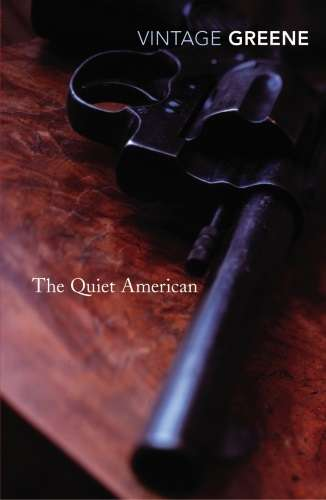
The Quiet American by Graham Greene Basic Notes

This Resource is for students studying Mainstream English in the Victorian Curriculum.

In applying the theme of conflict to an analysis on Graham Greene’s mid-1950s novel The Quiet American, we cannot avoid the constant, juxtaposed pairing of motifs that create the plot basis of the narrative: non-involvement versus action, neutrality versus commitment, ‘‘dégagé’’ versus ‘‘engagé’’.  The idea of conflict is both explicitly and implicitly explored in the text at a societal as well as a personal level.  Being set in Vietnam before the defeat and subsequent withdrawal of the French, provides a backdrop to a clash between personal and political ideologies.  Throughout the novel there is a running debate on the issue of foreign intervention in Indochina.  In terms of political symbolism, it is Fowler and Pyle’s rival attempts to possess Phuong that reflect the West’s attempts to possess and control Vietnam itself.

The Crux of this Novel and the Central Dilemma

The text raises key questions of its protagonist Thomas Fowler.  How long can a non-participating observer — a cynical, middle-aged British journalist paid to report only the facts of conflict — stand on the sidelines until he is compelled to pass a personal and moral judgment upon another, and to become involved?  Fowler clearly points out to Pyle “I don’t know what I’m talking politics for.  They don’t interest me and I’m a reporter.  I’m not engagé’’… “I don’t take sides.  I’ll be still reporting, whoever wins” (p.88).  We are forced to question whether there is any such thing as the moral high ground.  Sooner or later Fowler finds out what Captain Trouin tells him is the truth “One has to take sides.  If one is to remain human” (p.166).

A Moral Choice

Does Fowler have Pyle killed as a result of his jealousy over Phuong’s desertion of him for the American?  Or is he asserting his humanity and taking sides?  He sacrifices his friend to prevent further needless civilian deaths but Greene is ambiguous on how far Fowler’s motives are honest.  Greene in fact makes Fowler deal with a moral choice but he is left with a guilt that is reluctant to let him go.  Human life according to Greene is muddied, even chaotic with dark and contradictory elements in Fowler that leave the reader with more questions than answers at the end of the novel.

The Exposition of Conflict

The exposition of conflict is played out through the relationship between Fowler the journalist, who is also the first-person, confessional narrator of the novel, and Pyle, a young American governmental representative.  Pyle, described by Fowler as a “quiet American”, (p. 9) is inoculated with a textbook education — little more than an academic and ideological theory — on how the creation of a political and military ‘‘Third Force’’ might bring the values of American-style democracy to a Vietnam being destroyed by a war waged between French colonialism and the insurgency of nationalist communism during the early 1950s.

Personal Conflict

Complicating and intensifying matters is the more personal conflict arising in Saigon between the two characters when Pyle falls in love with Fowler’s mistress, Phuong; behind the scenes, with the collusion of a ‘‘third force’’ in Phuong’s grasping older sister, Pyle succeeds in winning her.  Embittered, and a man accustomed to deserting wives and girlfriends rather than them leaving him, Fowler breaks down in the toilet, symbolically, of the American Legation building: ‘‘… with my head against the cold wall I cried.  I hadn’t cried until now.  Even their lavatories were air-conditioned, and presently the temperate tempered air dried my tears as it dries the spit in your mouth and the seed in your body’’ (p.139).

Interconnected Conflicts and Love, Personal Relationships and War

This is black comedy rather than tragic drama.  It is also one example in the novel of where the wider, large-scale conflict of war and ideology, as viewed from Fowler’s stance, intersects and coalesces with the personal.  For Phuong may also be interpreted in a wider sense as representative of the culture, nature and beauty of a ‘‘feminised’’, perhaps idealised image of traditional Vietnam being fought over by an old, tired, cynical Europe and a thoroughly modern, optimistic, yet unworldly United States.

Through Fowler, Greene’s ferocious contempt for the popularity and insidious spread of American values, affluence, behaviour and antiseptic cleanliness is obvious.  He even associates the name ‘‘Pyle’’ with constipation and haemorrhoids in one sequence.

For example, although the novel is narrated by Fowler, Greene ensures an alternative — and accurate — point of view through two sequences in which the British journalist receives a letter and a telegram from his deserted and badly hurt wife, in which she refers to Phuong and to his serial emotional insecurity and weakness: ‘‘You pick up women like your coat picks up dust … I suppose like the rest of us you are getting old and don’t like living alone … You say that we’ve always tried to tell the truth to each other, but, Thomas, your truth is always so temporary’’ (p.108-110 ).

Engagé  – Commitment

Engagé is foretold in a scene in which Fowler accompanies Trouin, a French air force pilot, on an aerial bombing mission, in which a sampan and its crew are casually obliterated.  Who should feel responsible for this, and for the dropping of napalm on villages?  The pilot only, carrying out his nation’s orders?  Trouin insists that at some point everyone, including Fowler, will be forced to take sides, because you cannot stand aside and be dispassionate: ‘‘It’s not a matter of reason or justice. We all get involved in a moment of emotion and then we cannot get out. War and Love — they have always been compared’’ (p.144).

Fowler’s moment is the realisation that Pyle’s covert activities in organising a ‘‘democratic’’ Third Force have brought bloodshed to the streets of Saigon.  Yet it is more complex than this.  It is also a moment that deeply involves the personal — ‘‘War and Love’’ (p.144) — for Fowler’s immediate reaction is that Phuong has been caught up in the bombing, and that Pyle is directly responsible.  Phuong is safe, but Fowler is fully engagé for the first time: ‘‘I thought, ‘What’s the good?  He’ll always be innocent, you can’t blame the innocent, they are always guiltless.  All you can do is control them or eliminate them.  Innocence is a kind of insanity’ ’’ (p.155).

Dégagé – Professional Neutrality

Ironically, Pyle’s ‘‘elimination’’ at the hands of the local communists can be traced back to Fowler’s non-partisan, dégagé newspaper coverage of the war, and the fact that the communists trust him. ‘‘Mr Fowler, you are British.  You are neutral.  You have been fair to all of us,’’ (p.120) says one of their sympathisers, Mr Heng.  This reputation of professional neutrality from conflict, and the consequent insider knowledge supplied to him by the communists, is precisely the factor that has awoken Fowler to Pyle’s quiet ‘‘insanity’’, and drawn him into engagement.

Is Fowler a Murderer by Proxy?

Regardless of cause, motive and justification, is Fowler, by proxy and at arm’s length, a murderer?  At the end of the narrative, with his estranged wife willing to divorce him, he tells Phuong, ‘‘Here’s your happy ending’’ (p.180).  But the words are charged with cynicism and self-recrimination.  For according to Graham Greene — the unhappy country in which the author’s moral and emotional compass swings and points — there is secrecy, guilt, sorrow, and an aftermath in which peace, a quiet resting place of the soul, will never be realised.

By the conclusion of The Quiet American, the interconnected conflicts of love, personal relationships and war have reached some sense of relief and resolution through the agency of Pyle’s death.  In one moment Fowler, whose constant refrain throughout the narrative has been, ‘‘Let them fight, let them love, let them murder, I would not be involved,’’ (p.20) now becomes fully engaged and complicit.  Fowler’s usual response to the conflict that surrounds him has been to sit on the sidelines.  However, when the conflict comes closer, threatening to undo his carefully cultivated equilibrium, his cynicism does not protect him from the horrors of war.

No Definitive Sense of Personal Redemption for Fowler

At Phat Diem, Fowler is confronted with a canal “full of bodies” (p.43) and at this time his own values are unexpectedly challenged by Pyle’s actions.  He is reminded of the truth in what Captain Trouin said that “One day something will happen.  You will take a side” (p.143).  However, it is the bombing in Place Garnier that is the turning point for the hardened journalist.  Haunted by images of the carnage he has witnessed, he realises that inaction can also have lasting consequences.  Fowler’s moral conflict is stark.  Does he betray the man who saved his life?  Does he become complicit in the assassination of another human being?  Does he allow Pyle to continue to “… play with plastics” (p.125) unchecked and kill more innocent people?

Yet when he does engagé, Fowler ends up with a hollow victory.  While Fowler may have gained in humanity by becoming ‘involved’, inevitably he feels guilt for his role in Pyle’s murder.  Paradoxically, he has become like Pyle “… I had betrayed my own principles; I had become engagé as Pyle, and it seemed to me that no decision would ever be simple again” (p.175).  Nonetheless, Fowler expresses remorse for the part he played in Pyle’s death.  He remarks at the end of the novel “Everything has gone right with me since he had died, but how I wished there existed someone to whom I could say that I was sorry” (p.180).  In the end I believe Fowler is fully engagé and complicit.

This Resource is created by englishtutorlessons with Online Tutoring of English using Zoom

Learning Outside the Fish Bowl

This Resource is for Teachers and Students in the Mainstream English Victorian Curriculum.

‘Learning Outside the Fish Bowl’

Have you heard this term before?  The fish bowl analogy is related to the term many people say these days as “seeing the big picture”.  What does it mean?  What requires you to see the big picture and take that leap beyond your current fish bowl?

The fish bowl analogy means that we are all immersed in a paradigm and reality, much like a fish in the water it swims in.  A fish can’t distinguish itself from his water, just as most of us don’t distinguish ourselves from our thoughts about the way we learn.  We don’t know that there is a new learning reality outside the fish bowl within which we are immersed.

The challenge is to pop out of your current fish bowl or context  in order to see the “big picture” to strive ahead far more effectively at school and beyond .  Like a man on the flying trapese, we all have to let go of a known way of viewing our learning  for the unknown.  Everyone of us who aspires to something greater than our current fish bowl or our current grades at school, has to risk this moment of vulnerability.  What makes a clever person is their willingness to confidently jump out of the fish bowl in order to see the bigger picture from which to strive ahead far more effectively.

It takes commitment and a capacity to expand one’s reality.   In order to let go of the trapeze bar of one level of functioning, in order to swing to and grasp another, you have to be committed enough to let go of what no longer serves your learning.  One distinction of a clever person is their willingness to risk failures and their own vulnerability to expand their knowledge to see their potential.

As an English Teacher I can help to hold the bigger picture for my students to leap into.  I will endeavour to empower my students to make the leap into learning outside the fish bowl in order to see and act from the Big Picture.  I will allow my students to get the big AH-HA moment to shift their paradigm to include this next level of the Big Picture of learning by giving them the tools to write well and achieve academic success.

This Resource is created by englishtutorlessons with Online Tutoring Classes using Zoom