Poetry Analysis Step by Step

Why Read Poems?

Some people say they don’t like poetry, it’s boring or they don’t understand it.  I think poetry is more like a song, the more you hear it the more you like it.  The words are very similar to poetry; in fact we can break down the verses of songs and see the meaning as poetry.

Poetry doesn’t have to be boring; it can also be funny like limericks.

Start with a Step by Step Analysis

Have a look at this Poetry Analysis Step by Step Flow Chart in PowerPoint to show you the way to read and understand a poem.  Follow it below as well with a full explanation of the Poetry Analysis Step by Step.

Poetry Analysis flow chart

1. Read a poem 2 or 3 times

Each time you read a poem you notice different things

When you read the poem a second time you pick up on ideas and themes that you may have missed the first time you read it.  Also the poet can have ideas hidden just below the surface of the words and as you read it again, the new ideas can jump out.

2. Paraphrase the poem by stanza next to the original text

Writing it in your own words is a good idea to make sense of the poem, so you know what it means in simple terms

Stanza means the verses of the poem just like a song

How the poet organises the stanzas in a poem is often an important aspect of the poem’s structure.  Nothing in a poem is by accident.  Poets choose their words carefully as well as giving careful thought to the form and layout of the poem.  You should ask yourself why the poet has done this or that because there will be a reason and there is an effect for everything in a poem.

3. Answer the 5 W’s

Who? Who is the poet referring to?

What? What is the poem about?

Why? Why is the poet writing about it?

When? When is the poem set, the time period?

Where? Where is the poem, the place the poet is taking about, the setting?

4. Identify the theme, message or topic

What is the poet trying to say? What is the poet’s message in the poem?

What is the point? Is the poet trying to make a specific point in the poem?

5. Identify and Highlight Examples of Literary Techniques

Simile

Definition: Simile is when you compare two nouns (persons, places or things) that are unlike, with “like” or “as.” “The water is like the sun.”  “The water is like the sun” is an example of simile because water and the sun have little in common, and yet they’re being compared to one another. The “is” is also part of what makes this stanza an example of simile. “The rain falls like the sun,rising upon the mountains.”

Metaphor

When something is described in terms of something else, ‘her eyes are the stars in the sky’ is a metaphor as one thing her eyes is being described in terms of another thing the stars. Metaphors are comparisons that show how two things that are not alike in most ways are similar in one important way. Metaphors are a way to describe something. Authors use them to make their writing more interesting or entertaining. Unlike similes that use the words “as” or “like” to make a comparison, metaphors state that something is something else.

Imagery

Poets use words to create images in your mind.

Alliteration

This is the repetition of a consonant sound in the words.  For example slippery slithering snake is alliteration.

Personification

This is where human qualities or emotions are given to non human things.  The wind howled in agony all day.  He gazed at the angry sea.

Tone

The overall mood of the poem, the emotions can be sad, optimistic, solemn.

Point of View

From what point of view is the poet writing.

Online Tutoring of English using Zoom

Poetry of Robert Frost

Robert Frost

Robert Frost

Frosts poetry is a Metaphor for the ways in which we make sense of our lives

The ways in which people develop their imaginative landscapes, their attitudes and values and how they respond to the world around them are influenced by their sense of place.  In analysing texts the landscape may be seen in literal or metaphorical terms.  Places where we have lived and people we have lived with contribute to our outlook on life and how we respond to particular situations.  For some people these memories stay with them throughout life.  The imaginative landscape derives from the diversity of these experiences over the years.  The physical landscape of a person’s life forms a literal and metaphorical yardstick with which to measure the passage of time and the acquisition of personal characteristics.  The physical becomes intertwined with their imaginative landscape.

Robert Frost’s Imaginative Landscape

Encompasses both the beauty and dark side of the land and of human nature.  While his love of the natural world is evident, inspiring him as a poet and a person, he does not romanticize it, rather he imbues it with strong moral tones, reflecting in his love of rural America.

As well as describing the physical world, Frost is also preoccupied with how the human figures are placed in the landscape and in time.  His characters are aware of where they have come from and their history.  They move in time from the past but also encompass the future.  Frost’s imaginative landscape helps us to construct versions of ourselves by exploring where and who we have come from and who we might become.

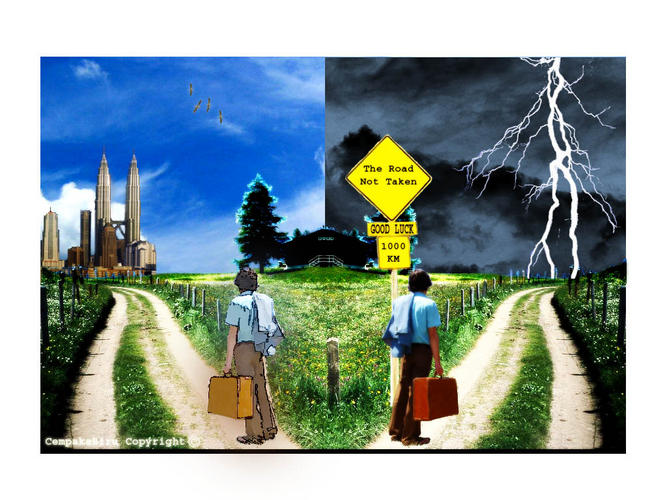
‘The Road Not Taken’ Poem by Robert Frost

See the source image

The speaker stands in the woods, considering a fork in the road.  Both ways are equally worn and equally overlaid with un-trodden leaves.  The speaker chooses one, telling himself that he will take the other another day.  Yet he knows it is unlikely that he will have the opportunity to do so.  He admits that someday in the future he will recreate the scene with a slight twist, he will claim that he took the less-travelled road.

One of the attractions of this poem is its archetypal dilemma, one that we instantly recognise because each of us encounters it numberable times, both literally and figuratively.  Paths in the woods and forks in the roads are ancient and deep-seated metaphors for life, its crises and decisions.  Identical forks, in particular, symbolise for us the nexus of free will and fate.  We are free to choose, but we do not really know beforehand what we are choosing between.  Our route is, thus, determined by an accretion of choice and chance, and it is impossible to separate the two.

The Fourth Stanza Holds the Key to the Poem with 2 Tricky Words

“I shall be telling this with a sigh

Somewhere ages and ages hence:

Two roads diverged in a wood, and I –

I took the one less traveled by,

And that has made all the difference”.

Those who interpret this poem as suggesting non-conformity take the word “difference” to be a positive difference.  There is nothing in the poem that suggests that this difference signals a positive outcome.  The speaker could not offer such information, because he has not lived the “difference” yet.

The other word that leads non-discerning readers astray is the word “sigh”.  By taking “difference” to mean a positive difference, they think that the sigh is one of nostalgic relief.  However, a sigh can also mean regret.  There is the “oh, dear” kind of sigh, but also the “what a relief” kind of sigh.  Which one is it?  We do not know.

See the source image

If the the sigh is one of relief, then the difference means the speaker is glad he took the road he did.  If the sigh is one of regret, then the difference would not be good, and the speaker would be sighing in regret.  The speaker of the poem does not even know the nature of that sigh because that sigh and his evaluation of the difference his choice will make are still in the future.  It is a truism that any choice we make is going to make “all the difference” in how our future turns out.

Private Online Tutoring of English using Zoom


Basic Debating Rules

This Resource is for students studying Mainstream English in the Victorian Curriculum.

See the source image

Basic Debating Rules: Starting with an Explanation of What is a Debate?

A debate is basically an argument with strict rules of conduct.  It is not a shouting match between two sides with different points of view.

Topic Sides

There are 2 sides in a debate:

  1. The Affirmative agrees with the topic
  2. The Negative disagrees with the topic

The Team Line

Three speakers work together as a team.  The Team Line is the basic statement of “why the topic is true” (for the affirmative team) and “why the topic is false” (for the negative team).  It should be a short sentence, presented by the first speaker of each team and used by the other two speakers to enforce the idea of teamwork.

The Debate Announcer and Time Keeper

  1. The Debate Announcer introduces the topic and the students on each team
  2. The Debate Announcer mentions that each speaker will be timed, the minimum speech is 3 minutes and the Time Keeper will tap on the desk when the 3 minutes has elapsed so the Speaker knows
  3. Each team will have the same allowance for time

Speakers

Each side has 3 speakers who speak in order:

First Speaker of the Affirmative Side Must

  • define the topic
  • present the Affirmative team’s line
  • outline briefly what each speaker in their team will talk about
  • present the first half of the Affirmative case

First Speaker of the Negative Side Must

  • accept or reject the definition.  If you don’t do this it is assumed that you accept the definition.
  • present the Negative team’s line
  • outline briefly what each of the Negative speakers will say
  • rebut a few of the main points of the First Affirmative Speaker
  • the First Negative Speaker should spend about one quarter of their time rebutting
  • Present the first half of the Negative team’s case

Second Affirmative Speaker Must

  • reaffirm the Affirmative team’s line
  • rebut the main points presented by the First Negative Speaker
  • the Second Affirmative Speaker should spend about one third of their time rebutting
  • present the second half of the Affirmative team’s case

Second Negative Speaker Must

  • reaffirm the Negative team’s line
  • rebut some of the main points of the Affirmative’s case
  • the Second Negative Speaker should spend about one third of their time rebutting
  • present the second half of the Negative team’s case

Third Affirmative Speaker Must

  • reaffirm the Affirmative team’s line
  • rebut all the remaining points of the Negative team’s case
  • the Third Affirmative Speaker should spend about two thirds to three quarters of their time rebutting
  • present a summary of the Affirmative team’s case
  • round off the debate for the Affirmative team

Third Negative Speaker Must

  • reaffirm the Negative team’s line
  • rebut all the remaining points of the Affirmative team’s case
  • the Third Negative Speaker should spend about two thirds to three quarters of their time rebutting
  • present a summary of the Negative team’s case
  • round off the debate for the Negative team
  • neither Third Speaker may introduce any new parts of their team’s cases

Importance of Rebuttal

In debating, each team will present points in favour of their case.  They will also spend some time criticising the arguments presented by the other teamThis is called Rebuttal.

There are a few things to remember about Rebuttal:

  1. Logic – to say that the other side is wrong is not enough.  You have to show why the other side is wrong.  This is best done by taking a main point of the other side’s argument and showing that is does not make sense.  A lof of the thinking for this needs to be done quickly and this is one of the most challenging aspects of debating.
  2. Pick the important points  – try to rebut the most important points of the other side’s case.  You will find that after a while these are easer to spot.  One obvious spot to find them is when the first speaker of the other team outlines briefly what the rest of the team will say.
  3. Play the ball – do not criticise the individual speakers, criticise what they say.

The Manner of how you present your debate is important

The manner is how you present what you say and the best manner style is definitely not to shout and thump the table but to keep calm and present your points with a clear speaking voice.  Here are a few tips that might come in handy with your debating style:

  1. Use Cue Cards – debating is a lively interaction between two teams not just reading a speech off notes.  Use cue cards like a prompt in a play as a reference if you lose your spot or train of thought.
  2. Use Eye Contact – if you look at the audience you will hold their attention.  If you spend the whole time reading from your cue cards or looking at a spot away from the audience, they will lose concentration very quickly.  Keep the audience in your sight and their minds will follow your logic.
  3. Your Voice – you must project your voice so that you can be heard but definitely do not shout.  Use the volume, pitch and speech of your voice to emphasise important points of your speech.  Sometimes a loud burst will grab the audience’s attention while a period of quiet speaking will draw the audience in and make them listen more carefully to what you are saying.
  4. Your Body – Make your body work for you by using hand gestures with confidence.  Move your head and upper body to maintain eye contact with all members of the audience.  Stand straight up, definitely do not slouch over the desk or let the audience know you might be nervous.
  5. Nervous Habits – avoid them like the plague.  Playing with the cue cards, pulling strands of your hair, fiddling with your watch or bouncing up and down on your feet will all distract from what you are saying.  Don’t let any one thing detract from your ability to persuade the audience.
  6. Using Big Words – try to avoid going overboard with big words and confusing people.  If you don’t understand the big words yourself then the chances no one else will understand what you are saying either.  It would be a huge mistake to debate and get stuck on a word that you are not sure what it means but also one that you can’t pronounce.

The Marking Scheme in a Debate

Every adjudicator marks to a standard.  You will get a mark out of 40 for matter, manner and method with a total mark out of a 100.

This Resource is created by englishtutorlessons with Online Tutoring Classes using Zoom


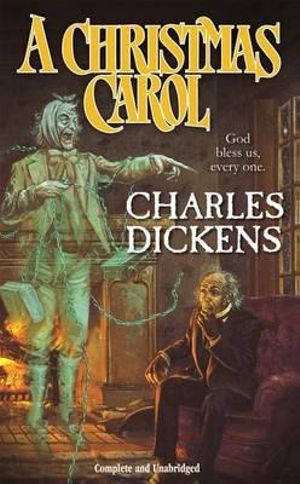
Brief Synopsis of ‘A Christmas Carol’ by Charles Dickens

What is A Christmas Carol by Charles Dickens about?

Set in the 1840s on Christmas Eve, A Christmas Carol by Charles Dickens chronicles the personal transformation of the protagonist, Ebenezer Scrooge, the proprietor of a London counting house.  A wealthy, elderly man, Scrooge is considered miserly and misanthropic: he has no wife or children; he throws out two men collecting for charity; he bullies and underpays his loyal clerk, Bob Cratchit; and he dismisses the Christmas dinner invitation of his kind nephew, Fred.  Moreover, Scrooge is a strong supporter of the Poor Law of 1834, which allowed the poor to be interned in workhouses.

As he prepares for bed on Christmas Eve in his solitary, dark chambers, Scrooge is visited by the ghost of his former partner, Jacob Marley.  In life Marley was very similar in attitude and temperament to Scrooge: remote, cruel, and parsimonious.  In death he has learned the value of compassion and warns Scrooge to reform his ways before it is too late.  Marley announces that Scrooge will be visited by three more specters: the Spirits of Christmas Past, Present, and Yet to Come.

The Ghost of Christmas Past takes Scrooge back to his unhappy childhood, revealing that the young boy’s experiences with poverty and abandonment inspired a desire to succeed and gain material advantage.  Unfortunately, Scrooge’s burgeoning ambition and greed destroyed his relationship with his fiancée and his friends.

The Ghost of Christmas Present is represented by a hearty, genial man who reminds Scrooge of the joy of human companionship, which he has rejected in favor of his misanthropic existence.

Finally, the Ghost of Christmas Yet to Come appears in a dark robe and shrouded in mystery.  Silently, the ghost reveals the ambivalent reaction to news of Scrooge’s own death. Scrooge realizes that he will die alone and without love, and that he has the power and money to help those around him – especially Bob Cratchit’s ailing son, Tiny Tim.  Scrooge begs the ghost for another chance and wakes in his bed on Christmas morning, resolved to changing his life by being generous and loving to his family, employees, and the poor.

Classifying A Christmas Carol

For some readers A Christmas Carol resonates as a gothic ghost story, at times chilling and terrifying and at other times, extremely funny.  Other readers see the story as a time travel narrative.  Dickens in effect blended realism and the supernatural to create a world in which the gothic and the mundane sit side by side.  Dickens himself said he was here taking old nursery tales and “giving them a higher form” (Stone, Harry 1999, ‘A Christmas Carol: Giving Nursery Tales a Higher Form’).  With its dark, chilly setting and its supernatural visitors, A Christmas Carol draws on elements of the gothic novel when Scrooge’s door-knocker turns into Jacob Marley’s face.  The narrator provides a number of descriptions in which gothic elements are interwoven with freezing, icy imagery to emphasise the atmosphere of mystery and to remind us of the protagonist’s icy heart.

A Christmas Carol as a Cultural Myth

According to Juliet John, A Christmas Carol has become a “cultural myth” providing “a parable for the modern, commercial age” (John, Juliet 2011, ‘Dickens and Mass Culture’).  As a morality tale, in which evil is exposed, virtuous characters like the Cratchits are rewarded, and everyone celebrates at the conclusion.  However, there are issues raised in A Christmas Carol that remain unresolved at the conclusion of the novel. The sinister children of Want and Ignorance, do not go away just because Scrooge has been reformed, but the narrator tells us nothing of their future.  Their role is more allegorical than that of other characters. Dickens uses them as an important warning to his readers and to Scrooge as the frighteningly ugly face of 19th century poverty.  Unless social reform takes place urgently, Want and Ignorance will grow into hungry, resentful predators.  The fact that Dickens even raised the issue of the miserable lives of street children at all marks an important attempt by him to make his readers ponder their own social responsibilities.

Historical Context of A Christmas Carol 

While A Christmas Carol is primarily received as a ghost story, it is also a damning expose of social inequality in 1840’s Britain.  Dickens was deeply agitated by what he perceived as the inertia of the British government and wealthy middle classes to help those less fortunate than themselves.  A Christmas Carol was written at the beginning of the ‘Hungry Forties’ a period that encompassed the catastrophic Irish potato famine, as well as intense suffering for the English working classes.  Dickens uses A Christmas Carol to not only attack the Utilitarian philosophy of Jeremy Bentham, who justified the centralisation of Poor Relief in workhouses, but also to lambast the work of Thomas Malthus in his Essay on the Principle of Population.  Whilst in abstract these principles might seem logical, when applied to suffering individuals, their underlying brutality becomes obvious.

Ebenezer Scrooge

For most readers Scrooge represents the worst charactertistics of his society.  Fixated with material goods at the expense of all human connection, particularly with his clerk Bob Cratchit, Scrooge is an allegorical embodiment of the forces of capitalism underpinning Britian’s economy in the 1840’s.  For Dickens, he represented everything that was wrong with society in an increasingly industrialised world where human relations took second place to profits.

Dualism in Dicken’s Writing

The world of the early Dickens is organized according to a dualism which is based in its artistic derivation on the values of melodrama: there are bad people and there are good people, there are comics and there are characters played straight. The only complexity of which Dickens is capable is to make one of his noxious characters become wholesome, one of his clowns turn out to be a serious person. The most conspicuous example of this process is the reform of Scrooge in A Christmas Carol shows the phenomenon in its purest form.

We have come to take Scrooge so much for granted that he seems practically a piece of Christmas folklore; we no more inquire seriously into the mechanics of his transformation than we do into the transformation of the Beast into the young prince that marries Beauty in the fairy tale. Yet Scrooge represents a principle fundamental to the dynamics of Dickens’ world and derived from his own emotional constitution – though the story, of course, owes its power to the fact that most of us feel ourselves capable of the extremes of both malignity and benevolence.

Redemption in A Christmas Carol 

Can A Christmas Carol be seen as a tale about redemption in a man who has ostracized himself from his society?  While the narrative is focused on Ebenezer Scrooge’s learning experiences and his reintegration into the community, his story also forms part of a broader allegory through which Dickens invites his readers to consider Christmas as a time of renewal and hope and to think about how they themselves might redeem and be redeemed.

The ‘Scrooge Problem’ – the Questioning of Scrooge’s Transformation

Elliot L. Gilbert’s essay: ‘The Ceremony of Innocence: Charles Dickens’ A Christmas Carol’ addresses ‘the Scrooge problem’, that is, the critical tradition of questioning the sincerity of Scrooge’s sudden transformation from being mean-spirited to kind-hearted.  Gilbert admits that his support for Scrooge’s change of heart is not free from doubt, as similarly to House and Johnston, he feels that the ease of Scrooge’s alteration is questionable. Furthermore, to accept the overnight metamorphosis of a man who has spent a lifetime bullying clerks, revelling in misanthropy and grinding the faces of the poor, is ‘to deny all that life teaches in favour of sentimental wishful thinking.’

Gilbert’s essay provides a new hypotheses to explain the reader’s misgivings regarding the plausibility of Scrooge’s radical conversion; he is merely returning to his childhood innocence. He explains why he views A Christmas Carol to be metaphysical; it is because it portrays the journey of a human being trying to rediscover his own childhood innocence. Such innocence Gilbert claims is evident in Scrooge’s encounter with the ghost of Christmas past, when Dickens has Scrooge’s fiancé break off their engagement, because the man she sees before her is not the man she first knew. Here, he reveals that Scrooge was not always bitter and mercenary, and therefore not so different from the man we are shown at the end of the novel. Thus, Scrooge’s new self is believable as it is in part his old self.

Private Online Tutoring of English using Zoom

The God of Small Things by Arundhati Roy: The Basics

Brief Analysis for Mainstream English Year 11 Students studying ‘The God of Small Things’ by Arundhati Roy, AOS1 Unit 1 Analytical Study

The God Of Small Things By Arundhati Roy

Historical Context of The God of Small Things

The God of Small Things takes place mostly in 1969 and 1993, in Ayemenem, in the district of Kerala in India. Marxist ideas grew popular in Kerala soon after India’s liberation from British colonial rule, and in 1967 the Naxalite party split off as a more radical Communist group than the mainstream. The growing social unrest from these labour movements affects the action of the early novel. The ancient Hindu caste system (dividing Untouchables from Touchables, among other rules) was abolished around 1950, but many Indians still clung to old traditions and the class divide. Some of the characters in the novel are also Syrian Christians, an ancient community in Kerala originating with St. Thomas.

Setting/Place

Ayemenem: where most of story takes place; where Estha/Rahel come home to when they are older (1993), where the death of Sophie Mol takes place (1969).

New York: where Rahel lives shortly while married to Larry

Delhi: where Rahel goes to school studying architecture.

Cochin: where the family see “The Sound of Music” and Estha gets molested by the Orangedrink Lemondrink Man. On the way Rahel sees Velutha participating in a communist rally. Location of the airport when the family picks Sophie Mol & Margaret Kochamma up from their London flight.

Main Plot

  1. In Ayemenem Pappachi and Mammachi live together. Pappachi is an imperial entomologist who discovers a new species of moth and never gets credit for it, making him resentful for the rest of his life. Elements of pappachi are mentioned later on, Sophie mol has his nose and throughout the novel it is mentioned that Rahel has a moth on her chest, spreading its wings when traumatic events happen.
  2. Pappachi beats Mammachi who starts Paradise Pickles and Preserves and is a talented violinist. Pappachi also smashed Mammachi’s violin.
  3. When Chacko comes back from studying in England where he meets his only love, Margaret, he sees Pappachi beating Mammachi and tells Pappachi that it will never happen again. After this Pappachi and Mammachi never talk again.
  4. Chacko has his heart broken by Margaret while she is pregnant with their child. He moves back to Ayemenem. Meanwhile, Ammu wants to leave Ayemenem and does so by marrying Baba and has the twins with him, she then goes back to Ayemenem after he tells her about his bosses proposal for sex after he loses his job. Baba is an alcoholic, compulsive liar and Ammu later sends Estha back to him when she can’t afford to care for him.
  5. The family in Ayemenem go on one of their routine trips to Cochin where they see the sound of music, and Estha is molested by a vendor there. On the way to Cochin they witness a communist rally where Rahel sees Velutha.
  6. The next day in Cochin the family pick up Sophie Mol and Margaret from the airport. Rahel then describes everything as if it were a play and everyone is trying to impress Sophie Mol.
  7. Velutha tells the twins that the person at the rally is his twin brother when they bring it up.
  8. There is a moment where Velutha and Ammu make eye contact, signaling their relationship to begin.
  9. Estha is still fearful of the man who molested him, and while he is stirring jam at the factory Rahel walks and he tells her about his plan.
  10. They go to the history house on a boat and bring their toys and food. They go multiple times, and on their way back with Sophie Mol, she dies in an accident.
  11. Around this same time, the house is alerted by Velutha’s dad about Ammu and Velutha’s forbidden relationship.
  12. Ammu is locked in her room by Baby Kochamma and Mammachi. When she comes out she yells at the twins and they go to the history house with Sophie Mol, who dies.
  13. Baby Kochamma fabricates a story to the police that Velutha raped Ammu and kidnapped the kids, and is responsible for Sophie’s death. He is beaten to death by police.
  14. Ammu later goes to the police station and tries to tell them the truth, but they do nothing and she leaves crying saying “I killed him”
  15. Baby Kochamma uses Chacko’s grief to kick Ammu out of town for her actions. Estha is ‘returned’ and Rahel stays with Mammachi and Baby. Ammu dies soon after.
  16. Baby Kochamma abandons her garden and becomes consumed by the TV. Kochu Maria joins her. The returned Estha at the house doesn’t speak.
  17. Rahel watches Estha as he enters the shower after his walk in the rain and they end up having sex in the bed after.

Narrative Structure

The book is written in a non-linear format using multiple narrators and flashbacks. The story unfolds in two time periods, 1969 and 1993, and the unknown narrator gives details about events outside those times. The non-linear technique with gaps in the plot until the end keeps the reader interested and leaves them with many questions.

Things are seen from Rahel and Estha’s childlike perspectives, for example Rahel is convinced Sophie Mol is alive and that Velutha didn’t die, it was his fictitious twin. The climax of the novel is surrounding Sophie Mol’s death, and it is known from the beginning that she will die due to the non-linear format. This technique creates anticipation regarding Sophie’s death. Even more shock is present during the climax when the Ammu and Velutha’s unexpected relationship is revealed by the sobbing Vellya, the only clue of their relationship mentioned previously being their eye contact.

The non-linear format allowed for Estha and Rahel’s love scene being juxtaposed with Ammu and Velutha’s because they are placed back-to-back. The reader is shocked by the incestuous relationship and also by the graphic nature of Ammu and Velutha’s love scene.

Themes

Love relationships & forbidden love / sexuality / death / dreams / Indian caste system / narrative past / narrative present / time is stagnant / family influence & obligations / change versus preservation of time / western values / white westerners superior / gender politics / Communism / social structures / Indian politics / imperialism / religion / the environment

Symbols

Small Things = small moments, objects and changes that lead to the big things in life, small talk that is a mask for larger hidden feelings, relevant to the taboo relationship of Ammu & Velutha

Big Things = big events in life like love, death and political upheaval

Pappachi’s moth = signifies the family’s downfall and acts as a carrier of negativity

Spider = relates to Ammu and Velutha’s relationship & part of the ‘small things’ they focused on

Rahel’s watch = the time on the watch stays the same at ten minutes to two signifying that time is stagnant, the novel is literally frozen in time

Sophie Mol’s death = while it is a tragic accident her death is tied to many elements in the novel including Estha’s sexual abuse, Ammu & Veluthas taboo relationship & Estha & Rahel’s sexual encounter

The Heart of Darkness = Joseph Conrad’s novel connected to the History House that Chacko explains to the twins how to understand history

The History House = Kari Saibu’s house the Englishman who had ‘gone native’ and was mentally unstable and been corrupted

Communism = Chacko, Pillai and Velutha are communists from different classes yet shows how widespread communism is in India

Love = love and the rules about “who should be loved.  And how.  And how much” refers to love laws in India that are controlled by the caste system

The Sound of Music = the movie is popular because it represents western values and links to the theme of natural beauty against society’s demands on the individual

Ammu’s dream = represents her physical reaction to Velutha as the one-armed man that she cannot touch and Ammu’s own romantic death

Colours as Symbols

White = the association of whiteness as being superior and privileged in status as westerners like Margaret Kochamma and Sophie Mol who are British are compared to the twins who are Indian and darker skinned made to recognise as subordinate their own ways of seeing.  Sophie Mol’s white skin is precious as Rahel says “she’s very delicate, if she gets dirty she’ll die”.

Blue = blue can be negative associated with sadness, fear and depression but on the positive side it can signify harmony, confidence and cleanliness.  Pappachi, Baby Kochamma and Margaret Kochamma represent the old social order under threat of losing its grip everything about them is blue, symbolised by the “skyblue Plymouth”.

Red = red represents rebellion and change in the characters of Ammu, Rahel, Estha, Velutha and Comrade Pillai with the Communist “red flags”.  Red and blue signify warring parties.  Red is also associated with impending danger and an omen of bad consequences such as Velutha’s red blood is his symbolic sacrifice at the blue altar of the Ayemenem Police Station.  Rahel’s “yellow-rimmed red plastic sunglasses” make her a prophet predicting the future.

Yellow = represents fear in the context of cowardice, illness, dishonesty and weakness.  The “yellow church” is a chorus of fear and tragic fate that is the sadness of Sophie Mol’s funeral.  Sophie Mol’s “yellow Crimplene bellbottoms” are bell shaped indicative of silent, fearful bells.  The “yellow teeth” of the Orangedrink Lemondrink Man represent fear.

Green = green is the colour of earth, fertility, youth and the undergrowth.  Green can also have final cruel power taking over Baby Kochamma’s garden but most importantly is linked to the river that is part of the cause of Sophie Mol’s death with its “thick, viscous water … of green scum”.

Main Characters

  • Pappachi:               Imperial Entomologist position in Delhi, upper-class education, father to Chacko and Ammu, habitually beats his wife Mammachi with a brass vase until Chacko forces him to stop.  Never overcomes the professional disappointment of discovering a new species of moth but not having it named after him.
  • Mammachi:           Esther & Rahe’s blind grandmother who is unhappily married to Pappachi who regularly beats her and smashes her violin before he dies.. After Pappachi dies becomes an entrepreneur starting successful Paradise Pickles and Preserves business.
  • Baby Kochamma:                Pappachi’s sister who is fearful because of the western media she consumes. Loves Father Mulligan and tries to become nun to win him over but fails, embittering her. Was forced to wave communist flag in rally by men and is traumatized by this, aims all her anger about this event towards Velutha after finding out about him having sex with Ammu.
  • Chacko:                   Ammu’s brother and self-proclaimed communist, takes over factory and makes female factory workers call him comrade and flirts with them. Has a door built into his room so the women he sleeps with can secretly leave. His only love is Margaret Kochamma, who divorced him and took their daughter Sophie Mol to live with her and her husband Joe in England, who dies. Margaret is his only love.
  • Ammu:                    mother of Estha and Rahel who got married to Bengali Hindu man Baba in order to escape from her parents to an alcoholic, then separated from him after he offered her to his boss for sex. Had a taboo sexual relationship with the Paravan Velutha, leading to his death. Dies at 31 while waiting for a job interview/trying to provide for her twins.
  • Baba:                        Estha & Rahel’s father and Ammu’s ex husband, is an alcoholic who tires to persuade Ammu to safeguard his job by sleeping with his boss.  He gives Estha a loveless home for 2 decades, then decides to emigrate to Australia sending Estha back to Ayemenem
  • Rahel:                      fraternal twin of Estha who studies architecture and moves to America marry Larry McCaslin. She separates from her husband and eventually moves back to Ayemenem in 1992 as a 31 year old because she hears Estha has returned.
  • Estha:                       Rahel’s male fraternal twin, in 1969 after the death of Sophie Mol is sent to live with his alcoholic father Baba in Calcutta & stops speaking, due to his traumatic abuse in childhood, remains mute for rest of the novel. His reunion with Rahel after a 23 year long separation is a poignant event in the novel.
  • Velutha Paapen:                  Paravan/untouchable son of one-eyed father Vellya. Mutual love between him and the twins. Works as a handyman in the Paradise Pickles factory. Has a taboo sexual relationship with Ammu, is the God of Loss & Small Things. Member of the Communist Party. Tragic figure betrayed by everyone and dies as a result of being beaten by the police.
  • Vellya Paapen:                     is in debt to the Ipe family for providing a glass eye, putting his son in the Reverend John Ipe’s Paravan school and allowing his family to live on the land. Confesses to Baby Kochamma and Mammachi about seeing his son have sex with Ammu.
  • Sophie Mol:           daughter of Chacko and Margaret Kochamamma.  After Joe’s death she and her mother arrive in Ayemenem for a Christmas visit.  Dies because she is flipped off a boat with Rahel and Estha in the Meenachal River. Her death is the central traumatic event that leads to the disintegration of the Ipe family, separating the twins and her death is blamed on Velutha by Baby Kochamma, contributing to the climax of the story.
  • Kochu Maria:        Temperamental cook and housemaid at Ayemenem House, lives with Baby Kochamma until the twins return as adults, watches constant TV like her employer.
  • Comrade K.N.M Pillai:       Leader of the Communist Party who takes advantage of Velutha’s death by causing a strike that shuts down Chacko’s pickle factory. He is not interested in protecting Velutha when he is arrested by Inspector Mathew.

Nineteen-Eighty Four by George Orwell: The Basics

Brief Analysis for Mainstream English Year 11 Students studying ‘Nineteen Eighty Four’ by George Orwell in AOS1 Unit 1 Analytical Study

Image result for nineteen eighty four front cover

Introduction

George Orwell’s ‘Nineteen Eighty-Four’ is a dystopian fiction novel set in a futuristic Britain which has become part of a global party state.  The story is told via the protagonist Winston Smith who desperately tries to hold on to his sense of identity while fighting the impregnable doctrines of ‘Big Brother’ and ‘The Party’.  Defying a ban on individuality, Winston dares to express his thoughts in a diary and pursues a relationship with Julia. These criminal deeds bring Winston into the eye of the Party, who then must reform the nonconformist.

First published in 1949 as a dystopian fiction and social criticism, the novel is intended to shine a light on the problems of the present day, even if they are set in the future.  In Orwell’s case this meant highlighting the dangers of totalitarian regimes such as the Nazis in Germany during WW11 and the Communists in the Soviet Union (Russia) after WW11.  By extrapolating into the future, Orwell depicts such a regime being in power in England and explores what the implications of that might be for its citizens. 

Structure of the Novel

Part One – Eight Chapters

  • Introduces/describes main characters
  • Describes society and control of the masses
  • Winston is used to contrast the reality of life in Oceania versus the stated reality of the government
  • Relationship between Winston and Julia
  • The Proles are introduced

Part Two – Ten Chapters

  • Winston and Julia’s relationship develops
  • Their commitment to O’Brien

Part Three – Six Chapters

  • Winston’s torture/ ‘cure’
  • The mighty power of the Party
  • The destruction of the individual

Character Study

Winston Smith

Winston Smith is the protagonist and ‘hero’ of 1984.  The novel is told from his point of the view so it is not surprising that the reader connects with him and his plight.  Winston is an individual living in a demoralizing, totalitarian government trying to fight for his right to personal inner and outer freedom.  He is aware of what has been lost and the deceit and immorality of the society.  In his own small way, he stands up for truth and freedom.

Intellectually Winston questions the status quo and is frustrated by the lack of privacy. Every element of life is controlled and people need to even watch their expressions so they so not commit ‘face crime’. Winston can see things as they really are – life is not good. Conditions are poor and lies are everywhere. In fact, he works at the Ministry of Truth, where he has to change facts, history and current news to suit the Party.

Winston is a true hero because he puts in a brave fight and knows on some level that he is doomed. The novel highlights how unorthodox people who rebel are not tolerated and quickly destroyed in such authoritarian governments.  He is a hero but not in the traditional sense of the word.  Key Point is that Winston is characterised by both pessimism and hope.  He feels that he will inevitably be discovered and tortured by the Thought Police, yet he rebels anyway and holds onto hope as long as he can, locating that hope eventually not in his own rebellion but in the proles.

Along the way the reader clearly sees that Winston is genuinely naïve and delusional regarding how much change he can enact.  His tendency towards his nostalgic, emotional yearning probably encourages him to be too trusting of O’Brien and Mr Charrington.  

Winston Quotes

‘Now that he had recognised himself as a dead man it became important to stay alive as long as possible’ (p.33)

‘The one thing that matters is that we shouldn’t betray one another, although even that can’t make the slightest difference’ (p.192)

‘But it was all right, everything was all right, the struggle was finished.  He had won the victory over himself.  He loved Big Brother’ (p.342)

Julia

Everything we know about Julia is through Winston’s observations so we may not have the full picture.  Like Winston, Julia is rebellious and an independent thinker.  Unlike Winston, she is confident, daring, determined and very selfish. Julia wants to improve her life and that is enough.  She sees no point in trying to change the political landscape or harp on about the past.  When Winston tries to talk about his memories or the past as well as his dreams, she either does not understand him or does not care and falls asleep on him.  Julia is resilient and ruthless in the way she lives her life.  She has gained remarkable knowledge and knows how to use the black market to get what she wants.  In the end, Julia is a survivor.

Julia Quotes

‘Life as she saw it was quite simple.  You wanted a good time; “they” meaning the Party, wanted to stop you having it; you broke the rules as best you could’ (p.151)

‘As they walked back across the grass, she looked directly at him for the first time.  It was only a momentary glance, full of contempt and dislike’ (p.336)

O’Brien

O’Brien is the embodiment of cold hard evil as he is the system and keeper of the power. O’Brien has lost the ability to separate himself from the Party and he does not care. As quite an intelligent man, he is dangerous because he has no need for emotions. He is both a physical and mental sadist – toying with ideas, facts and memories. When it comes to torture, O’Brien sees all his victims as inferior and deserving of their punishment. It becomes sickly clear O’Brien is doing his ‘job’ with extra zealousness, representing the worst Nazis like Dr. Mengele and his ‘scientific’ experiments on the Jews.

O’Brien loves the power that he has over people and his role in the Inner Party. His arrogance is also due to the fact that he is one of the favourite ‘insiders’ who knows what is really going on; and he lives a more affluent lifestyle.

O’Brien Quotes

‘But at any rate he had the appearance of being a person that you could talk to, if somehow you could cheat the telescreen and get him alone’ (p.13)

‘An unmistakable message had passed.  It was though their two minds had opened and the thoughts were flowing from one into the other through their eyes’ (p.20)

Big Brother

Big Brother is the public face of the Party, the face that watches over all the citizens of Oceania from posters and telescreens.  Orwell based Big Brother’s appearance on that of Joseph Stalin and in the mythology of the Party he was the revolutionary leader who swept them to power.  The slogan that accompanies many of the posters is ‘BIG BROTHER IS WATCHING YOU’, and he therefore embodies the surveillance state that monitors the citizens at every moment.  O’Brien asserts that Big Brother exists when he tells Winston ‘Of course he exists.  The Party exists.  Big Brother is the embodiment of the Party’ (p.296).  In the end Winston accepts that he loves Big Brother which shows the ultimate victory of the Party over the individual.

Parsons

Parsons comes across as ridiculous through Orwell’s use of black humour.  He is happy when his daughter informs on him to the Thought Police.  He represents the powerlessness of people and the hardships they have to put up with it and never complain about, assuming they can see what is wrong. Despite his loyalty and conformity, Parsons becomes a victim – again highlighting the lack of control and security people have.

Symes

Symes is clearly intelligent, which may have led to his downfall.  As the expert on Newspeak, Symes was quick to gloat and talk to others.  ‘One of these days, thought Winston with sudden deep conviction, Syme will be vaporized.  He sees too clearly and speaks to plainly.  The Party does not like such people.’

Goldstein

Goldstein is a scapegoat, blamed for all the problems.  He is stereotyped as Jewish and is meant to symbolize Trotsky.  In Russian history, Trotsky became Stalin’s scapegoat – taking the focus away from his own selfish, evil deeds.

Charrington

For a while, Charrington held for Winston what he yearns for from life – individuality, beauty, the romance of the past.  The items in the shop lure Winston in.  When Winston and Julia are arrested, Charrington’s appearance is changed and he is revealed as a spy for the ‘Thought Police’.

Social Structure of Oceania

INGSOC – Inner Party 2% of Oceania

  • INGSOC is the name of the English Socialist Party – representing the political ideology of the totalitarian government in Oceania – Inner Party make policies, decisions and govern whilst living an upper class/privileged lifestyle
  • Big Brother is the leader but he may or may not exist
  • As history is constantly altered and rewritten, the origins of the Party are somewhat blurred
  • At one point Emmanuel Goldstein was a significant member but then he supposedly betrayed the Party or he is classified as an enemy of the Party
  • The Theory and Practice of Oligarchical Collectivism written by Goldstein refers to the Party as an Oligarchical Collectivism

The Outer Party – 13% of Oceania

  • Administrative workers such as Winston
  • Implement, manage policies
  • Voiceless and powerless
  • Spied on through telescreens and other surveillance
  • Allowed Victory cigarettes and gin as their only luxury
  • Very poor living conditions and food rations despite being called ‘middle class’
  • Sex is forbidden except for procreation in marriage
  • Intimacy, love, relationships are seen as ‘dangerous’ as they may encourage an emotional life with others rather than the Party

The Proles – 85% of Oceania

  • Lowest class, manual labourers. 
  • Live in poverty, but under less surveillance
  • Kept happy with seemingly more freedom – sex, alcohol, sport, gambling, pornography and fiction
  • Most are uneducated and thus do not impose such a threat to the Party
  • Minimal surveillance for potential ‘thinkers’ by Thought Police
Major Themes
Dangers of totalitarianism / control & powerInterrogation / torture / violencePropaganda / history / control of the past / manipulation of historySurveillance / informers
Courage / resistance / rebellionLove / connectionLanguage / communicationLanguage as mind control
Philosophical viewpointstechnologyPsychological manipulationrepression
Death of privacyAbolishment of sex and intimacyMemory and the pastWarfare
Major Symbols & Literary Motifs
Big Brother / posters of Big BrotherEmmanuel GoldsteinNewspeakDoublethink
Mutability of the pastTelescreensGlass paperweightSt Clements Church
Victory Gin / Victory CigarettesJulia’s scarlet anti sex sashThe place where there is no darknessRed armed prole woman
Urban decayDreamsWinston’s motherRoom 101
Memory holesSong Church bells / Oranges & lemonsBirdsWinston’s varicose ulcer
2+2 = 5Goldstein’s bookThought PoliceMinistry of Truth
INGSOC slogan ‘Our new happy life’Song ‘Under the Spreading Chestnut Tree’Ministry of LoveWar is peace / freedom is slavery / ignorance is strength
ThoughtcrimeBombing of Airstrip OneOceania/Eastasia allegiance at war2 minutes of Hate / Hate week
Big Brother’s ‘Order of the Day’Confessions of ‘Thought Criminals’News in Oceania emphasis on figuresWinston’s job revisits history

Essay Introductions on the Film ‘Lion’ Directed by Garth Davis

Image result for images of lion the movie

For students studying the film Lion Directed by Garth Davis, please find two essay prompts with their Introductions that include the Main Contention and Message of Director colour coded.

Prompt #1   “Every night I imagine that I’m walking those streets home and I know every single step of the way and I whisper in her ear I’m here”.  Lion portrays the bonds of family.  Discuss.

Introduction / Main Contention / Message of Director

Lion the movie directed by Garth Davis is about love, the bonds of family and the remarkable bond between mother and son that transcends continents.  As a young five year old we see Saroo working with his birth mother Kamla in the hills behind their village of Ganesh Talai, Khandwa, India.  There is a clear sense of belonging to family and knowing Saroo is accepted and loved shown in the scene where his mother feeds her children with the milk in packets Guddu got in the market.  In 1987 Saroo is adopted by Sue and John Brierly who prove a quiet dedication to the bonds of family in the life they provide for Saroo in Tasmania.  Then the film transports us 25 years later as the adult Saroo scours Google Earth for clues to the whereabouts of his village in India.  The more vivid the memories become for Saroo he feels the more his love for his birth mother is reignited.  The pivotal moment is in 2012 in the village of Ganesh Talai when Saroo’s birth mother sees his face after 25 years of separation.  The memory of her face had been embedded in Saroo’s mind for such a long time in the many flashbacks he experienced throughout the film.  No matter how long Kamla had been apart from her son she knew who he was and their tears spoke for themselves as the bonds of unconditional love is celebrated.  Director Garth Davis said that for him the film reminds us that if you can love unconditionally and give a child a home and hope, like Sue gave Saroo, then you can overcome anything through love.

Introduction / Main Contention / Message of Director

Prompt #2  Explore how the landscape plays a significant part in the film Lion.

The film Lion directed by Garth Davis hosts a range of beautifully shot landscape sequences by cinematographer Greig Frasier both in India and Tasmania.  The rugged and stunning landscapes play a significant part in the film as they are used to convey Saroo’s current state of mind.  The landscape shots were based on stories told by the real Saroo Brierley to the cinematographer with the effect that it allows the viewer to empathise with and create a connection with Saroo.  When Saroo says “I have to find my way back home” these words are like a pledge to accomplish something seemingly impossible to achieve across continents of landscapes.  Geography is at the heart of the film and we see at the very beginning of the film overhead shots take place as the credits appear which carry great meaning to the real life of Saroo.  The landscapes are meant to simulate astral-travelling that Saroo used to do as a child when he would allow his mind to travel across Australian landscapes to Indian landscapes to find his home.  Throughout the sequencing of the sweeping landscapes of both India and Australia the film tells the viewer Saroo’s story in sections so that we compare the two. Consequently, it is impossible not to reflect on the juxtaposition between the comfortable, suburban, middle-class upbringing Saroo enjoyed in Hobart, and the tough, dirty, poor lifestyle he inadvertently escaped back in India.  More importantly, by mimicking astral-travelling within the magnificent landscapes, Director Davis wanted his audience to appreciate the sense of Saroo as a tiny speck against a massive world and the enormous effort needed to find his way home to the village of Ganesh Talai.

Online Tutoring of English using Zoom
Gattaca and Nineteen Eighty Four are Social Commentaries

For students studying the futuristic dystopian science thriller film Gattaca directed by Andrew Niccol and the dystopian totalitarian state novel Nineteen Eighty Four written by George Orwell.

Social Commentaries in Context

Both Gattaca directed by Andrew Niccol and 1984 written by George Orwell are social commentaries which explore the broad social wrongs of a totalitarian government.  Both texts depict a futuristic, dystopian society in which individuality is destroyed in favour of faceless conformity.  Protagonist Winston in 1984 cannot understand the rhetoric of the government party and on a similar note, Vincent in Gattaca is trapped, unable to achieve his dreams because of his imperfect genome.  Both characters demonstrate individual rebellion against society and explore the significant social injustices of their respective totalitarian states.

Destruction of Individuality

Destruction of individuality is explored by both Niccol and Orwell to expose the broad social wrongs of an oppressive society.  In 1984 Winston fights to maintain his individuality in a society that has eliminated “love, friendship or joy of living” by making him hollow.  As Winston is tortured in order to be psychologically broken down by O’Brien’s relentless interrogation in Room 101, he is eventually made to accept that 2+2=5 and that he ‘loves’ Big Brother.

Similarly, in Gattaca destruction of individuality and the consequences of an oppressive society are found in close up shots focusing on Vincent’s cleaning process and the constant DNA checks to reinforce how authoritarian societies can demolish all sense of self.  As an ‘Invalid’ Vincent must take extreme measures to overcome the prejudices of a genetically controlled society if he is to achieve his dream of joining Gattaca and going into space.

Message of Niccol in Gattaca

Director Andrew Niccol celebrates the power of self-belief in the film Gattaca to inspire individuals to scale the heights of their desires and dreams to motivate them to succeed against the odds.

Message of Orwell in 1984

Writer George Orwell was deeply disturbed by the widespread cruelties and oppression he observed in communist countries and he wrote 1984 as a warning to the West of totalitarian regimes who used powerful measures to control their citizens.

The Most striking differences between Gattaca and 1984

The most striking difference between Gattaca and 1984 is the total victory of the Party over Winston and Julia’s attempts at resistance/rebellion against Big Brother compared with Vincent’s ability to undermine and find the flaw in the Gattaca DNA system to achieve his dreams of going into space.  Another important difference is that Winston is broken by the absolute power of the Party to suppress his individual happiness and thoughts of any freedom against the oppression.  Whereas, in contrast, Vincent proves that the philosophy underpinning discrimination by DNA is flawed and that his success is determined by other variables that are not within the control of science.

Resistance, courage and determination of Vincent against the regime in Gattaca

Vincent possesses a dream, an ambition and is willing to use courage and determination to do whatever is required to achieve it, even in the face of insurmountable odds.  Vincent is able to undermine the discrimination of Gattaca by purchasing his ‘Valid’ status with the use of Jerome’s DNA in order to circumvent the Gattaca system.  His metamorphosis into Jerome allows him to join the elite Gattaca space program.  Yet he stays true to himself, maintains his vision and integrity to achieve his goal in spite of a society that is designed to ensure he fails in any attempt to better himself.  He does use a process of deception to join Gattaca but he does not aspire to be one of them, rather he uses Jerome’s DNA as a tool to achieve his dream of flying in space.

Resources created by englishtutorlessons with Online Tutoring of English Using Zoom

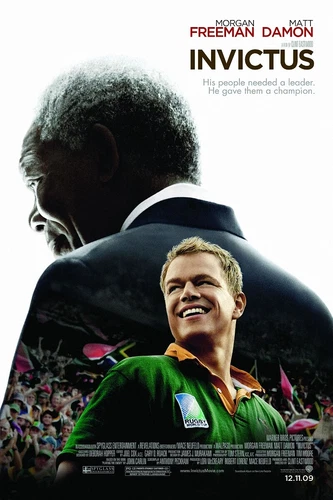
Construction of Meaning in Invictus the Film

Invictus (2009) Movie Poster Drama Film 36x24" Art Silk Print - Picture 1 of 6

This Resource is for students studying the film ‘Invictus’ in the Victorian Mainstream English Curriculum.

Why is Construction of Meaning in Invictus the Film Important?

When reading/viewing texts to construct meaning, readers/viewers increase their understanding by recognising the craftsmanship of the writing/film and the choices the authors/directors made to portray the topic in a certain way.

In order to achieve a high mark for essays students need to interpret the texts analytically which includes understanding the implications of:

  • how the author constructs meaning and structure in a text and
  • then explain what the author’s purpose or agenda was in writing the text

If you just write about the narrative only you are NOT answering the key criteria of analysing texts

What the author SEES, THINKS, VALUES & BIG PICTURE / How?  Through LITERARY TECHNIQUES

  1. Type of Text = Movie / historical / drama / biographical / political / sports. Released in 2009.  Director Clint Eastwood.  Writer Anthony Peckham.
  2. Setting = South Africa between 1994-1995. 1st year of Nelson Mandela’s Presidency.  Post apartheid South Africa, start of Rainbow Nation.
  3. Title of movie = Symbol for ‘unconquered’ taken from Henley poem that inspired Mandela.
  4. Narrative Structure = The film progresses in a linear fashion with an introduction / middle / end with the history behind Nelson Mandela / his Presidency / rugby World Cup / conclusion winning the World Cup.
  5. Historical Context = Mandela is released after 27 years in prison and his 1st year of Presidency is the narrative as he uses the rugby World Cup in 1995 to unify South Africans.
  6. Themes = leadership / sacrifice / reconciliation / forgiveness / identity / family / politics / challenges / responsibility / racial tension / apartheid / inspiration / change / sport / revenge / documentary story / destiny
  7. Symbolism/Imagery = Flag of Springboks / Rainbow Nation Flag / South African Flag / Mandela’s clothes / Springboks jersey, cap and colours / Nkosi Sikelel / South African division between black and white / poor and wealthy / rugby catalyst for change
  8. Characters & Relationships = Mandela & his staff / Mandela & his family especially Zindzi / Mandela & the South African nation / Pienaar & his rugby team / his family / Black & white body guards / South Afrikaners & black South Africans
  9. Director’s Big Picture Values = Clint Eastwood was inspired by the book ‘Playing the Enemy’ by Carlin about the inspiration of Mandela to use a rugby game to help unify a nation. He also appreciated the element of ‘the underdog’ in sport to win and the support of sportsmanship.
  10. Music & Soundtracks = 9000 Days of Destiny / Nkosi Sikelel i Africa adds to position the viewers and the dramatic plot.
  11. Narrative Voice = Dialogue of characters – words are powerful tools / social and political interactions / media is a narrative device to create a back story on Mandela / Newspaper headlines / News casts on TV / TV broadcaster Johan de Villiers comments establishes the international community view on apartheid.
  12. Film Techniques (CAMELS) =
    • Mise en scene
    • Setting
    • Lighting
    • Acting style
    • Costumes
    • Cinematography
      • Camera distance / close ups / medium shots / medium long shots / long shots
      • Camera angle / straight on / low angle / high angle / camera movement / pans
    • Sound
      • Dialogue and sound of action
      • Music soundtrack
      • Voice overs
      • Dream sequence of action in character’s mind

This Resources is created by englishtutorlessons with Online Tutoring of English Using Zoom

Creative Story on ‘The Boat’ short story in ‘Island’ by Alistair MacLeod

Image result for picture of the boat in alistair macleods short story

Creative Story on ‘The Boat’ from Island by Alistair MacLeod for students studying English in the Victorian Curriculum.

Note that this creative story was developed with inspiration from ‘The Boat’ short story and all ideas are original to englishtutorlessons.

Do not plagiarise this story.

Plagiarism is a copyright infringement.

Creative Prompt:

Years later, one of the daughters has to tell her daughter about her childhood, the role of the island and why she eventually left Cape Breton.  Refer back to the story in Island ‘The Boat’.

Research:

  • Scottish Gaelic names for father = dadaidh formal, dadai = dad or daddy
  • Scottish Gaelic names for mother = mathair
  • Scottish Gaelic girls names = Ainslie, Fiona, Alana, Annis, Morag, Catriona
  • Scottish Gaelic name for island = Innis

Creative Story Based Around ‘The Boat’ Short Story

Looking through my kitchen window over the Cape Cod seashore I heard the sharp laughter of a gull.  The moment was broken as my 15 year old daughter Alana called out “Hey ma, I have to do a literature assignment on our family’s ancestry which is due Friday can you help me with it?”  This middle daughter was just like me and her grandfather.  We all loved literature and reading.  Yet she was tall, willowy with fine facial features set off by long dark hair tinged a reddish copper colour, energetic and beautiful like her grandmother.  “Sure” I called back to Alana as she lopped into the kitchen with her notebook and pen; “What do you want to know?”  “I need information about where you came from, you know ma, the traditional stuff you never talk about”.  I looked at her striking face and my mind wandered back to an old-fashioned kitchen with a wood and coal burning stove next to a heavy table, around it stood five wooden homemade chairs.  Alana said “For instance ma why did you give the three of us girls a weird middle name like ‘Innis’, what does it mean?”

“Innis is Scottish Gaelic for island” I told Alana.  “I wanted to link you and your sisters like a chain of tradition back to my home land of Cape Breton.  It was my way of retaining the custom of someone of the sea like my mother’s people”.  Was that my real reason for calling the girls ‘Innis’ I wondered?  My five sisters and brother Callum were all born at Cape Breton but my three girls Fiona, Alana and Catriona were born at Harwich Port Massachusetts.  Looking over the Cape Cod seashore and the Atlantic Coast, Harwich Port is 848 miles from the bitter windswept island of Cape Breton.  No one at Harwich Port had to carve out an existence as a fisherman or give up their dreams to sustain a family of seven children.  Not like my old father who yearned for a life taken from the imaginative stories in his books away from the sea.

As children we called our father by the Gaelic ‘dadai’ an informal way of speaking to him while he was in his room lying on his bed smoking his handmade cigarettes.  His ashtray overflowed with tobacco shreds and ash as my sisters, one by one, sat on his bed or in a single chair reading his stack of paperbacks.  No one called our mother anything but the more formal ‘mathair’ because we were all scared of her as she would look at us with her dark and fearless eyes.  ‘Mathair’ never thought reading trashy books would help anyone in life.  I remember clearly she slapped my sister so hard she left the print of her hand upon my sister’s cheek just because Fiona was reading one of ‘dadai’s’ paperbacks.  We all knew it was difficult to defy our ‘mathair’ but the call of reading books outweighed our restlessness and we lost interest in darning socks and baking bread.

“So who are your mother’s people of the sea then?” Alana asked me.  I explained the ancestry story as clearly as I could; “The Cape Breton Islanders were mostly families from the Highlands in Scotland who were forced to leave their homes in the 1800’s.  ‘Mathair’s’ family were all inshore fisherman sailing Cape Island boats in search of lobsters, mackerel, cod, haddock and hake.  Her brothers all had large families to sustain.  In fact my uncle Bryce had thirteen children to support while he worked with my ‘dadai’ on our boat the Jenny Lynn”.

Alana was intrigued and followed up with a question about what the people of the sea were like and the importance of the ‘boat’.  As I told her about the boats racing out to sea with their traps I could see in my mind uncle Bryce tall and dark like ‘mathair’, standing at the tiller guiding the boat between the floating pans of ice and my ‘dadai’ in the stern with his hands upon the ropes that lashed the cargo to the deck.  I remember watching from the kitchen window of our old house that faced the sea, while my ‘dadai’ was away fishing in the boat.  We were always working on repairing clothes, preparing food or just looking for the return of the boat.  When ‘dadai’ returned home the first question my ‘mathair’ would ask was “Well, how did things go in the boat today?”

Alana stretched out her long legs and stood up with a yawn and said “OK I know about dad’s family history settling in Boston from 1630, but why did you choose to leave Cape Breton for Harwich Port?”  How do you explain to your own daughter that restlessness that you get at 15 looking for a life elsewhere and the imaginative world that books inspire?  Each of my five sisters felt the need for change from raising hens to growing vegetables.  When the Sea Food Restaurant opened it catered to tourists that flooded the island during July and August.  I got a job as a waitress and met people who were not classified as “our people” according to ‘mathair’, but they were fun, carefree and well educated.  Sometimes my sisters and I would stay out late on hot summer nights and try to dodge ‘mathair’s’ questions about who we were associating with.  ‘Dadai’ understood as we talked softly to him late at night about our ambitions beyond the island while the music of his radio floated up the stairs.

I cleared my throat and said to Alana “Then one day your father and his family came to Cape Breton for a summer holiday.  I was swept off my feet by your father’s brilliant smile and his welcoming family.  I didn’t care that ‘mathair’ believed he was not one of ‘her people’ or that she couldn’t understand I wanted a life outside of ‘the sea’ at Cape Breton”.  “Wow ma that’s why we never see our grandmother but what happened to your ‘dadai’? Alana asked me.

It was long after I left Cape Breton and settled in Harwich Port with my husband and three young daughters when I received a call from Callum to say that ‘dadai’ had drowned at sea.  It seemed nonsensical that my father and my uncles who were all experienced fisherman sailing the Atlantic waters could not swim a stroke.  The news of my father’s drowning devastated all of us.  It left Callum with a terrible choice whether to continue the seafaring tradition of ‘mathair’s’ family or leave Cape Breton for his own dream of becoming a university professor.  In the end the Jenny Lynn left my mother with bitterness that neither her husband nor her son was able to sustain the fisherman’s life.

Answering Alana as best I could I just said “My father drowned at sea during a violent storm when he was fishing with Uncle Callum.  The towering waves hit him as he stood in the stern of the Jenny Lynn and he went overboard”.  As Alana hugged me I did not tell her the details of how my father’s body was found at the base of rock-strewn cliffs where he had been hurled and slammed many times so there was not much left of him physically but for the brass chains on his wrists and the seaweed in his hair.

All Resources are created by englishtutorlessons with Online Tutoring of English for Years 11 & 12 using Zoom