Are you a Maths and Science loving student for whom English is a weak point?
You excel at Foundation Maths, General Maths, Further Maths, Mathematical Methods and Specialist Maths. You excel at Biology, Physics and Chemistry but English might be the one crucial core subject that could bring your ATAR down.
I CAN HELP YOU.
I can explain the correct format for essays and provide you with notes on all texts and full scaffolding of essay prompts to help you achieve that high SAC mark and help you with revision for the Exam.
English does not have to be difficult
Using a tutor like me with years of teaching experience can help. With a strong grasp of English you can enhance your academic performance across many other subjects and this knowledge will transfer into your further studies and future career paths.
Are you stressed about writing essays for Unit 1 & 2 Year 11 and Unit 3 & 4 Year 12?
My knowledge of the texts for years 11 & 12 is comprehensive. This knowledge will help you to explore the depth of skills required for Units 1 & 2 for Year 11 and Units 3 & 4 for Year 12 with Crafting Texts, Creating Texts Frameworks and Reading & Responding to Texts in 2026.
These are the Year 12 Texts I am teaching in 2026:
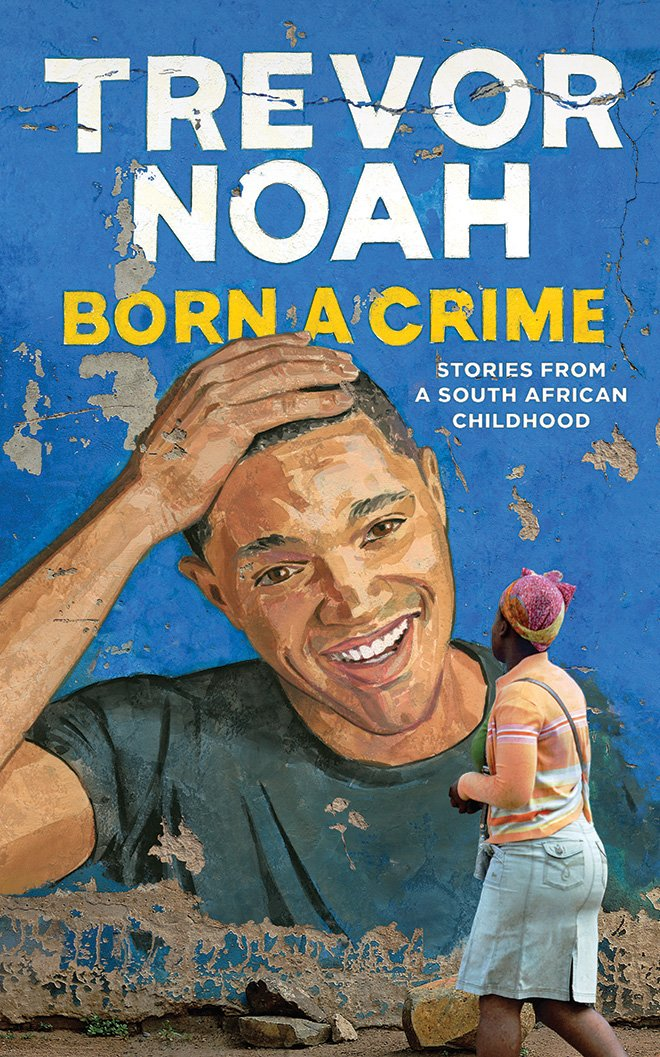
Born a Crime
Non-Fiction Novel by Trevor Noah
Regeneration
Novel by Pat Barker
My Brilliant Career
Novel by Miles Franklin
Chronicle of a Death Foretold
Novel by Gabriel Garcia Marquez
We Have Always Lived in the Castle
Novel by Shirley Jackson
The Memory Police
Novel by Yoko Ogawa
Bad Dreams and Other Stories
Short Stories by Tessa Hadley
The Complete Stories
Short Stories by David Malouf
Twelfth Night
Play by Shakespeare
Oedipus the King
Play by Sophocles
Selected Poems
Poems by Langston Hughes
Sunset Boulevard
Film by Billy Wilder
Do you need help in Unit 2 in Year 11 or Unit 4 in Year 12 for Analysing Argument?
I will de-mystify Language Analysis for you and give you the confidence to answer both components of Audio/Visual Analysing Argument & Article Analysis. I will help you research topics for Presenting a Point of View with an Oral Presentation.
My online tutoring service provides the one-on-one attention that may be missing from school.
I have a proven track record of helping students to achieve high ATAR Scores in English. I am proud of the students I taught for 2025 who achieved a perfect 50 ATAR for English.
Join me on your learning adventure to achieve A+ in English.
Don’t Leave it to Late to Contact Me to discuss a tailor-made program just for you:
Via mobile phone = 0418 440 277
Via this site = by leaving me a comment on the contact form below
My Melbourne based online English tutoring service provides the one-on-one attention that may be missing from school.
Based in Berwick in Melbourne Victoria, I can reach students all across Victoria via online classes using ZOOM.
I am a Year 11 and Year 12 VCE specialist with experience teaching the VCE Victorian Curriculum for Mainstream English.
Proven Track Record for ATAR Results
I have a proven track record of helping students to achieve high ATAR Scores in English.
Congratulations to the students I tutored with perfect 50 ATARs in English for 2025 VCE. I am so proud of you.
Are you stressed about writing essays for Units 1-2 and 3 Creating Texts & Unit 4 Reading & Responding to Texts?
My knowledge of the texts for years 11 and 12 is comprehensive. This knowledge will help you to explore the depth of skills required for Units 1-2 & 3 Creating Texts Frameworks and Unit 4 Reading & Responding to Texts.
The Year 12 Texts I am teaching for 2026 are:
Born a Crime
Non-Fiction Novel by Trevor Noah
Regeneration
Novel by Pat Barker
My Brilliant Career
Novel by Miles Franklin
Chronicle of a Death Foretold
Novel by Gabriel Garcia Marquez
We Have Always Lived in the Castle
Novel by Shirley Jackson
The Memory Police
Novel by Yoko Ogawa
Bad Dreams and Other Stories
Short Stories by Tessa Hadley
The Complete Stories
Short Stories by David Malouf
Twelfth Night
Play by Shakespeare
Oedipus the King
Play by Sophocles
Selected Poems
Poems by Langston Hughes
Sunset Boulevard
Film by Billy Wilder
If you are concerned about writing Creating Texts in Unit 3 AOS2 for Year 12, I have taught all the Frameworks:
Protest / Play / Personal Journeys OR Country
I can help you develop your creative writing to address your specific framework for the SAC and Exam.
Join me on your learning adventure to achieve A+ in English.
Contact me to discuss a tailor-made program just for you:
This resource is for year 12 students studying Born a Crime by Trevor Noah in the VCE Victorian English Curriculum for 2026.
Introduction
Trevor Noah’s Born a Crime genre that are stories about his own life, his childhood and adolescence, and it is made up of anecdotes and memories that at times jump around with flashbacks and flashforwards, small vignettes that in first person and often have a humorous text for comic effect. Therefore, Noah’s memoir is not simply a story about the horrors of apartheid, or about the brutality of structural racism. It is a story about resilience, resistance, family, patriarchy, justice, faith, sacrifice, humour, coming-of-age, education, language, and luck despite these things.
Divided into 3 parts that loosely conform to the three stages of Noah’s life from early childhood through to adolescence. Within each chapter there is a broader commentary on social, racial, and political aspects of life in South Africa and personal anecdotes. Before or after each chapter, there is also a short passage that acts as a lead-in, provides context, or sometimes offers a different perspective. The short contextual passage discusses the lasting impact of apartheid in South Africa.
The language, which plays a significant theme of the text is informal, witty, sometimes coarse, and often hilarious, but is chosen with words for their particular effects. Noah’s humour does not minimise the very real violence and struggles of his childhood, it is used to highlight both the adversity he faced and the strength of his will to overcome those struggles. Throughout the text, dark and often disturbing memories are filtered through this lens of comedy.
Prologue and Epigraphs to the Text
The book begins with a dedication from Trevor Noah to his mother who is the most important person in the text. To contextualise the ‘crime’ of his birth, Noah also includes an excerpt from the 1927 Immorality Act, which includes two points: forbidding European males from having ‘illicit carnal intercourse’ with ‘a native female’ and vice versa.
Apartheid in South Africa
Apartheid was a system of institutionalised racial segregation and white supremacy in South Africa from 1948 to the early 1990s. It was a legal framework that enforced strict separation between racial groups, with the white minority holding political and economic control and the black majority being denied basic rights, including where they could live, work, and go to school. The system was officially ended with the country’s first multiracial elections in 1994.
Born a Crime in a Nutshell
Trevor Noah’s memoir about his childhood and adolescence in South Africa during and after apartheid. Born to a Black Xhosa mother and a White Swiss-German father, he was a mixed-race child whose existence was illegal under apartheid laws. The book recounts his life navigating racial hierarchy and poverty, his close and supportive relationship with his rebellious mother, and how he used humour and language skills to overcome violence and find his identity.
Language opens a pathway towards opportunity
In Born a Crime, it is clear that a knowledge of multiple languages enables opportunities that help Trevor and his mother to continue to move forward, and aspire to a life that would be otherwise inconceivable without that knowledge. Throughout the memoir, their abilities as multilingual shapeshifters mean they have the resources to communicate and construct circumstances that give space for love, empathy, and connection; often with those who may otherwise present as a threat. Language provides them with the ability to connect with potential enemies and even expose the hypocrisy of apartheid.
While language provides many opportunities, it is also apparent that South Africa’s ‘Tower of Babel’ is fertile ground for misunderstanding and exploitation. Noah’s rich and textured narration and dialogue is loaded with accented English, and the layers of various tribal dialects and tongues, inviting the understanding that language can be ‘used to cross boundaries, handle situations, navigate the world’ (p. 55). While understanding multiple languages gets Trevor and his mother out of some impossibly dangerous situations, it also helps him to identify, examine and expose the hypocrisy of apartheid South Africa and those who label them as ‘other’.
THEMES
apartheid
race and colour
poverty
crime and violence
coming of age
the law
language
education
relationships and affairs of the heart
identity and belonging
division
gender
humour
defiance
aspiration and place
CHARACTERS
Trevor Noah
Protagonist and narrator. Noah’s narration traverses his childhood and coming of age at a politically frenzied time for apartheid in South Africa. His comedic storytelling style and his ability to reflect deeply upon his childhood without bitterness is astonishing. His relationships with those around him are rendered in rich detail in this text.
Patricia Nombuyiselo Noah
As stubborn as she is religious, Patricia Nombuyiselo Noah (‘Mbuyi’ to her husband Abel) is Trevor’s mother. A fierce Xhosa woman, she is characterised by Noah as ‘never scared. She is the source of Noah’s identity, a symbol of resilience against apartheid, and a model for his own independence and creativity. Her decision to have a mixed-race child was a protest, and she raised Trevor with a combination of strict love, languages, and faith to equip him for a world that sought to limit him.
Robert
Noah’s father, a Swiss German who settled in South Africa in the late 1970s, was ‘a complete mystery’ (p. 103) to him, even though they managed to have a relationship against lawful and societal circumstances
Abel Ngisaveni Shingange
Trevor’s step-father and father to both of Trevor’s younger brothers, Andrew, and Isaac. Abel’s ongoing abuse of Trevor, and of his brothers and his mother, reaches a horrific climax in the final chapter when he shoots Patricia in the back of the head, in front of Trevor’s two younger brothers. Abel’s dependence on alcohol and the way that this plummets him into acts of domestic terror inspire constant fear.
Andrew
Trevor’s younger brother and son of Abel, Andrew is about eight years younger than Trevor.
Isaac
Trevor’s youngest brother is also fathered by Abel. When Trevor’s mother discovers she is pregnant again, she is forty-four years old.
Mlungisi
Mlungisi is Trevor’s older cousin, responsible and sensible helps get Trevor out of multiple tough situations and giving Trevor empathy and support regardless of the differences between them.
Teddy
Trevor befriends Teddy at Sandringham, the school he attends from grade eight, and he describes their relationship as ‘mayhem’ (p. 153). Teddy is the son of a domestic worker living in the staff quarters in the wealthy suburb of Linksfield, near Sandringham.
Tim
Friends with Trevor in his final years of school, Tim is the mastermind behind the Busta Rhymes and Spliff Star ruse and is also responsible for setting Trevor up with Babiki, who does not share any common languages with Trevor. Tim is ‘always trying to cut a deal’ and is one of two ‘middlemen’ working for Trevor in his CD business.
Sizwe
The second of Trevor’s two middlemen for his CD business in high school, Sizwe is described as ‘a leader and protector of Township kids’ (p. 203). The two sustain their friendship beyond school and Trevor continues to gravitate towards him, spending all of his time when he finishes school in Alexandra.
Daniel
Daniel is the white kid at Sandringham who Trevor works for as a middleman selling CDs, who eventually enables Trevor’s CD business by giving him his CD writer, and therefore the means of production. Noah credits Daniel with ‘changing [his] life’ (p. 186).
Hitler
Hitler (his real name) is part of Sizwe and Trevor’s dance crew and ‘was a great friend’ (p. 193). An excellent dancer, ‘he was mesmerising to watch’ (p. 193) and was the star attraction of their party bookings. Their whole DJ set was built around his performances. Hitler also acts as a vehicle for Noah to unpack what a black South African education looks like.
Temperance Noah
Temperance Noah, Trevor’s maternal grandfather, was ‘The only semi-regular male figure in my life’ (p. 35). Noah highlights the irony in his name as ‘he was not a man of moderation at all’ (p. 35). His descriptions of his grandfather paint a picture of a womaniser with a big personality who lived with his ‘second family’ in the Meadowlands.
Frances Noah
Noah’s grandmother ‘was the family matriarch … barely 5 feet tall … but rock hard’. Noah characterises her as the opposite to his grandfather: ‘calm, calculating, with a mind as sharp as anything’ (p. 37).
Maylene
The focus of his affectionate endeavours in the ‘Affairs of the Heart: Part I’, Maylene is the only coloured girl at H.A. Jack and delivers the first of his documented love lessons, in the context of Valentine’s Day. He is twelve years old.
Zaheera
Based on his first love lesson where he ‘learned that cool guys get girls, and funny guys get to hang out with the cool guys who get girls’ (p. 146), he decides that he ‘shouldn’t even try’ (p. 146). He carefully cultivates a connection with Zaheera based on friendship.
Babiki
Babiki becomes the focus of his third love lesson, in ‘Affairs of the Heart, Part III: The Dance’. It is his final year of high school and his friend Tim sets him up on a date for the matric dance with ‘the most beautiful girl he has ever seen’ (p. 168).
Fufi
Fufi one of Trevor’s childhood dogs was actually deaf but Trevor learns from Fufi that love is not diminished and you cannot own the thing you love.
SYMBOLS
Mulberry tree
Patricia’s second-hand Volkswagen & cars
CD writer
epigraphs
coming of age
Maylene, Zaheera & Babiki
language
beatings
drive ways in Soweto
stolen digital camera
chameleon
food
cheese
church
identity & whiteness
All Resources created by englishtutorlessons.com.au Online Tutoring using Zoom for Mainstream English Students in the Victorian VCE Curriculum 2026