About Margaret

Qualified English Teacher, BA/BT UNE, Registered with VIT, located in Berwick Victoria 3806. Contact 0418 440 277, email contact@englishtutorlessons.com.au

Essay Introductions on the Film ‘Lion’ Directed by Garth Davis

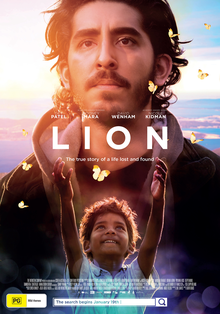
Image result for images of lion the movie

For students studying the film Lion Directed by Garth Davis, please find two essay prompts with their Introductions that include the Main Contention and Message of Director colour coded.

Prompt #1   “Every night I imagine that I’m walking those streets home and I know every single step of the way and I whisper in her ear I’m here”.  Lion portrays the bonds of family.  Discuss.

Introduction / Main Contention / Message of Director

Lion the movie directed by Garth Davis is about love, the bonds of family and the remarkable bond between mother and son that transcends continents.  As a young five year old we see Saroo working with his birth mother Kamla in the hills behind their village of Ganesh Talai, Khandwa, India.  There is a clear sense of belonging to family and knowing Saroo is accepted and loved shown in the scene where his mother feeds her children with the milk in packets Guddu got in the market.  In 1987 Saroo is adopted by Sue and John Brierly who prove a quiet dedication to the bonds of family in the life they provide for Saroo in Tasmania.  Then the film transports us 25 years later as the adult Saroo scours Google Earth for clues to the whereabouts of his village in India.  The more vivid the memories become for Saroo he feels the more his love for his birth mother is reignited.  The pivotal moment is in 2012 in the village of Ganesh Talai when Saroo’s birth mother sees his face after 25 years of separation.  The memory of her face had been embedded in Saroo’s mind for such a long time in the many flashbacks he experienced throughout the film.  No matter how long Kamla had been apart from her son she knew who he was and their tears spoke for themselves as the bonds of unconditional love is celebrated.  Director Garth Davis said that for him the film reminds us that if you can love unconditionally and give a child a home and hope, like Sue gave Saroo, then you can overcome anything through love.

Introduction / Main Contention / Message of Director

Prompt #2  Explore how the landscape plays a significant part in the film Lion.

The film Lion directed by Garth Davis hosts a range of beautifully shot landscape sequences by cinematographer Greig Frasier both in India and Tasmania.  The rugged and stunning landscapes play a significant part in the film as they are used to convey Saroo’s current state of mind.  The landscape shots were based on stories told by the real Saroo Brierley to the cinematographer with the effect that it allows the viewer to empathise with and create a connection with Saroo.  When Saroo says “I have to find my way back home” these words are like a pledge to accomplish something seemingly impossible to achieve across continents of landscapes.  Geography is at the heart of the film and we see at the very beginning of the film overhead shots take place as the credits appear which carry great meaning to the real life of Saroo.  The landscapes are meant to simulate astral-travelling that Saroo used to do as a child when he would allow his mind to travel across Australian landscapes to Indian landscapes to find his home.  Throughout the sequencing of the sweeping landscapes of both India and Australia the film tells the viewer Saroo’s story in sections so that we compare the two. Consequently, it is impossible not to reflect on the juxtaposition between the comfortable, suburban, middle-class upbringing Saroo enjoyed in Hobart, and the tough, dirty, poor lifestyle he inadvertently escaped back in India.  More importantly, by mimicking astral-travelling within the magnificent landscapes, Director Davis wanted his audience to appreciate the sense of Saroo as a tiny speck against a massive world and the enormous effort needed to find his way home to the village of Ganesh Talai.

Online Tutoring of English using Zoom

Analytical Essay on Belonging in Peter Skrzynecki’s Poetry

This resource is for Mainstream English students studying the poetry collection ‘Old/New World’ by Peter Skrzynecki.

This task requires the students to synthesise poems in the ‘Old/New World’ collection by Peter Skrzynecki of ‘Black Cockatoos’ / ‘Immigrants at Central Station’ / ‘Feliks Skrzynecki’ / ‘Seeing my Parents’ and put together an analytical response essay on the prompt.

The Analytical Prompt Topic is ‘Belonging is not about geography, but about family’.  Discuss.

Belonging is tied to a sense of identity and the groups we choose to belong to and the ways we connect with others to help form our own identity.  Together these issues go to the heart of who we are and how we present ourselves to the world.  We share a human quality in the need to belong yet sometimes we question both ‘who am I?’ and ‘where do I belong?’.  In ‘Old/New World’ poetry collection by poet Peter Skrzynecki, he shares with his readers a sense of ambivalence in his relationship with his parents, but at the same time, he acknowledges and honours their sacrifices they made for him.  Therefore, in analysing Skrzynecki’s poems it is important to see not only his connection to family but also to place, practices, language, heritage and geography that are all interconnected and tied to his sense of belonging and sense of identity.

In the poems under review “Black Cockatoos”, “Immigrants at Central Station”, “Feliks Skrzynecki” and “Seeing my Parents”, Peter Skrzynecki writes about connecting the old and new worlds of his poetry together in his search for belonging.  Through his poems Peter discovers the ways in which he can come to terms with the multi-faceted nature of his identity and the interaction between belonging to his family’s old cultural Polish heritage and the new world as an Australian with all its promising future.

Synthesising the relationship of the birds in “Black Cockatoos” who represent freedom in the new world, they express themselves clearly against the old domesticated species of pigeons in “Immigrants at Central Station” who represent the old world from Europe.  The cockatoos easily belong and make themselves heard with brash and screeching voices so that they can be heard “above the boom and crash of the waves” yet the pigeons just “watch” and are voiceless.  The pigeons, representing the immigrants, have sad and negative thoughts about belonging to the new world and because they cannot speak English and there seems to be no way for them to counteract the noisy cockatoos (Australians) who literally take over the place.

As the old-world birds, from devastated post-war Europe, have difficulty in belonging to the place they are in, such as the train station, it represents a transit place and part of their dislocation from their country of origin.  In terms of freedom to belong, they are limited by language differences, experience, loss of culture and an expectation of what their futures will be in the new country.  This is shown as the immigrant journeys are controlled by time “while time ran ahead” but their sense of belonging is impacted by an unknown future “along glistening tracks of steel” to a place they do not know.  In contrast, the cockatoos in “Black Cockatoos” are totally in control of their lives as they “swept down the cliff” and “whistled, broke formation, chattered” taking over the whole beach.

In some of Peter Skrzynecki’s poems related to family and belonging there is also a sense of paradox where Peter’s optimism for the future in the new world clashes with his sense of sadness about his past and even regret that at the end of his poems he has not received closure about who he is or where his identity comes from.  In the poem “Seeing my Parents” there is a sense of regret that the poet wanted to thank his parents for all the sacrifices they made as immigrants to help his education and way of life in the new country but he is unable to tell them how he feels in the present day because they are dead.  The poet wants to catch up with them and “touch them – thank them for everything they did for me” yet he cannot reach for them “out of yesterday and into tomorrow”.

Similarly, Peter wants the readers to appreciate his sense of pride and belonging to his father Felix in the poem “Felix Skrzynecki” when he begins the poem “my gentle father” is Peter’s tribute to Felix’s dignity.  However, the young Peter also feels a disconnect with his family and does not belong to his heritage in his inability to accept his Polish past he is in fact alienated from Felix and his friends and does not understand why “His Polish friends always shook hands so violently”.  Peter does not want to learn the Polish language and even puts up “Hadrian’s Wall” to disconnect himself from belonging to his Polish heritage.

Peter Skrzynecki’s poetry is deeply rooted in family and cultural awareness and he writes about the importance of belonging to not only family but also to place, language, heritage and geography.  However, his poems clearly show a divide between the interaction of belonging to the past and the new world that represents the poet’s future as an Australian.  There are however, paradoxes in his relationships with his family that, as an adult poet, Peter has tried to honour his parents by paying tribute to his heritage and staying connected to them in his poems.  Yet, many poems end without closure and as readers, we have to respect his feelings and the notion of something that is not finished.  May be Peter is asking us readers to question whether he did finally belong to one world – the old world or the new world?

Online Tutoring of English using Zoom

Gattaca and Nineteen Eighty Four are Social Commentaries

For students studying the futuristic dystopian science thriller film Gattaca directed by Andrew Niccol and the dystopian totalitarian state novel Nineteen Eighty Four written by George Orwell.

Social Commentaries in Context

Both Gattaca directed by Andrew Niccol and 1984 written by George Orwell are social commentaries which explore the broad social wrongs of a totalitarian government.  Both texts depict a futuristic, dystopian society in which individuality is destroyed in favour of faceless conformity.  Protagonist Winston in 1984 cannot understand the rhetoric of the government party and on a similar note, Vincent in Gattaca is trapped, unable to achieve his dreams because of his imperfect genome.  Both characters demonstrate individual rebellion against society and explore the significant social injustices of their respective totalitarian states.

Destruction of Individuality

Destruction of individuality is explored by both Niccol and Orwell to expose the broad social wrongs of an oppressive society.  In 1984 Winston fights to maintain his individuality in a society that has eliminated “love, friendship or joy of living” by making him hollow.  As Winston is tortured in order to be psychologically broken down by O’Brien’s relentless interrogation in Room 101, he is eventually made to accept that 2+2=5 and that he ‘loves’ Big Brother.

Similarly, in Gattaca destruction of individuality and the consequences of an oppressive society are found in close up shots focusing on Vincent’s cleaning process and the constant DNA checks to reinforce how authoritarian societies can demolish all sense of self.  As an ‘Invalid’ Vincent must take extreme measures to overcome the prejudices of a genetically controlled society if he is to achieve his dream of joining Gattaca and going into space.

Message of Niccol in Gattaca

Director Andrew Niccol celebrates the power of self-belief in the film Gattaca to inspire individuals to scale the heights of their desires and dreams to motivate them to succeed against the odds.

Message of Orwell in 1984

Writer George Orwell was deeply disturbed by the widespread cruelties and oppression he observed in communist countries and he wrote 1984 as a warning to the West of totalitarian regimes who used powerful measures to control their citizens.

The Most striking differences between Gattaca and 1984

The most striking difference between Gattaca and 1984 is the total victory of the Party over Winston and Julia’s attempts at resistance/rebellion against Big Brother compared with Vincent’s ability to undermine and find the flaw in the Gattaca DNA system to achieve his dreams of going into space.  Another important difference is that Winston is broken by the absolute power of the Party to suppress his individual happiness and thoughts of any freedom against the oppression.  Whereas, in contrast, Vincent proves that the philosophy underpinning discrimination by DNA is flawed and that his success is determined by other variables that are not within the control of science.

Resistance, courage and determination of Vincent against the regime in Gattaca

Vincent possesses a dream, an ambition and is willing to use courage and determination to do whatever is required to achieve it, even in the face of insurmountable odds.  Vincent is able to undermine the discrimination of Gattaca by purchasing his ‘Valid’ status with the use of Jerome’s DNA in order to circumvent the Gattaca system.  His metamorphosis into Jerome allows him to join the elite Gattaca space program.  Yet he stays true to himself, maintains his vision and integrity to achieve his goal in spite of a society that is designed to ensure he fails in any attempt to better himself.  He does use a process of deception to join Gattaca but he does not aspire to be one of them, rather he uses Jerome’s DNA as a tool to achieve his dream of flying in space.

Resources created by englishtutorlessons with Online Tutoring of English Using Zoom

Construction of Meaning in Invictus the Film

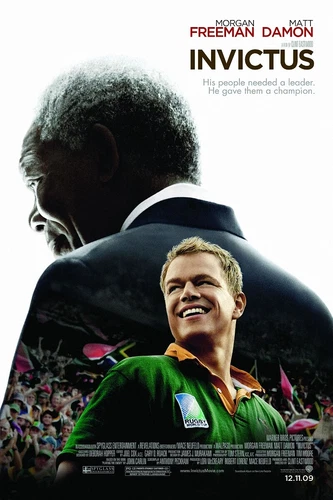
Invictus (2009) Movie Poster Drama Film 36x24" Art Silk Print - Picture 1 of 6

This Resource is for students studying the film ‘Invictus’ in the Victorian Mainstream English Curriculum.

Why is Construction of Meaning in Invictus the Film Important?

When reading/viewing texts to construct meaning, readers/viewers increase their understanding by recognising the craftsmanship of the writing/film and the choices the authors/directors made to portray the topic in a certain way.

In order to achieve a high mark for essays students need to interpret the texts analytically which includes understanding the implications of:

  • how the author constructs meaning and structure in a text and
  • then explain what the author’s purpose or agenda was in writing the text

If you just write about the narrative only you are NOT answering the key criteria of analysing texts

What the author SEES, THINKS, VALUES & BIG PICTURE / How?  Through LITERARY TECHNIQUES

  1. Type of Text = Movie / historical / drama / biographical / political / sports. Released in 2009.  Director Clint Eastwood.  Writer Anthony Peckham.
  2. Setting = South Africa between 1994-1995. 1st year of Nelson Mandela’s Presidency.  Post apartheid South Africa, start of Rainbow Nation.
  3. Title of movie = Symbol for ‘unconquered’ taken from Henley poem that inspired Mandela.
  4. Narrative Structure = The film progresses in a linear fashion with an introduction / middle / end with the history behind Nelson Mandela / his Presidency / rugby World Cup / conclusion winning the World Cup.
  5. Historical Context = Mandela is released after 27 years in prison and his 1st year of Presidency is the narrative as he uses the rugby World Cup in 1995 to unify South Africans.
  6. Themes = leadership / sacrifice / reconciliation / forgiveness / identity / family / politics / challenges / responsibility / racial tension / apartheid / inspiration / change / sport / revenge / documentary story / destiny
  7. Symbolism/Imagery = Flag of Springboks / Rainbow Nation Flag / South African Flag / Mandela’s clothes / Springboks jersey, cap and colours / Nkosi Sikelel / South African division between black and white / poor and wealthy / rugby catalyst for change
  8. Characters & Relationships = Mandela & his staff / Mandela & his family especially Zindzi / Mandela & the South African nation / Pienaar & his rugby team / his family / Black & white body guards / South Afrikaners & black South Africans
  9. Director’s Big Picture Values = Clint Eastwood was inspired by the book ‘Playing the Enemy’ by Carlin about the inspiration of Mandela to use a rugby game to help unify a nation. He also appreciated the element of ‘the underdog’ in sport to win and the support of sportsmanship.
  10. Music & Soundtracks = 9000 Days of Destiny / Nkosi Sikelel i Africa adds to position the viewers and the dramatic plot.
  11. Narrative Voice = Dialogue of characters – words are powerful tools / social and political interactions / media is a narrative device to create a back story on Mandela / Newspaper headlines / News casts on TV / TV broadcaster Johan de Villiers comments establishes the international community view on apartheid.
  12. Film Techniques (CAMELS) =
    • Mise en scene
    • Setting
    • Lighting
    • Acting style
    • Costumes
    • Cinematography
      • Camera distance / close ups / medium shots / medium long shots / long shots
      • Camera angle / straight on / low angle / high angle / camera movement / pans
    • Sound
      • Dialogue and sound of action
      • Music soundtrack
      • Voice overs
      • Dream sequence of action in character’s mind

This Resources is created by englishtutorlessons with Online Tutoring of English Using Zoom

Fishbone Diagram as Brainstorming for Persuasive Writing

This Resource is for teachers and students studying English in the Victorian Curriculum to help visualise and brainstorm Persuasive Writing Analysis.

"Machili Jal Ki Rani Hai" Fish Poem Animated Hindi Nursery Poem Song for Children with Lyrics. "One of the famous kids songs depicting the story of fish and its life . Hindi Poems Hindi Poem Hindi rhymes 2D Rhymes 2D Rhymes 2D Rhymes English Education preschool SchoolWhat is a Fishbone Diagram?

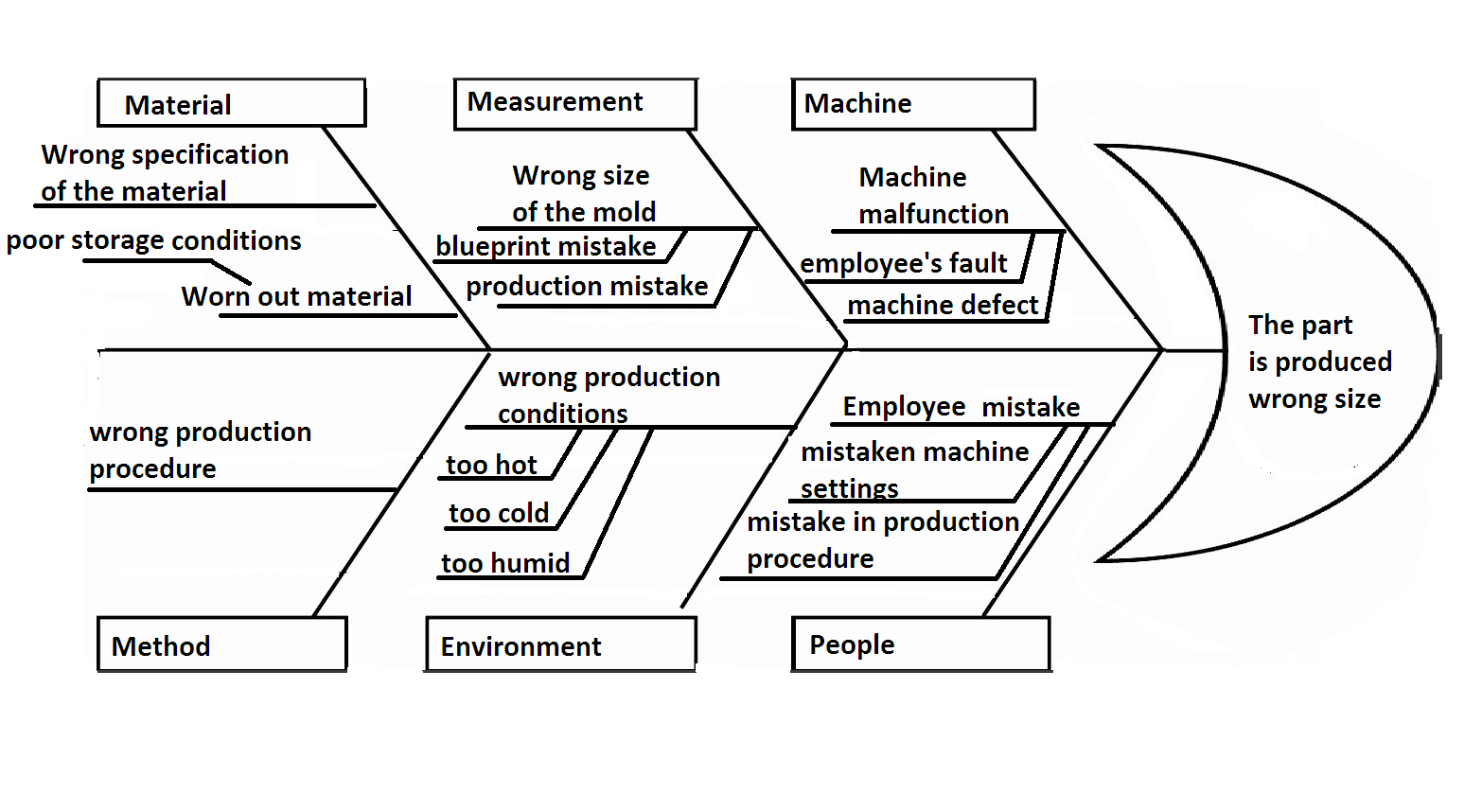
A fishbone diagram, also called a cause and effect diagram or Ishikawa diagram (named after Dr. Kaoru Ishikawa who invented it) , is a visualization tool for categorizing the potential causes of a problem in order to identify its root causes.

Using a Fishbone Diagram in Brainstorming for Persuasive Writing

The Fishbone Diagram Design

The design of the diagram looks much like a skeleton of a fish. Fishbone diagrams are typically worked right to left, with each large “bone” of the fish branching out to include smaller bones containing more detail.

Image result for Ishikawa diagram

This Resources is created by englishtutorlessons with Online Tutoring of English Using Zoom

Creative Story on ‘The Boat’ short story in ‘Island’ by Alistair MacLeod

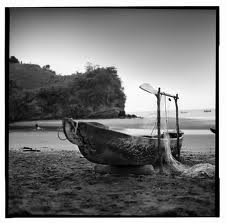
Image result for picture of the boat in alistair macleods short story

Creative Story on ‘The Boat’ from Island by Alistair MacLeod for students studying English in the Victorian Curriculum.

Note that this creative story was developed with inspiration from ‘The Boat’ short story and all ideas are original to englishtutorlessons.

Do not plagiarise this story.

Plagiarism is a copyright infringement.

Creative Prompt:

Years later, one of the daughters has to tell her daughter about her childhood, the role of the island and why she eventually left Cape Breton.  Refer back to the story in Island ‘The Boat’.

Research:

  • Scottish Gaelic names for father = dadaidh formal, dadai = dad or daddy
  • Scottish Gaelic names for mother = mathair
  • Scottish Gaelic girls names = Ainslie, Fiona, Alana, Annis, Morag, Catriona
  • Scottish Gaelic name for island = Innis

Creative Story Based Around ‘The Boat’ Short Story

Looking through my kitchen window over the Cape Cod seashore I heard the sharp laughter of a gull.  The moment was broken as my 15 year old daughter Alana called out “Hey ma, I have to do a literature assignment on our family’s ancestry which is due Friday can you help me with it?”  This middle daughter was just like me and her grandfather.  We all loved literature and reading.  Yet she was tall, willowy with fine facial features set off by long dark hair tinged a reddish copper colour, energetic and beautiful like her grandmother.  “Sure” I called back to Alana as she lopped into the kitchen with her notebook and pen; “What do you want to know?”  “I need information about where you came from, you know ma, the traditional stuff you never talk about”.  I looked at her striking face and my mind wandered back to an old-fashioned kitchen with a wood and coal burning stove next to a heavy table, around it stood five wooden homemade chairs.  Alana said “For instance ma why did you give the three of us girls a weird middle name like ‘Innis’, what does it mean?”

“Innis is Scottish Gaelic for island” I told Alana.  “I wanted to link you and your sisters like a chain of tradition back to my home land of Cape Breton.  It was my way of retaining the custom of someone of the sea like my mother’s people”.  Was that my real reason for calling the girls ‘Innis’ I wondered?  My five sisters and brother Callum were all born at Cape Breton but my three girls Fiona, Alana and Catriona were born at Harwich Port Massachusetts.  Looking over the Cape Cod seashore and the Atlantic Coast, Harwich Port is 848 miles from the bitter windswept island of Cape Breton.  No one at Harwich Port had to carve out an existence as a fisherman or give up their dreams to sustain a family of seven children.  Not like my old father who yearned for a life taken from the imaginative stories in his books away from the sea.

As children we called our father by the Gaelic ‘dadai’ an informal way of speaking to him while he was in his room lying on his bed smoking his handmade cigarettes.  His ashtray overflowed with tobacco shreds and ash as my sisters, one by one, sat on his bed or in a single chair reading his stack of paperbacks.  No one called our mother anything but the more formal ‘mathair’ because we were all scared of her as she would look at us with her dark and fearless eyes.  ‘Mathair’ never thought reading trashy books would help anyone in life.  I remember clearly she slapped my sister so hard she left the print of her hand upon my sister’s cheek just because Fiona was reading one of ‘dadai’s’ paperbacks.  We all knew it was difficult to defy our ‘mathair’ but the call of reading books outweighed our restlessness and we lost interest in darning socks and baking bread.

“So who are your mother’s people of the sea then?” Alana asked me.  I explained the ancestry story as clearly as I could; “The Cape Breton Islanders were mostly families from the Highlands in Scotland who were forced to leave their homes in the 1800’s.  ‘Mathair’s’ family were all inshore fisherman sailing Cape Island boats in search of lobsters, mackerel, cod, haddock and hake.  Her brothers all had large families to sustain.  In fact my uncle Bryce had thirteen children to support while he worked with my ‘dadai’ on our boat the Jenny Lynn”.

Alana was intrigued and followed up with a question about what the people of the sea were like and the importance of the ‘boat’.  As I told her about the boats racing out to sea with their traps I could see in my mind uncle Bryce tall and dark like ‘mathair’, standing at the tiller guiding the boat between the floating pans of ice and my ‘dadai’ in the stern with his hands upon the ropes that lashed the cargo to the deck.  I remember watching from the kitchen window of our old house that faced the sea, while my ‘dadai’ was away fishing in the boat.  We were always working on repairing clothes, preparing food or just looking for the return of the boat.  When ‘dadai’ returned home the first question my ‘mathair’ would ask was “Well, how did things go in the boat today?”

Alana stretched out her long legs and stood up with a yawn and said “OK I know about dad’s family history settling in Boston from 1630, but why did you choose to leave Cape Breton for Harwich Port?”  How do you explain to your own daughter that restlessness that you get at 15 looking for a life elsewhere and the imaginative world that books inspire?  Each of my five sisters felt the need for change from raising hens to growing vegetables.  When the Sea Food Restaurant opened it catered to tourists that flooded the island during July and August.  I got a job as a waitress and met people who were not classified as “our people” according to ‘mathair’, but they were fun, carefree and well educated.  Sometimes my sisters and I would stay out late on hot summer nights and try to dodge ‘mathair’s’ questions about who we were associating with.  ‘Dadai’ understood as we talked softly to him late at night about our ambitions beyond the island while the music of his radio floated up the stairs.

I cleared my throat and said to Alana “Then one day your father and his family came to Cape Breton for a summer holiday.  I was swept off my feet by your father’s brilliant smile and his welcoming family.  I didn’t care that ‘mathair’ believed he was not one of ‘her people’ or that she couldn’t understand I wanted a life outside of ‘the sea’ at Cape Breton”.  “Wow ma that’s why we never see our grandmother but what happened to your ‘dadai’? Alana asked me.

It was long after I left Cape Breton and settled in Harwich Port with my husband and three young daughters when I received a call from Callum to say that ‘dadai’ had drowned at sea.  It seemed nonsensical that my father and my uncles who were all experienced fisherman sailing the Atlantic waters could not swim a stroke.  The news of my father’s drowning devastated all of us.  It left Callum with a terrible choice whether to continue the seafaring tradition of ‘mathair’s’ family or leave Cape Breton for his own dream of becoming a university professor.  In the end the Jenny Lynn left my mother with bitterness that neither her husband nor her son was able to sustain the fisherman’s life.

Answering Alana as best I could I just said “My father drowned at sea during a violent storm when he was fishing with Uncle Callum.  The towering waves hit him as he stood in the stern of the Jenny Lynn and he went overboard”.  As Alana hugged me I did not tell her the details of how my father’s body was found at the base of rock-strewn cliffs where he had been hurled and slammed many times so there was not much left of him physically but for the brass chains on his wrists and the seaweed in his hair.

All Resources are created by englishtutorlessons with Online Tutoring of English for Years 11 & 12 using Zoom

The Secret River by Kate Grenville Analysis

TheSecretRiver.jpg

This Resource is for students studying Mainstream English, The Secret River by Kate Grenville in the Victorian Curriculum.

All pages numbers referenced in this brief analysis are taken from the 2013 edition of The Secret River by The Text Publishing Company (front cover shown above).

Genre and Historical Setting of The Secret River

The Secret River is a historical fiction novel with the characters’ stories told within the larger context of the social, cultural and political surroundings of the early colonial settlement of NSW from 1806 onwards.

Each of the 3 landscapes in the text traces protagonist William Thornhill’s life from London, Sydney and Thornhill’s Place and the different kinds of conflict that arise.

The narrative is a story of colonisation, identity and the relationships between settlers, the land and the Aborigines – it’s a story of belonging, ownership and ultimately the bloodshed that results when a people is displaced.  In The Secret River, the land represents money and a future for the characters of English descent which contrasts sharply with its meaning for the Indigenous Australian characters.  For the Indigenous Australians the land represents their capacity to survive in the present, their future and their past.

The setting of colonial NSW becomes important to the main characters that are caught up in the historical narrative of the settlement and conflict.  It is from Part 2 ‘Sydney’ to Part 6 ‘The Secret River’ that we witness the most obvious conflict between the Indigenous Australians and the white characters.  It is in this colonial setting of NSW that we see William Thornhill’s inner conflict through the complexities and challenges he faces and the extent to which conflict is all consuming.

Structure of The Secret River

Grenville adopts a traditional realist structure and framework of the narrative which is strictly chronological.  The novel is broadly divided into three main sections: those that deal with the characters’ experiences in London, Sydney and Thornhill’s Point.

Prologue: ‘Strangers’ = William Thornhills first encounter with Indigenous Australians

Part 1: ‘London’ = William and Sally’s earliest life in London

Part 2: ‘Sydney’ = Transportation to Sydney, colonial settlement in NSW 1806

Part 3: ‘A Clearing in the Forest’ = The Thornhills move from Sydney to settle Thornhills Point

Part 4: ‘A Hundred Acres’ = Potential for violent conflict with the Indigenous Australians becomes increasingly prominent as the settlers realise the Aborigines are not leaving the land.

Part 5: ‘Drawing a Line’ = The conflict between the settlers and the Indigenous Australians reaches the point where the Governor issues a proclamation that the settlers should shoot the black natives.

Part 6: ‘The Secret River’ = The incidents of theft and violence between settlers and Indigenous Australians climaxes in the poisoning at Darkey Creek and culminating in the massacre at Blackwood’s place.

Epilogue” ‘Thornhill’s Place’ = The epilogue is set 10 years after the massacre and it is pervaded by a sense of remorse by William Thornhill.

Relationship between Conflicts of Space, Place & Identity

The novel has important conflicts of space, place and identity and the relationship between the three which allows distinct comparisons to be made.  It is also important to note that intrinsic to these ideas is the notion of culture, especially the cross-cultural conflict that Grenville is primarily concerned with.  The division of the novel into these sections is clearly differentiated by location which is an important reminder that place is a significant factor in this text.  The structure of the novel also reminds us of another important theme – the importance of a sense of belonging.

Language and Dialogue of The Secret River

Grenville’s prose is designed to complement the historical setting with her characters adopting some phrases and words from the settings both in England and Australia.  Instead of using quotation marks for dialogue, Grenville uses italics so that her characters speak within the text instead of traditional line breaks.  Some of the terminology that Grenville uses was common to the era and often reminds the reader of the cultural background of the characters.

It is an interesting point with the dialogue that Grenville chooses not to use any Aboriginal languages in The Secret River.  Unlike her other novel The Lieutenant where interactions with Aboriginal characters were given in traditional Indigenous language of the Eora people, The Secret River is spoken through William Thornhill in English.  Therefore the focus is on Thornhill’s point of view and readers have no real access to the understandings and perspective of the Indigenous Australians in this text.

A significant distinguishing factor between the white settlers and the Indigenous Australians is not just in the lack of dialogue for the Aboriginals but their lack of names.  William Thornhill is given his surname as his identity but the Indigenous Australians are named by their appearance “old grey beard” and “the younger one”.  The difference in ways of naming highlights the ignorance of the English characters as well as allowing them to be detached from the characters that they are harming.

The Significance of the Title

The title could mean symbolically a river that has held secrets or aspects of Australia’s history hidden.  It could also refer to undercurrents in personal relationships.  The actual river is the Hawkesbury north of Sydney where Broken Bay hides the entrance and is the ‘secret river’ where William Thornhill finds his land.

Themes, Issues and Ideas in The Secret River

  1. Home and Belonging = are constant themes from Thornhill’s childhood in London to his old age in NSW. The need for a home and a sense of belonging are universal in the text implying that the values of love and personal identity are universal human values.  Through his love for the land Thornhill develops his own identity as “something of a king” (p.314) – a man with a home to which he can belong and in which in turn belongs to him.
  2. Ownership = what defines ownership is a major theme in this novel. It is actually the question of ownership that lies at the bottom of the conflict between the settlers and the Australian natives.  The English believed that by “marking” a piece of property with a crop they made it theirs.  The natives, on the other hand, had free rein of the land for decades before Australia was claimed for England.  They saw the settlers as taking over land that had been theirs for centuries.
  3. Conflict = this theme is developed in a variety of forms as between racial groups, between individuals, within families, between beliefs and actions, between dreams/aspirations and reality and between differing philosophies.
  4. Guilt = Despite all his success, Thornhill began to feel a sense of unforgiving guilt for his treatment of the natives. He is considered the richest man in the area, a dream desired since he was a child in poverty.  Yet his accomplishment came at a cost, for his family and himself.  He no longer spoke to Dick and his relationship with Sal grew apart.  Furthermore, Thornhill’s unresolved conflict with the natives is conveyed through his encounter with Long Jack.  He and Sal offer Jack help with food, clothes and utensils in hope of reconciliation between the two.  Jack slapped his hand on the ground and declared “This me, he said.  My place” (p.329).  In the end Jack ‘‘… never put on the britches or the jacket … the clothes lay out in all weathers decaying into the dirt” (p. 328).  The exaggeration of time interpreted through the words ‘never’ and ‘decaying’ forebodes that the time for reconciliation has yet to come for Thornhill.
  5. Clash of Cultures = the clash of civilizations that began when Captain Cook first stepped foot on the land that become known as Australia. Throughout the novel, Grenville juxtaposes British and Aboriginal understandings of several important social concepts: personal property, clothing, hunting and farming, family relationships, and relationship to the natural environment.  The incomprehension with which each culture regards the other leads to the majority of conflicts in the novel.  The British concepts of private property and settlement, backed up by the guns and might of the Empire, eventually win the battle between the two civilizations.
  6. Aboriginal Culture = Grenville presents Aboriginal culture as a lost idyll. Although the novel focuses on William’s journey from the gutters of London to Australian gentry, Grenville places almost equal weight on the Aborigines and their way of life.  She is careful to refute the label of savage that the settlers give to the Aborigines.  Grenville conveys the richness of their culture and their deep attachment to the land.  She contrasts the over-consumption of Western civilization with the Aborigines’ understanding of the delicate balance of nature.  Grenville suggests that the white settlers could have learned much from the Aborigines and, by extension, that the modern world with its disregard for the natural environment should open its eyes to the wisdom of native peoples.
  7. Social Hierarchy = the theme of social hierarchy and its levels of power runs throughout the novel. Beginning with William’s first visit to Christ Church through to the placement of the stone lions on the gateposts of Thorhnhill’s Point, Grenville explores the impact of social ranking on individual development.  The humiliation that William experiences as a waterman in London marks his character for life and informs the choices he makes throughout the novel.  He craves the thrill of wielding power over another person.  For William and the other settlers (the majority of whom are convicts), their status as white men gives them permission to look down on other human beings (the Aborigines), for the first time in their lives.  Their treatment of the Aborigines is informed by their understanding of how one should treat a racial and social inferior.
  8. Self Creation = the story of modern Australia is essentially a story of self-creation. The convicts sent from England were given the chance to receive a full pardon and start their lives over.  The Secret River tells the story of William Thornhill one of those first settlers who arrived in New South Wales as a convict and an outcast and who eventually carved out a place for himself in Australia’s incipient ruling class.  The structure of the novel reflects the importance of this theme.  Grenville opens the novel not with William’s youth in London but with his first night in New South Wales. She ends the novel with William sitting on the veranda of his grand house, Cobham Hall.  He has re-written the story of his life both physically and metaphorically.
  9. The British Class System = The Secret River examines how the harsh British class system of the 18th and 19th centuries condemned people like William to a life of crime. Grenville exposes the harsh choices that people of William’s class faced in order to survive.  It was not a question of good or bad but of starvation or theft.  In her chronicle of William’s life in London, Grenville wants the reader to understand that the convicts who first settled modern Australia were not bad, just desperate.  Australia has chaffed under its moniker as a land of convicts since its inception.  Grenville’s empathetic account of William’s life represents an attempt to embrace Australia’s convict past and give it a human face.
  10. The Disorientation of the Immigrant = through the character of Sal, Grenville explores the disorientating experience of the immigrant. While she works hard and rarely complains, Sal has a difficult time settling in to their new life in Australia.  The very trees with their greyish leaves tell her she is no longer at home.  Sal feels the wild continent pressing in on her from all sides, and she misses the smells and sounds of London.  While William thrives in the new land, Sal finds it harder to adjust because she did not suffer the same level of humiliation as William.  Sal clings on to her memories of Britain, recreating her life in London as much as possible.  Grenville uses Sal to explore the persistence of British culture in Australia and the lingering concept that Britain was ‘Home’.
  11. Fate vs Free Will = at first the poor life in London disempowers Thornwill but as he gets older he sees things happen to him independently of his choices. Ending up in NSW he tends to base his behaviour more on the idea of fate.
  12. Alternate Path of Australia’s Development = Grenville sets up two paths to the development of Australia, embodied in the characters of Smasher Sullivan and Thomas Blackwood.  Smasher Sullivan represents the path of racial, social, and physical domination of the Aborigines that the British did follow in their colonization of Australia.  Thomas Blackwood, on the other hand, represents the choice of peaceful co-existence that was originally available to the British colonists if they had not been blinded by racial prejudice and greed.  Grenville gives the reader a glimpse of the possible development of future generations of Australians through the character of Dick Thornhill.

‘Guilt’ in Grenville’s Trilogy

Grenville’s The Secret River (in 2005) was the first in a trilogy: it was followed by The Lieutenant (in 2008), and Sarah Thornhill (in 2011).  The theme of all three novels is guilt—the guilt of white Australia at its treatment of Aboriginal people.  Guilt poisons William Thornhill’s life, and that of his daughter, Sarah Thornhill.  In The Lieutenant, Daniel Rooke, based on the historical William Dawes, avoids guilt only by disavowing (to his face) the governor’s orders to capture and kill six of the local Cadigal people.

The Message of The Secret River – It’s Relevance in Australia Today

On first reading the text focus of The Secret River is its exploration of the conflict between convict William Thornhill and the local Dharug people – whose land he tries to settle on.  But on closer examination it seeks to make a deeper point, about the relationship of Australians to the past – in this case to the Aboriginal people who were here so long before us.  The climactic event of The Secret River, a massacre of Aborigines on the Hawkesbury River that, in the book’s chronology, is placed at some point around 1814, is intended to place readers in the reality of a situation that we know happened in many places in Australia’s early history.

Actress Ningali Lawford-Wolf explained that “This country has a black history and how they came to be here was through massacres”.  Director Neil Armfield of The Sydney Theatre Company said that the tale of racial divides are, in many ways, still present today.  “That’s the contradictory reality that we’re still living, that actually all First Nation people are dealing with – that there are two different notions of possession” Mr Armfield said.  Trevor Jamieson, a renowned Aboriginal actor, explained there are vivid similarities between past issues and those bubbling today.  Adapting the text for the stage as a play, writer Andrew Bovell, said “I don’t think we can understand who we are as a people, unless we understand who we were”.

Comparisons with The Secret River and Joseph Conrad’s Heart of Darkness

It seems obvious that Grenville drew heavily on Joseph Conrad’s Heart of Darkness when she developed her protagonist William Thornhill in The Secret River.  In Heart of Darkness, protagonist Marlow acts as an impartial observer of the effects of the ivory trade in Africa.  His journey into the heart of Africa reflects his symbolic discover of his own self and human nature.  In effect Marlow sees the ‘heart of darkness’ (greed and evil) found in all men and suppresses this urge but others like Kurtz succumb to them.

When Marlow discovers Kurtz he has become so ruthless and greedy that even the other managers are shocked.  He refers to the ivory as his own and sets himself up as a primitive god to the natives.  He has written a seventeen-page document on the suppression of savage customs, to be disseminated in Europe, but his supposed desire to “civilize” the natives is strikingly contradicted by his postscript, “Exterminate all the brutes!”  Marlow is careful to tell his listeners that there was something wrong with Kurtz, some flaw in his character that made him go insane in the isolation of the Inner Station.  But the obvious implication of Marlow’s story is that the humanitarian ideals and sentiments justifying imperialism are empty, and are merely rationalizations for exploitation and extortion.

Similarly, in The Secret River, William Thornhill battles with his own conscience when facing challenges to decide on the ‘right’ course of action.  When faced with the poisoning of an entire camp of Aboriginal people at Darkey Creek culminating in the massacre of the Aborigines at Blackwood’s place, William weighs up his own safety and Sal’s happiness against his dislike for Smasher and his methods.

At the end of the novel William still feels regret at his involvement in the massacre so that readers gain the feeling that there is no satisfactory and lasting resolution to the conflict.  In this last section of the novel titled ‘Thornhill’s Place’ it is bitterly ironic as no amount of clearing, building, fencing, planting and killing of Aborigines will ever see Thornhill at peace with his surroundings.  Sitting on the bench at Cobham Hall where he could overlook all his wealth Thornhill felt that “… should have been the reward.  He could not understand why it did not feel like triumph” (p.334).

Both Texts Question “Who owns what?”

Both authors, Grenville and Conrad, highlight the controversy between the imperialistic attitudes of the English towards the natives in terms of possession of land with the same question “Who owns what?”  In Heart of Darkness British colonists saw no reason not to take land and resources in Africa that had not been claimed by either public or private ownership.  In The Secret River the white settlers were quite clear on the concept of “who owned what” in NSW: “There were no signs that the blacks felt the place belonged to them.  They had no fences that said this is mine.  No house that said, this is our home.  There were no fields or flocks that said, we have put the labour of our hands into this place” (p.93).  It was only Blackwood, a man of compromise who warned Thornhill against ‘taking up’ the land he obviously coveted.  Living in apparent harmony with the Aborigines, Blackwood advised Thornhill from the outset “When you take a little, bear in mind you got to give a little” (p.169).

This Resources is created by englishtutorlessons with Online Tutoring of English using Zoom

Island: Collected Stories by Alistair MacLeod Basic Notes

Front Cover

This Resource is for students studying Island: Collected Stories in the Mainstream English Victorian Curriculum.

Page numbers referenced in my analysis of Island: Collected Stories is from the Vintage publication dated 2002 (picture of the front cover shown above).

Genre and Structure of Island: Collected Stories by Alistair MacLeod

The obvious Genre within which Island fits is that of the short story collection.  Collections generally feature some linking factors.  These may be thematic, cultural, geographical or historical.  With a single-author text such as Island, the obvious shared factor among the stories is their author, but there are stylistic and thematic links too.  However, students should also analyse broader ideas, values and concerns along with recurrent settings, motifs and character types that have differences and similarities across the stories.

The structure of Island contains sixteen stories varying in length but averaging twenty pages.  There are many common themes, values and ideas, recurrent settings, images and relationship types and even commonalities of structure and style.  The stories are ordered chronologically tracing a period of more than thirty years in the author’s life.  Some stories incorporate multiple time frames, moving between past and present (both recent and distant).  Whilst most of the stories’ narrative voices share social and geographical origins and are from a teenager or adult others construct the voice of a young boy.

Cape Breton Setting of Island

Alistair MacLeod’s sixteen short stories, collected in Island, are all set on Cape Breton Island off the coast of Nova Scotia in south-eastern Canada.  Raised in Cape Breton in the 1960’s MacLeod writes primarily about a time and place closely related to his own.  He worked at the occupations he describes – a miner, a logger and a fisherman – before becoming a teacher and professor of English in Ontario.  In this way, his life mirrors the lives of the men who narrate his stories, who labour under great difficulty or who leave their early homes to find a wider world.  MacLeod has an intimate knowledge of the physical landscape he is writing about.  The importance of memory and place is intimately explored in MacLeod’s works.

It is an interesting fact that nearly all the central characters in Island are males, suggesting that MacLeod is comfortable writing from a familiar perspective.

While the stories explore a range of ideas, in each one the landscape of the island features prominently.  As the title of the collection suggests, MacLeod has made the isolated island pivotal to each story.  More than just a setting, Cape Breton features as a character in itself (the landscape and the natural elements are often personified), exerting its influence over the characters who give birth, work and die there.

Cape Breton Communities Founded on Tradition and Families

The communities of Cape Breton are founded on the bedrock of tradition and family.  The people have struggled against poverty, accidents and the elements to hold their lives together and remain constant in their values.  However, MacLeod shows that they cannot keep the modern world from intruding and altering their lives and their landscape.  He presents the tragedy of the inevitable loss of their world.  As traditional work of Cape Breton begins to dry up the men have to go further away to find employment.  As their men leave, the communities feel the strain of separation and the landscape, once bordered by the edges of their little harbour is forced to expand.

Outsiders make their way into the landscape and see the locals as objects of curiosity.  The old culture and music of the fishermen becomes the subject of academic study, like things of novelty.  As progress takes over the old world the beautiful landscape is also seen as a business opportunity for people to cater for the ever increasing number of summer tourists.

The fragility of the old world is shown by MacLeod in the inevitable changes to the landscape that are mourned by the characters.  Even the old Gaelic language spoken by the people on Cape Breton represents the private world they inhabit that seems ‘irrelevant and meaningless’ (p.195) to the new world.  Yet to the miners and others in Cape Breton they try to continue to speak Gaelic with friends and family or sing traditional Gaelic songs as a way of connecting with their own past and culture.

Language of Island

The collection uses descriptive language and often more poetic figurative language.  In times when it is needed, concrete language is used to convey pragmatic facts in stories such as descriptions of landscapes or environments that show great detail but little emotion.  On other occasions descriptions do the exact opposite and serve to show the feelings of the narrator or character.  In some instances descriptions of the imagery of the landscape and animals is matter of fact or business like to describe farming and the killing of animals on the farm as in ‘Second Spring’ (p.218-248).  The descriptions are devoid of figurative language and are kept unemotional otherwise it might become too hard to maintain one’s distance and the killing of the animals would become too distressing to the reader.  In other instances figurative language expresses emotions to create mood and feelings about the home Cape Breton represents to many of the characters.

Significance of the Historical Setting of Cape Breton

MacLeod’s stories are populated with miners and fishermen, and their wives and children, whose lives are shaped by the isolated landscape of Cape Breton Island.  For all the inhabitants, the island is intrinsic to their understanding of themselves and their place in the world.  For some characters, the island ties them to their ancestors and their history.  For others, the island is a suffocating prison they seek to escape.

MacLeod shows how strong the historical ties are that bind the inhabitants to the land. Cape Breton is explicitly associated with its link to the ‘old countries’ of Scotland and Ireland – ‘seeming almost hazily visible now in imagination’s mist’ – is reflected by the many characters who sing and speak in Gaelic.

Since the first settlers settled on the island, generations of the same families have lived on and worked their land.  It is mostly the older inhabitants of the island who see themselves as custodians of the land.

Many of the island’s younger inhabitants, conversely, respond to the island in a very different way, seeking to leave the island to escape the insularity and isolated lives of the tiny communities.

Themes and Ideas in Island

Many of the themes and ideas in Island cross over into other stories so that there is a linking of similar story lines.  This becomes apparent when students start to analyse the stories and see the same inter-linking themes and ideas.  For instance in the first story ‘The Boat’ (p.1-25) the themes of Tradition, Education, Literature and Death are inter-linked with the symbolism of the boat representing a journey through life.

  1. Tradition = Tradition connects family members, both close and distant and members of communities. Tradition in some stories offers continuity and belonging but it can also be a restrictive force on character’s lives that becomes a chain of imprisonment as well as providing strength.  The collection places the value of tradition in opposition to that of individuality so that those who are restricted by tradition are challenged when their individual desires conflict with the paths set for them by tradition.  Stories that cover Tradition are: ‘The Boat’ (p.1), ‘The Vastness of the Dark’ (p.26), ‘The Return’ (p.79), ‘The Road to Rankin’s Point’ (p.143), ‘The Closing Down of Summer’ (p.180), ‘Second Spring’ (p.218), ‘The Tuning of Perfection’ (p.271), ‘As Birds Bring Forth the Sun’ (p.310), ‘Vision’ (p.321), ‘Island’ (p.369), ‘Clearances’ (p.413).
  2. Transition and Change = Change is the opposite of Tradition but MacLeod is interested in Change at multiple levels in the stories. For the whole Cape Breton community change is a turning point as it faces the decline in traditional industry and culture while being exposed to the wider world.  Many of the characters are poised at important points in their lives as they transition from often childhood to adulthood or different stages of their employment on Cape Breton and have to struggle to accept the change.  Some stories embrace change by showing the negative impact on those who cannot accept change in their lives but others are fiercely resistant to change as it takes away their culture and tradition.  Ultimately change is inevitable even though accepting it is a universally difficult task for people to do.  Stories that cover Transition and Change are: ‘The Vastness of the Dark’ (p.26), ‘The Golden Gift of Grey’ (p.59), ‘The Return’ (p.79), ‘In the Fall’ (p.98), ‘The Lost Salt Gift of Blood’ (p.118), ‘The Road to Rankin’s Point’ (p.143), ‘The Closing Down of Summer’ (p.180), ‘To Every Thing There is a Season’ (p.209),Second Spring’ (p.218), ‘As Birds Bring Forth the Sun’ (p.310), ‘Island’ (p.369), ‘Clearances’ (p.413).
  3. Education and Literature = Education in particular Literature is a source of conflict between characters in a number of stories. Some value education and what it can provide and others scorn the opportunity to go to school and learn beyond the traditional needs and practices of their families before them.  Education represents new prospects for those characters who want to learn as it gives them a chance to be employed in jobs far removed from the traditional work such as farmers, fisherman or miners.  However, the education also takes them away from their families which cause conflict between characters.  It is often due to the mother or father being frightened or threatened by a new set of values or belief systems of their children associated with a new world outside of Cape Breton.  Stories that cover Education and Literature are: ‘The Boat’ (p.1), ‘The Golden Gift of Grey’ (p.59).
  4. Outsiders and Belonging = Outsiders are people excluded from groups in the text of Island either from outside a family or a culture and defined by their lack of belonging. Many of the older characters in the stories are threatened by outsiders while the younger characters tend to be more welcoming.  This mixed reception to outsiders supports MacLeod’s argument that older generations struggle more with the transition to new ways and habits, while younger generations tend to embrace change more readily.  Belonging is shown clearly in the relationships between those characters related by blood, as with parents, grandparents and siblings.  It suggests that a sense of belonging to a family or a culture provides safety and support for individuals.  Stories that cover Outsiders and Belonging are: ‘The Vastness of the Dark’ (p.26), ‘The Return’ (p.79), ‘The Lost Salt Gift of Blood’ (p.118), ‘The Road to Rankin’s Point’ (p.143), ‘Island’ (p.369), ‘Clearances’ (p.413).
  5. Death = Death is ever-present in the world of these stories. It could be depressing but MacLeod represents death as part of the remote existence of Cape Breton due to its extreme weather that creates life-threatening occasions for people.  Not only does the weather play a part in many deaths, so do the difficult physical occupations of mining, fishing and agriculture that make death a common event for not just humans but animals as well.  The characters grieve and are touched by death including loneliness and a loss of purpose or direction.  As death is inevitable the stories suggest that life should be valued, protected and celebrated.  Stories that cover Death are:  ‘The Boat’ (p.1), ‘In the Fall’ (p.98), ‘The Road to Rankin’s Point’ (p.143), ‘To Every Thing There is a Season’ (p.209), ‘Winter Dog’ (p.249), ‘As Birds Bring Forth the Sun’ (p.310), ‘Vision’ (p.321), ‘Island’ (p.369), ‘Clearances’ (p.413).

This Resource was created by englishtutorlessons with Online Tutoring of English using Zoom

Peter Skrzynecki ‘Old New World Poetry’ Basic Notes

peter1.jpgThis Resource is for students studying Mainstream English in the Victorian Curriculum.

About the Poet Peter Skrzynecki

Peter Skrzynecki (pronounced sher-neski) is an Australian poet and author of Polish-Ukrainian descent.  He was born in Germany in 1945 and migrated to Australia with his Polish parents in 1949.  After a four week sea voyage, Skrzynecki’s family arrived in Sydney on 11th November 1949.  They lived in a migrant camp in Bathurst for two weeks before being moved to the Parkes Migrant Centre, NSW.  In 1951 the family moved to the working class Sydney suburb of Regents Park where a home had been purchased at 10 Mary Street.  Peter’s father, Feliks Skrzynecki, worked as a labourer for the Water Board and his mother Kornelia found work as a domestic in Strathfield.  In 1956 Skrzynecki began school at St Patrick’s College, Strathfield, where he completed his Leaving Certificate in 1963.

After a year at Sydney University in 1964, he completed a Primary Teacher Training Course at Sydney Teachers’ College in 1965-66 and began teaching in small schools in 1967.  In 1968 he recommenced his university studies at the University of New England where he graduated with a Bachelor of Arts Degree in 1975.  Post Graduate studies include a Master of Arts from the University of Sydney in 1984 and a Master of Letters from the University of New England in 1986.  From 1987 he started teaching at the University of Western Sydney as a Senior Lecturer.

About the Volume Old/New World: New and Selected Poems

Year 12, VCE Mainstream English students studying AOS1, Unit 3: Reading and Creating Texts, will analyse poems by Peter Skrzynecki from his volume of poetry entitled Old/New World.  This volume contains over 180 poems selected from eight collections published between 1970 and 2000 and the 2006 collection, Blood Plums.  The book’s strength is its bringing together of old and new poems in a single collection, allowing the reader to become immersed in Skrzynecki’s poetry and to gauge his development as a poet over many years of writing practice.

Skrzynecki’s Style of Poetry

Skrzynecki mainly writes three kinds of poems, all in a similarly distinctive, almost prosaic style:

  1. the family poem, in which he often displays a deft ability to portray character through description;
  2. the immigrant experience, which ranges between the new and old worlds and often has a documentary quality; and
  3. the landscape poem, which is often idyllic, with a poetic persona not that dissimilar to a boy wandering and meditating in a garden or countryside.

Surprisingly, the poems that focus on family and the poems that observe people, primarily, stand out in this book, rather than specific accounts of the immigrant experience, although this theme is rarely absent from his work.

Skrzynecki’s Poetry Rhythm & Imagery

Skrzynecki’s poetry has a delicate rhythm, which suits (or emerges from) his frequently plain diction, which often takes the form of naming things, usually in a garden or a landscape. There are few fireworks in his writing and his understated, occasionally beautiful images appear all the more striking as a consequence.

Notable examples include the description of the road in A Year at Kunghur (p.189), which is “like a ribbon of dust mended/ with patches of bitumen”, or the moving Elegy for Roland Robinson (p.193), where the desolate cry of a spur-winged plover leads to the conclusion:

that when the cry of such a bird
is lodged in the heart
that moment is the start
of eternity.

In order to look at Peter Skrzynecki’s poetry on a broader level it is worth analysing the poems by a process that includes

  • Describing the poem & annotating it
  • Interpreting the annotations explaining what the words and ideas mean, figurative language, poetry terminology ie. metaphors, assimilation, personification etc.
  • Analysing the poems to look outside the text to search for hidden meaning that links parts of the poems with values and beliefs in the world of the poet
  • Synthesising the poems is the hardest part of analysing as it requires you to think about linking more than just those analysed ideas or themes from the poems but find connections outside the text. Peter searches for belonging in many of his poems and you can look beyond just him but what it means for migrants who have to renegotiate the relationship they have between self and place.

Synthesising Poems about Birds Compared to Immigrants

Symbolically birds in Peter’s poems represent freedom from the petty concerns of the everyday.  Black Cockatoos (p.192) have the ability to express themselves clearly and loudly they screech and even their cries are so loud they can be heard “above the boom and crash of waves”.  If you synthesise the birds in this poem with the immigrants you will see the immense difference in the old domesticated species of the parents (old types of birds) of the immigrants from the old world (Europe devastated by war) against the newer, wilder and brasher new species of birds who represent Australians.

Poems from The Immigrant Chronicle

Poems from Peter’s collection called The Immigrant Chronicle first published in 1975 are some of my favourite poems in his new volume.  In these poems Peter chronicles his own family’s experiences as well as other immigrant’s experiences in 1951.  In Immigrants at Central Station (p.34) Peter reminisces about his family’s immigrant journey and the promise of a new life as immigrants wait with fear and anxiety on Central Station in Sydney to board a train to a new future that they have no control over.  He uses personification in the second stanza as: “Time waited anxiously with us” and a metaphor to describe the choking emotions of the travellers: “The air was crowded with a dampness that slowly sank into our thoughts”.

Belonging in Feliks Skrzynecki

In many poems Peter belongs to his new home in Australia where he has grown up but his father Felik’s bond is still with his past which becomes a barrier to his belonging.  It becomes apparent to Peter that his mother and father find assimilating in their new environment and culture more difficult as they get older.  As such, Feliks never really ‘belongs’ in Australia.  This is evident in the poem Feliks Skrzynecki (p.36).  Feliks recreates his life with his garden, his work and his Polish friends but continues to latch onto the past.  Reminiscing about pre-war Poland reminds him of his youth and happier, uncomplicated times before the trauma of war and the destruction of everything he knew.  As Peter grows, school represents the growing chasm between Feliks and himself.  It is another area where he and Feliks are divided by experience and adds depth of meaning to the battle that ends up occurring between Peter and his father.

Themes in the New Collection

The poems in this new and selected edition represent lived experiences from an often-nostalgic perspective, as demonstrated in The Wind in the Pines (p.228).  Past and present, old and new are embedded structures in the majority of these poems, as the poet revisits landscapes (predominantly Australian) remembering significant places and phases of his life. Birds are often the subject of Skrzynecki’s poems and this collection is alive with ravaging lorikeets, fearless seabirds, mythological bellbirds, sparrows, swans, apostlebirds, finches and black cockatoos. Animals, fish and reptiles also feature.

Skrzynecki’s character portraits capture and express the little details of everyday life that make his subjects live on the page.  Feliks Skrzynecki, the poet’s father, later revealed not to be his biological father, ‘loved his garden like an only child’; we see him sweeping paths, holding the broom with his cement-darkened hands and cracked fingers, smoking on the back steps, watching the stars.

The theme of old and new worlds encompasses the poems of migration, the elegies, the character poems and is used in the poem Leukaemia (p.199) to signify hope:

[waiting] for a new world
to take over your body
so the old can be defeated,
left behind

Old/New World is peopled with a lifetime of poems, chronicling the forging of new lives in new countries and the adjustments to be made when old familiar worlds are changed forever by trauma or grief.  The journey is not merely one of physical travel, but of spiritual quest and emotional travail punctuated by moments of joy and nostalgic remembering.

This Resource is created by englishtutorlessons with Online Tutoring of English using Zoom

Every Man in This Village is a Liar by Megan Stack A Brief Synopsis

This Resource is for students studying Mainstream English in the Victorian Curriculum.

What is Every Man in This Village is a Liar about?

A few weeks after the planes crashed into the World Trade Centre on 9/11, journalist Megan Stack, a 25-year-old national correspondent for the Los Angeles Times, was thrust into Afghanistan and Pakistan, dodging gunmen and prodding warlords for information. From there, she travelled to war-ravaged Iraq and Lebanon and to other countries scarred by violence, including Israel, Egypt, Libya, and Yemen, witnessing the changes that swept the Muslim world, and striving to tell its stories.

Every Man in This Village Is a Liar is Megan Stack’s unique and breathtaking account of what she saw in the combat zones and beyond. It is her memoir about the wars of the 21st century. She relates her initial wild excitement and her slow disillusionment as the cost of violence outweighs the elusive promise of freedom and democracy. She reports from under bombardment in Lebanon; documents the growth of unusual friendships; records the raw pain of suicide bombings in Israel and Iraq; and, one by one, marks the deaths and disappearances of those she interviews.

The Prologue

The Prologue is Megan’s way of looking back on 10 years of killing and dying. She says that “… the first thing I knew about war was also the truest, and maybe it’s as true for nations as for individuals: You can survive and not survive, both at the same time” [p.4]. Megan reflects that the US determination in the wake of the September 11 attacks to go out and ‘tame all the wilderness of the world’ was an instinctive response. With the benefit of retrospect Megan surveyed the damage this folly has done to the US, to the affected nations in the Middle East and to her. In the end she judged that September 11 was the beginning of a ‘disastrous reaction’.

The quote “Every man in this village is a liar”

Megan realises that in the new reality of the war on terror, truth is no longer an absolute but the servant of political necessity. In Pakistan someone said to Megan, “Every man in this village is a liar” [p.9]. She explains it as “… one of the world’s oldest logic problems … If he’s telling the truth, he’s lying. If he’s lying, he’s telling the truth. That was Afghanistan after September 11” [p.9].

Conflict in the Text

The text is primarily concerned with Megan’s encounters with violent military conflicts in the Middle East. It does also deal with conflict on many levels. Not only does it examine deadly force used by countries at war it also considers how people subjected to this invasion or assault live with the constant fear of arrest, torture or death.

Megan also contemplates her own survival of what covering these wars has done to her as a person. In effect she documents the political and also moral price of the war on terror for America. She speaks about ‘sacrifice’ in chapter 8 [p.96] in countries that have historical conflict that stretches back over centuries. As a result Megan asserts that “Violence is a reprint of itself, an endless copy” [p.96].

Writing an Essay on Conflict

The challenge when writing a Context Essay is to think outside the box when it comes to the IDEAS that the Context is based on. The task in the SAC’s or Exam is to determine the exact nature of the relationship between an idea and the text. The set texts are chosen so that they reflect the issue of encountering conflict on many levels. It is a good idea to use the characters in the set text as a way to explore the context but also to consider the implications of their actions, responses and efforts to resolve their conflict. The next task is to use the prompt you are given in the SAC or Exam as a starting point for your ideas in your own writing.

Ask yourself questions about Conflict

The Context of Conflict asks you to question the types, causes and consequences of conflict. There are many different types of conflict, ranging from:

  1. Internal conflict: When a person is confronted with a difficult choice to make. It is a mental or emotional struggle that occurs within a character‘s mind.
  2. Conflict of conscience: When a person struggles internally either because they have done something they feel is wrong, or are being asked to overcome their conscience and do something that they feel is wrong
  3. Cultural conflict: When people from different cultural backgrounds disagree, find it difficult to live with one another or even fight because of their inability to understand one another (either literally, in terms of language, or because of different beliefs, traditions and cultural practices)
  4. Interpersonal conflict: When two or more people disagree or fight
  5. Physical conflict: When there is a conflict that leads to physical violence
  6. Familial conflict: When there is conflict between people from the same family
  7. Generational conflict: When there is conflict between people from different generations (this often overlaps with familial conflict)
  8. Class conflict: When there is conflict between people of different social classes
  9. International conflict: Conflict between countries. Think about the text Every Man in this Village is a Liar by Megan Stack where conflict in the Middle East is on a regional level that involves countries after 9/11. Think about the complexities and issues of Conflict and nationhood / Conflict and political power / Conflict and cultures / Conflict in paradox / Conflict without hope or despair /Conflict and conscience.
  10. National conflict: Conflict within countries, such as different ethnic groups.
  11. Local community or neighbourhood conflict
  12. Science and Religious conflict: Conflict between science and religion is based on two conflicting ways of knowing, one based on faith and authority and the other on observation, reason and doubt. Think about the text Life of Galileo by Bertolt Brecht where the great religious powers of the Catholic Church bring all their ideological firepower to battle against Galileo’s science because he was a threat to their supremacy in the universe. Think about Conflict and power / Conflict and morality / Conflict and truth / Conflict and the individual. In terms of more recent conflict with the Catholic Church have a think about writing on the Royal Commission Investigation into Child Sexual Abuse in not only Catholic institutions but also other groups who abused children. Think of the consequences for the victims of conflict and the emotional stress and trauma taking on the might of the Catholic Church long after the physical conflict is over.

Conflict also asks you to think about how it arises

What are the causes of a particular conflict, or conflict in general? The causes of conflict may range from ignorance and prejudice, to self interest and fear, to the struggle for power, justice or truth. One might even argue that conflict is an essential or inevitable part of human life.

Finally, Conflict asks you to think about its consequences 

You might like to think about how individuals, or a society as a whole, respond and react to conflict. The way an individual or a community responds to conflict reveals a lot about them, especially their strengths and their weaknesses. You might also like to think about the lasting consequences of conflict for individuals, families and communities. Conflicts rarely end once the war is over, or the fight has been won. There are winners and losers in every conflict, who remain affected long after the conflict is over. The consequences may range from trauma and physical and emotional pain to more positive outcomes, such as change, opportunity and growth. One thing is certain: people are changed by experiences of conflict.

This Resource is created by englishtutorlessons with Online Tutoring of English using Zoom